A west-facing BTO living room can be bright enough to make afternoon television uncomfortable, yet still feel exposed at night when the lights come on. That is why day and night curtains Singapore homeowners choose are usually not about decoration alone. They are a practical two-layer solution: sheer curtains for the day, paired with heavier drapes for privacy, darkness and a more settled feel after sunset.

For HDB flats, condominiums and landed homes, this combination gives far more flexibility than relying on one curtain fabric. The right choice depends on the direction of the windows, nearby blocks, how each room is used and how much light you genuinely want to keep. A careful site measurement and fabric discussion make a noticeable difference to the finished result.

What are day and night curtains?

In Singapore, day and night curtains commonly refer to a double curtain arrangement installed on a double track. The front layer is a sheer fabric, sometimes called a day curtain. It softens daylight, reduces the feeling of being overlooked and preserves some outward visibility. Behind it sits a night curtain, normally a dim-out or blackout fabric that is drawn when more privacy and light control are needed.

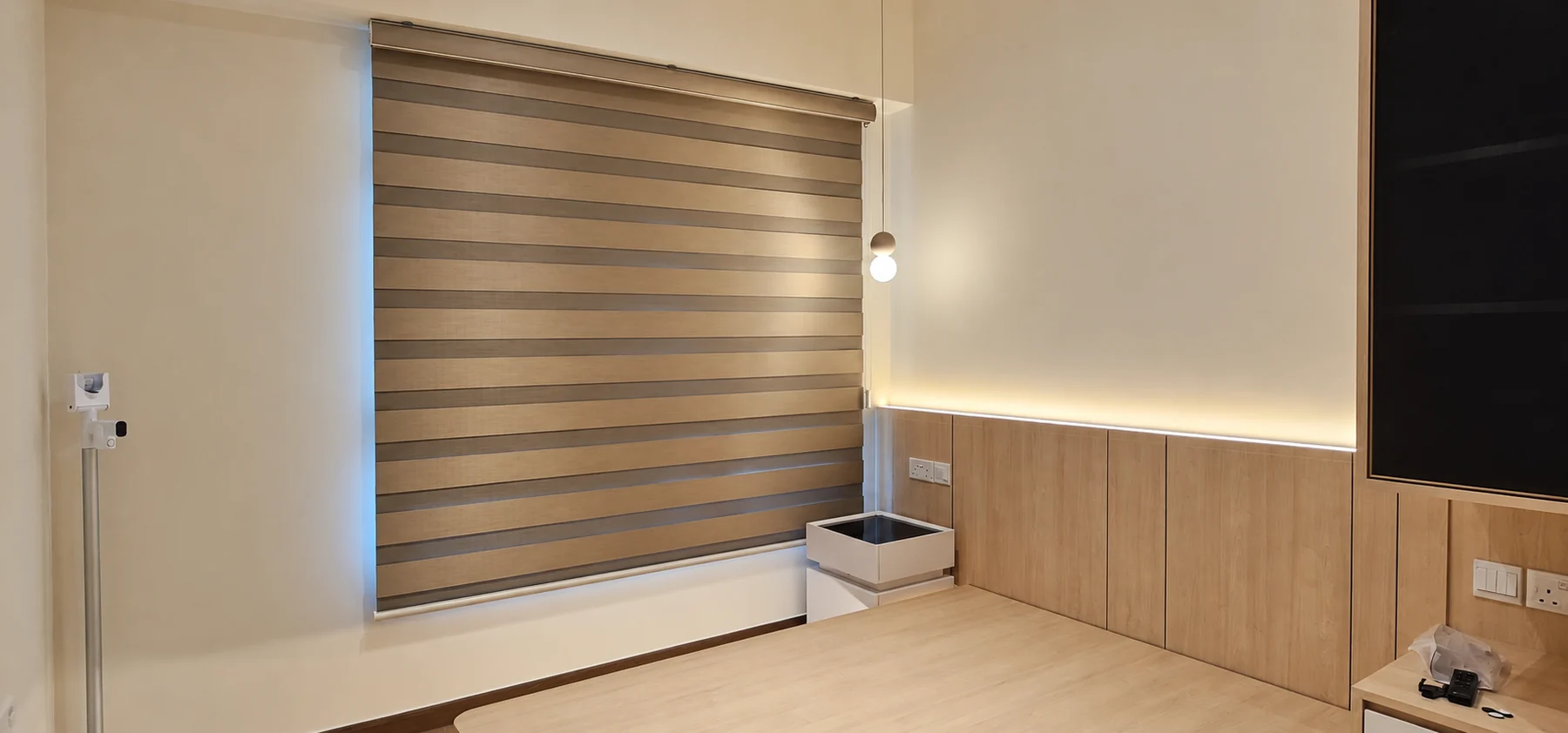
This should not be confused with a Korean blind or zebra blind, which also uses alternating sheer and opaque stripes and is sometimes marketed as a day-and-night blind. Both offer adjustable light control, but the look, operation and coverage are different. Curtains provide a softer, fuller treatment and can cover wide glazing particularly well. Blinds are often a neater choice where space is tight or a more minimal appearance is preferred.

The strength of a double-layer curtain is choice. Leave the sheers closed during the day for filtered natural light. Draw the night curtains partly across to cut glare. Close both layers in the evening for privacy and a more enclosed atmosphere.

Why this arrangement suits Singapore homes

Singapore homes often face close neighbouring units, strong sun and large window openings. A sheer alone may look light and elegant, but it will not give dependable privacy at night. A single blackout curtain gives coverage, but closing it every day can make the home feel unnecessarily dark. Day and night curtains address both situations without asking you to compromise on either.

They are especially useful in living and dining areas, where families may want daylight without a direct view into the flat. In bedrooms, the sheer layer offers privacy while dressing or working during the day, while the night layer supports better sleep. For a study, a dim-out curtain can reduce screen glare without creating complete darkness.

Heat is a related consideration, although curtains are not a replacement for air-conditioning or solar film. A lined or blackout night curtain can reduce the intensity of direct sun reaching the room, particularly when it is closed before the space heats up. The actual effect depends on the fabric, the gap around the curtain and the window orientation. West-facing windows generally deserve closer attention than sheltered windows with limited afternoon sun.

Choosing the right sheer curtain

A sheer fabric controls the character of the room more than many homeowners expect. White or off-white sheers brighten a compact BTO living room and work easily with changing furniture colours. Warm ivory, stone and light grey can feel softer in homes with timber, beige or earth-toned interiors.

Look beyond the colour sample. Hold the fabric against the window where possible, because the same sheer can appear very different in a showroom and in direct daylight. The weave affects privacy too. An open, lightweight sheer gives a clear view out in the day but offers less screening from nearby blocks. A denser textured sheer provides more privacy and filters light more noticeably.

For windows that face another block at close range, privacy sheers are often worth considering. They are not fully opaque, but their denser construction gives greater discretion while retaining a light appearance. At night, however, a sheer should not be treated as a privacy curtain. Indoor lighting reverses the effect, making the interior more visible from outside.

Curtain heading and fullness matter

The way a curtain hangs affects whether the finished window treatment looks tailored or flat. Ripple-fold and S-fold headings create consistent, gentle waves and suit contemporary HDB and condominium interiors. They usually require a compatible track and carefully calculated fabric fullness. Double pleat styles are more traditional and can be an economical option.

Fullness is the amount of fabric used compared with the width of the track. Too little fabric can make a sheer appear sparse when closed. Too much may feel heavy and add unnecessary cost. This is one reason made-to-measure curtains are preferable to estimating from window width alone.

Selecting the night curtain: dim-out or blackout?

The name “blackout” can be misleading. Blackout fabric blocks light through the fabric itself, but light can still enter at the sides, above the track or between curtain panels. If a bedroom needs the darkest possible result, the track position, wall returns, overlap and fabric drop all need to be planned together.

A dim-out curtain reduces light significantly but does not aim for near-darkness. It is often sufficient for a living room, dining area or a bedroom where the occupants prefer some morning light. Blackout curtains are more suitable for shift workers, young children with early bedtimes, media rooms or bedrooms exposed to street lighting and a strong sunrise.

There is also a style trade-off. Many modern blackout fabrics are available in soft textures and linen-look finishes, but they are still generally heavier than dim-out materials. In a small room, a lighter-coloured blackout fabric with a clean ripple-fold heading can prevent the window from looking too bulky.

Day and night curtains Singapore homes can use room by room

For a living room, a sheer paired with dim-out curtains is often the most balanced arrangement. It gives a pleasant daytime setting, helps with glare and provides night privacy without making the space feel overly formal. If the room receives harsh west sun, consider a denser night fabric or a blackout option.

Bedrooms deserve a more personal decision. A master bedroom overlooking another block may benefit from privacy sheers and blackout drapes. A guest room used only occasionally may be well served by a sheer and dim-out combination. Children’s rooms often benefit from washable, durable fabrics and a track layout that allows the curtains to be opened fully and easily.

For a home study, assess the screen position before choosing. If the monitor faces the window, a sheer may be enough for general daytime use. If direct sun falls across the desk, a dim-out curtain or a complementary blind can offer better glare management. In commercial spaces, such as meeting rooms or offices, blackout curtains may be considered where presentations are frequent.

Tracks, motorisation and installation details

A day-and-night arrangement needs two tracks: one for the sheer and one for the night curtain. Tracks can be ceiling-mounted for a clean, taller appearance, or wall-mounted where the ceiling condition or existing structure makes that more practical. Ceiling mounting is popular in BTO and condominium homes, but access panels, false ceilings and pelmet details should be checked before installation.

Motorised curtains are useful for wide windows, high ceilings and heavier blackout fabrics. They also make everyday use more likely: a curtain that opens and closes at the touch of a button tends to be used properly. Motorisation adds cost and requires early planning for a power point or a suitable battery-operated system. For some smaller bedroom windows, a quality manual track remains the simpler and more cost-effective choice.

Professional measurement is not simply about width and height. An installer needs to check the track clearance, air-conditioning trunking, window handles, existing pelmets, wall conditions and where the curtains will stack when open. These details determine whether the curtains move smoothly and whether they cover the glazing as intended.

Budget, durability and care

Pricing for custom day and night curtains varies with the window size, chosen fabric, heading style, number of tracks, lining, motorisation and installation requirements. Direct factory pricing can offer good value, but it is sensible to compare what each quotation includes. A lower figure may exclude track upgrades, transport, installation, blackout lining or the fabric fullness needed for a proper drape.

For daily use, choose fabrics that suit the household. Homes with children, pets or frequent open-window ventilation may prefer practical, hard-wearing materials over delicate open-weave sheers. Regular vacuuming with a soft brush attachment helps remove dust. Check the fabric care advice before washing, as some curtain fabrics may shrink, lose their finish or require professional cleaning.

At Sincere Interior Service, our Singapore-based in-house sewing and production allow each curtain set to be made around the actual window and selected track system. With more than 40 years of experience, we focus on the practical details as carefully as the fabric choice, followed by professional installation, a 12-month warranty and post-installation support.

Before deciding, stand at your windows at different times of day and notice what is really bothering you: glare, heat, visibility from nearby homes, early morning light or a room that feels bare. Bring those observations to a consultation. They will lead to a day and night curtain arrangement that feels right in daily life, not just on installation day.

Roller blinds are simple and neat looking. It is made with a single piece of fabric wrapped around a tube with a supporting headrail which are custom to size to fit your windows. Roller blind is operated by either a pulley chain mechanism or pull cord attached to the bottom. They are versatile and can suit and enhance any type of interior decoration. Roller blinds are also very functional when it comes to controlling (or blocking out) light, providing privacy and easy to maintain.

Roller Fabric Type – Blackout / Sunscreen / Translucent

Combi Blinds have two layers of fabrics combine, which provides a day and night effect by alternating panels of opaque and translucent fabrics rolled up into one single piece. Operated by a pulling cord, these panels will glide over each other seamlessly.

Available in blackout or translucent materials with many different designs and fabric texture.

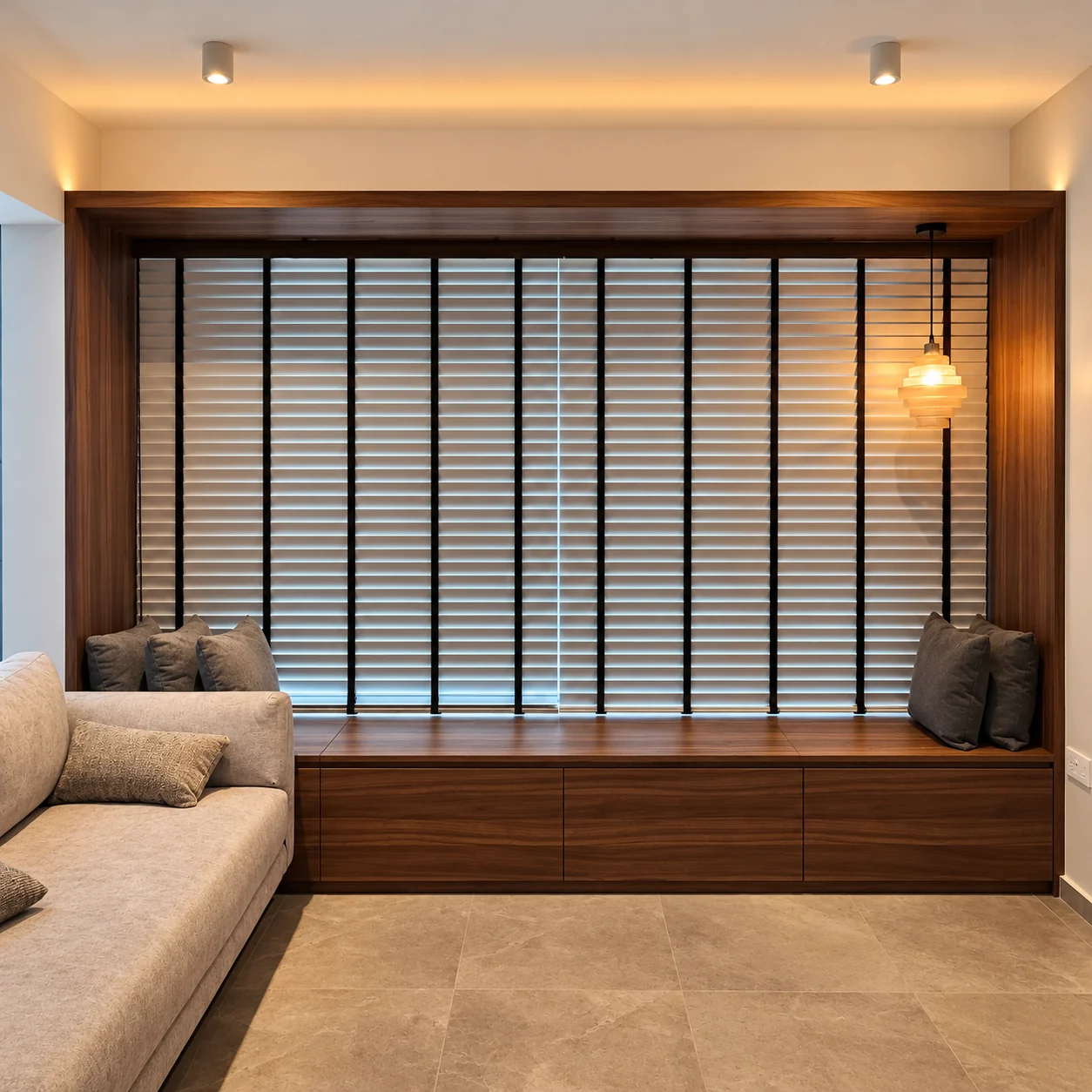
Venetian Blinds are horizontal slats made in either Wood, PVC or Aluminium. They offer privacy, insulation and good light control. The slats are held together with decorative tapes or cords that roll up and down when raising or lowering the blind. Not only could you lower or raise the blind, you’re able to adjust the slats to offer better lighting control. Venetian blinds slats typically rotate 180 degrees, offering variability when it comes to privacy and light control.

Available Systems:

Standard System (PVC, Wood and Aluminium)
Easy-Lift System (PVC, Wood)
Ultra-Easy Lift System (PVC, Wood)
Single Cord Pulley System (PVC, Wood and Aluminium)

Honeycomb blinds are also known as cellular shades. They are called honeycomb blinds because of their unique shape. Honeycomb blinds have pieces of fabric connecting them and stacking them throughout like an accordion, and it looks like a bee’s honeycomb between each section. Unlike other blinds, honey comb blinds are unique in the own manner. Available in these options depending on your requirements:

  • Standard System (Normal Up Down Effect)
  • Top-Down, Bottom up System (Allows you to lower the shades down from the top and the bottom for privacy and light control)
  • Day and Night Shades in a single window treatment. (Utilizes both light filtering and room darkening fabric. The middle bar separating the two fabrics can be pushed down when light and privacy are desired, pushed up when greater light blockage is needed, or completely raised for a full view to the outside)

Roman blinds can be considered timeless. They are made from fabric giving you both the privacy, and all the insulating benefits from drapes. They are designed to pleat when raised, constructed by mounting slats, which are connected to cords, into the back of a fabric panel. When the blind is lifted, the cords pull the slats together and force the blind to fold into pleats.

Vertical blinds are made of fabric slats, running vertically across your window (top-to-bottom). Vertical blinds give you the privacy when completely closed and also helps with sunlight. The material is fastened into a headrail and is operated via a pulley system attached to a track. When you pull the chain or cord, the vertical blinds move left, right or an option to open from the centre. It can also be partially or fully tilted at 180 degrees.

Available in both Blackout and Translucent fabric option

Made from natural bamboos, this blind provides a natural appearance for home and outdoor purpose. Custom to size and available not only in its natural bamboo colour but also able to paint it in different colours, most commonly black/white.

QUICK ENQUIRY

SEND US A MESSAGE