0
0

Commercial Curtain Installation Singapore: What Matters
Commercial curtain installation Singapore: fabric, tracks, light control, safety and fitting details for a practical, durable workplace that works daily.
READ MORE →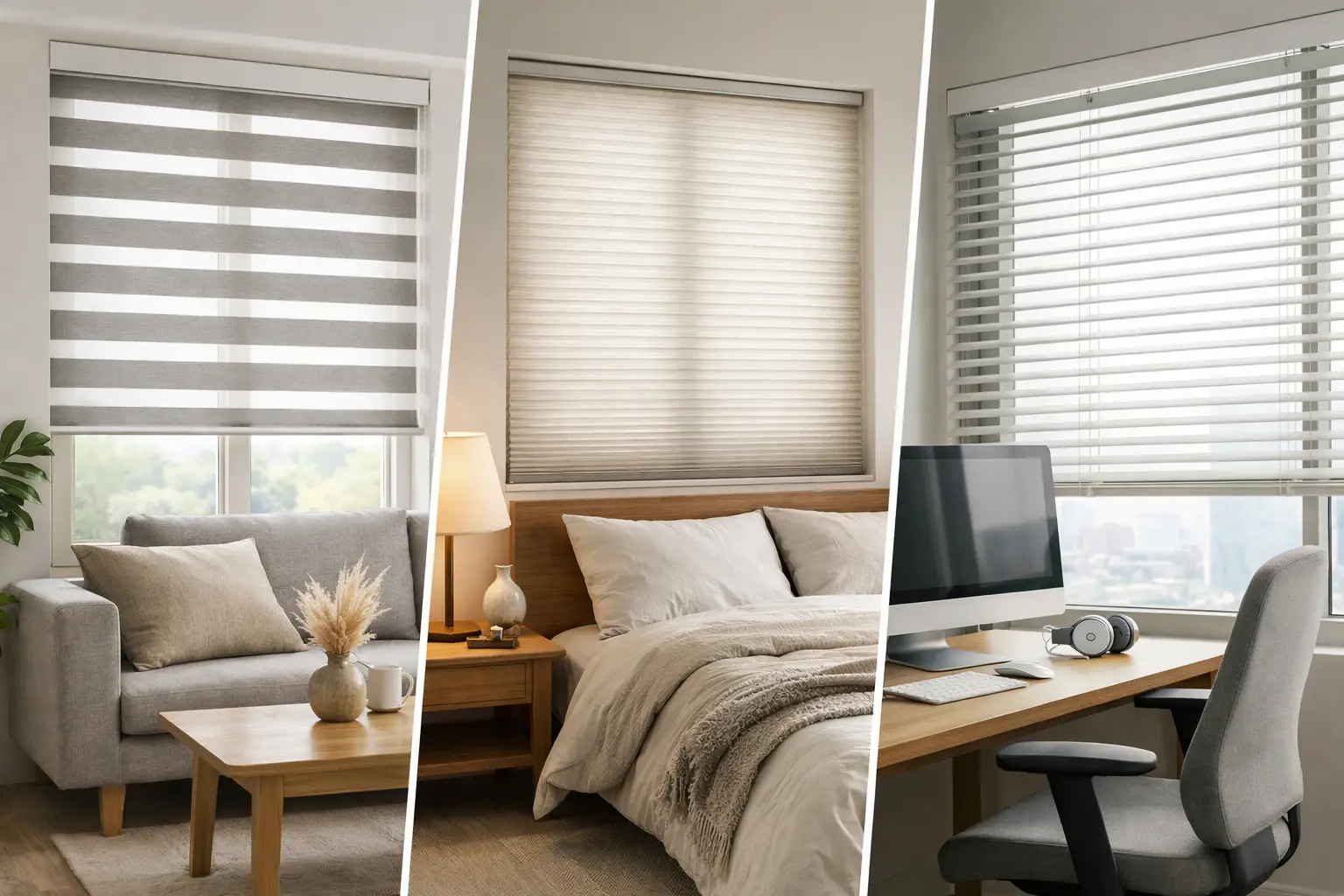

A new BTO flat often has large windows, close-facing blocks and bright afternoon sun. That makes window furnishing a practical decision, not only a decorating one. Korean blinds for BTO flats are popular because they offer a clean, contemporary look while giving homeowners more control over privacy and daylight than a standard roller blind.
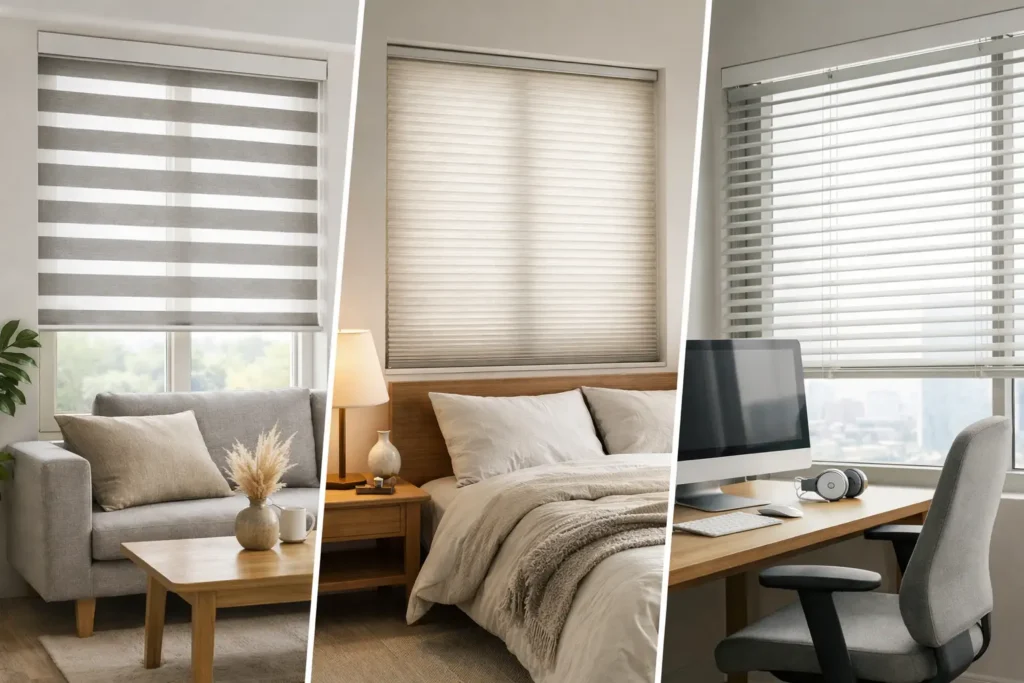
Also known as zebra blinds or combi blinds, Korean blinds use one continuous fabric with alternating sheer and opaque horizontal bands. By adjusting the fabric layers, you can align the sheer sections for filtered daylight or overlap the opaque sections for greater privacy. It is a simple system, but choosing the right fabric, size and installation method makes a significant difference in everyday use.
Korean blinds for BTO flats sit neatly within or above the window area and can be operated with a side pulley/cord or, in selected setups, a motorised system. The alternating fabric stripes are their defining feature. When the sheer bands meet, light enters while the view is softened. When the solid bands overlap, the blind provides more coverage from neighbouring windows and passing foot traffic below.
For many homeowners, Korean blinds for BTO flats offer flexibility that suits the way a home is used throughout the day. You may want natural light in the living room in the morning, partial screening during the afternoon, and privacy in the evening without drawing heavy curtains. A Korean blind can move between these settings more easily than a conventional single-layer roller blind.
However, it helps to have realistic expectations. Even when the opaque bands are aligned, Korean blinds are generally not the same as a dedicated blackout blind or blackout curtain. Small gaps at the sides and light passing through the sheer bands can remain visible. Bedrooms for light-sensitive sleepers may need a more blackout-focused solution.
Korean blinds are especially well suited to BTO living rooms. Their slim profile keeps the window area visually tidy, which is useful in compact layouts where bulky treatments can make a room feel crowded. Light-filtering fabrics soften strong daylight and reduce glare on a television screen or dining table, while still allowing the space to feel open.
For flats facing another block at close range, choose a fabric with sufficiently dense opaque bands. A lighter-coloured blind can still look bright and airy, but the fabric construction matters more than colour alone when privacy is a concern. During a site consultation, the viewing angle from nearby units should be considered, particularly for lower-floor homes.
Korean blinds can work well in bedrooms where the goal is daytime privacy and a calm, uncluttered appearance. Neutral shades such as warm white, light grey, taupe and soft beige tend to pair easily with most BTO renovation themes.
If you work shifts, have young children, or are affected by early morning sun, consider layering. A Korean blind can provide flexible daytime control, while blackout curtains on a track offer stronger darkness at night. This combination also gives the room a softer, more finished look and can help reduce light leaking around the window edges.
In kitchens, practical considerations should lead the decision. Korean blind fabrics are generally easier to wipe than drapery, but they are not ideal directly beside a cooking hob where grease and heat are frequent. For kitchen windows away from heavy cooking, they can provide privacy while maintaining ventilation and daylight.
Service yards need particular thought. Humidity, moisture and regular use can affect fabric blinds over time. A suitable blind may still be installed, but material selection and mounting position should account for drying racks, windows that open inwards or outwards, and access to the laundry area. In some cases, a more moisture-tolerant blind type may be the better long-term choice.
The colour you see in a showroom can look different once sunlight passes through it. In Singapore, where daylight is strong for much of the year, a white or pale fabric may brighten a room considerably. This can be attractive in a smaller BTO flat, but it may also reveal silhouettes at night when indoor lights are on.
Darker tones usually offer a stronger sense of privacy and can reduce visual glare, though they may make a compact room feel more enclosed. Mid-tones such as grey, stone and textured beige often give a balanced result. They hide minor marks better than crisp white fabrics while keeping the room light enough for daily living.
Opacity should be discussed alongside colour. Some Korean blind fabrics are designed mainly for light filtering, while others have denser opaque sections for improved screening. A professional sample check at the actual window is more reliable than selecting by photograph, especially if your unit faces west or receives direct afternoon sun.
BTO windows are not always perfectly uniform, even within the same development. Accurate measurement is essential for a blind that rolls smoothly, sits level and covers the window area properly. The decision between inside-recess and outside-recess installation also affects privacy, light gaps and appearance.
An inside-recess installation gives a cleaner built-in look when there is enough depth and the window frame allows it. An outside-recess installation can offer better coverage because the blind extends beyond the glass area. It may be preferred where the recess is shallow, where handles obstruct the blind, or where reducing side light gaps is a priority.
Homeowners should also consider how the windows open. Casement windows, sliding panels, grilles and existing renovation features can all influence bracket placement. Professional installation avoids common issues such as chains sitting too close to handles, blinds catching on window hardware or uneven fabric alignment.
For families with young children, chain safety should not be overlooked. The operating chain should be tensioned and secured correctly to reduce loose loops. Motorised Korean blinds are another option for higher windows, wide living-room windows or homeowners who prefer touch-button or smart-home operation. Motorisation adds cost, but it can be worthwhile where daily convenience and accessibility are priorities.
The cost of Korean blinds is not based on window width alone. Fabric range, blind dimensions, hardware, manual or motorised operation, installation complexity and the number of windows all affect the quotation. Extra-wide blinds may require different components or be divided into separate panels for smoother operation.
It is tempting to compare only a per-panel price, but this can overlook fit, fabric quality and after-sales support. A blind that is poorly measured or installed may leave unnecessary gaps, operate unevenly or wear prematurely. Made-to-measure blinds are particularly useful for BTO flats because window sizes, recesses and practical requirements differ from room to room.
At Sincere Interior Service, homeowners can discuss fabrics, operation and coverage based on how each room is actually used. With more than 40 years of window furnishing experience, Singapore-based production and professional installation, the focus is on recommending a workable solution rather than applying one blind type everywhere.
Regular, gentle care helps Korean blinds stay presentable. Dust can be removed using a feather duster, a soft microfibre cloth or a vacuum cleaner with a low-suction brush attachment. Work carefully along the fabric bands rather than pulling the blind down abruptly.
For small marks, dab lightly with a clean damp cloth and mild soap if suitable for the fabric. Avoid soaking the material, harsh chemicals and vigorous scrubbing, as these can leave water marks or affect the coating. Kitchens and homes near busy roads may need more frequent cleaning due to grease or dust.
Operate the blind smoothly and avoid forcing it when the fabric is misaligned. If a chain, bracket or roller mechanism feels unusual, it is better to have it checked early than continue using it under strain. Good workmanship and proper use both contribute to a longer service life.
Korean blinds are a strong option when you want adjustable daylight, daytime privacy and a modern, space-saving finish. They are particularly effective in living rooms, study areas and bedrooms that do not require full blackout conditions. Their main trade-off is that they cannot fully replace blackout curtains for households that need darkness for sleep.
The most useful starting point is to consider each room at the time you use it most: the sun direction, the distance to neighbouring blocks, whether you need to open windows often, and how much privacy you want after dark. Once these details are clear, the right fabric and fitting choice becomes far easier to make.
You can also view a recent Korean blinds installation by Sincere Interior on Instagram to see how the layered fabric looks in a completed home.
Not sure which curtain style, fabric or system suits your home? Speak with our team for personalised recommendations for your space.
GET IN TOUCH →