0
0


How to Choose Curtain Fabric for Every Room
Learn how to choose curtain fabric for Singapore homes, balancing light, privacy, drape, maintenance and fit for bedrooms, living rooms and more…
READ MORE →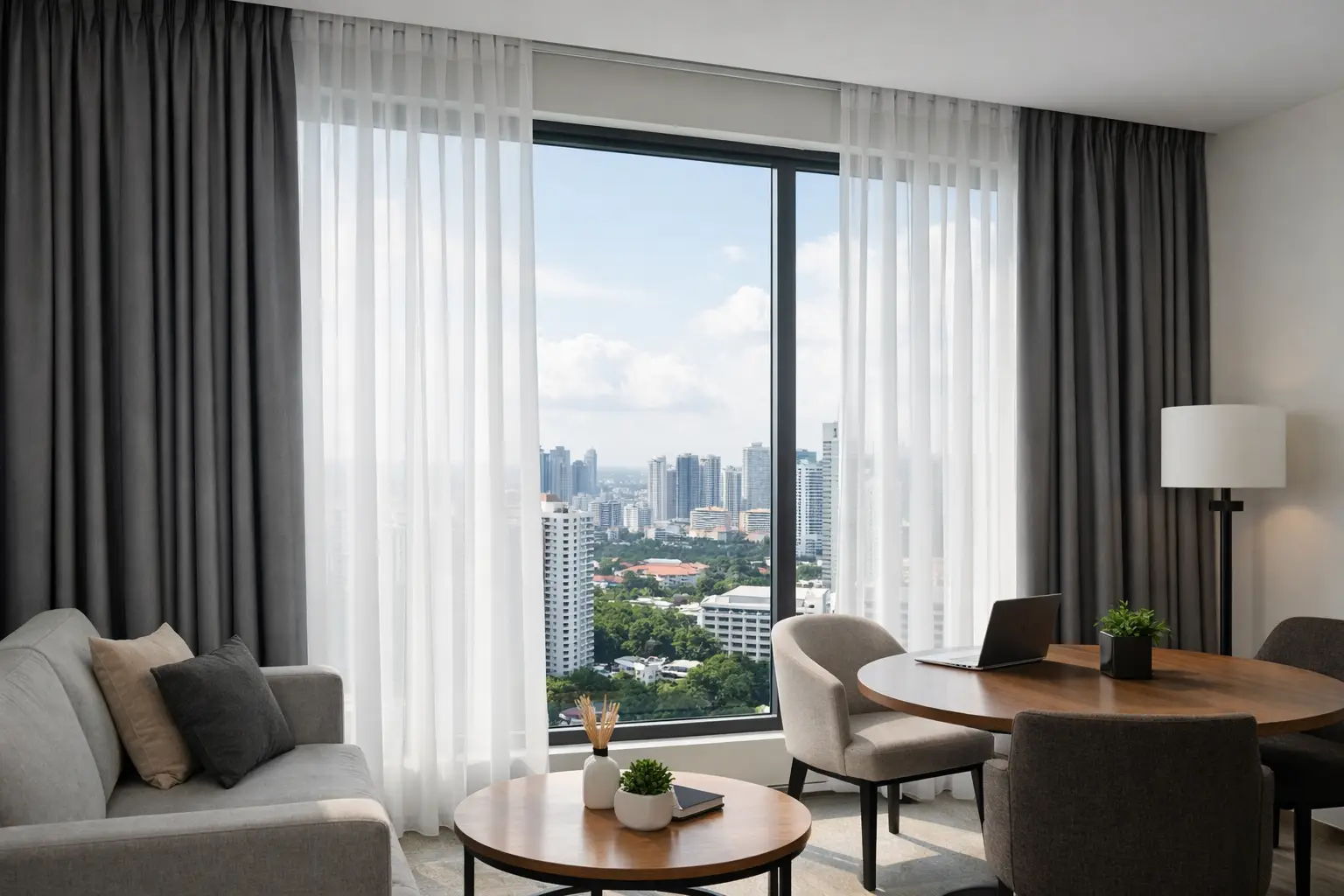

A meeting room with bright afternoon glare, a clinic that needs discreet consultation areas, and a restaurant facing a busy walkway may all require curtains. Yet commercial curtain installation Singapore is not simply a matter of choosing a colour and fixing a track above the window. The treatment must suit how the space operates every day. Consider privacy, cleaning, staff use, sunlight exposure and the condition of the walls or ceiling.
A well-planned installation gives occupants practical light control without making the room feel closed in. It also avoids common problems such as curtains catching on furniture, tracks flexing under a heavy fabric, persistent side light in a blackout room, or a blind that staff find inconvenient to operate.
The first question is not whether curtains or blinds look better. It is what the window furnishing needs to do. In an office, the priority may be reducing screen glare while retaining outward visibility. In a training room, the requirement may be effective darkening for projection. A retail frontage may need daytime privacy without blocking natural light, while a hotel or serviced accommodation unit may need dependable night-time coverage and a finish that withstands frequent handling.
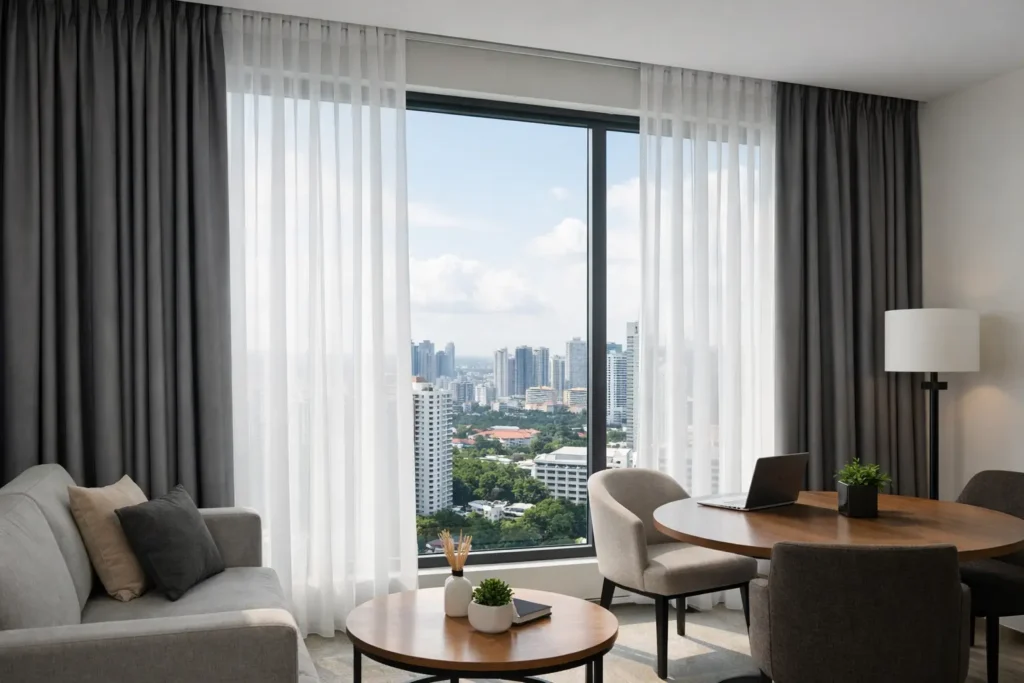
Commercial spaces often have mixed requirements within the same premises. An open office may suit roller blinds to manage glare across a row of windows. Enclosed meeting rooms may benefit from a sheer paired with dim-out or blackout curtains. The sheer softens daylight and maintains some privacy during the day; the back curtain is closed when presentations or confidential discussions require it.
It is worth distinguishing dim-out from blackout fabric. Dim-out curtains noticeably reduce light but may still allow light through the weave or around the edges. Blackout fabric blocks light through the fabric itself, but true room darkening also depends on track position, curtain fullness, overlap and gaps at the sides, top and bottom. For a boardroom used for presentations, these fitting details matter as much as the fabric label.
Accurate on-site measurement should come before a final recommendation. Commercial windows are not always straightforward. There may be bulkheads, sprinkler heads, air-conditioning grilles, exposed conduits, glass partitions, built-in cabinetry or uneven ceiling levels. A fabric that looks suitable from a sample can also become impractical if it needs a deep stack-back space beside a narrow window.
During a professional site survey, the installer should confirm suitable fixing points for the track or blind brackets. Next, identify the mounting surface and whether high windows require access equipment. Where installation requires elevated access, the Workplace Safety and Health Council provides guidance on safe access and fall-prevention measures for work at height. In renovated offices and retail units, drawings may not reflect later site changes, so physical checks remain essential.
Window dimensions alone are not enough. The open curtain needs somewhere to sit. This is called stack-back. A thick blackout curtain with generous fullness can take up substantial space when opened, reducing part of the view or covering a glass panel. Ripple fold and S-fold curtains give a clean, consistent wave, but their stack-back and track requirements should be allowed for from the outset. Where maximum glass exposure is important, a roller blind or vertical blind may be a more practical option.
Choose commercial fabrics for performance as well as appearance. Light-filtering sheers can make a reception area feel calmer and less exposed, but a very fine sheer offers limited privacy at night when indoor lights are on. Pairing it with a second curtain layer provides more flexibility, although it requires a double track and sufficient projection from the wall.
For rooms with strong sun, the fabric colour and openness affect the result. Darker solar blind fabrics can improve outward view and glare management in bright conditions, but they may make a room feel visually heavier. Lighter shades keep the interior brighter, though glare reduction may be less pronounced depending on the material. The most suitable choice depends on window orientation, surrounding buildings and whether people are working on screens close to the glass.
Roller blinds are often favoured in commercial settings because they are compact, orderly and easy to operate. They work particularly well for repetitive windows, offices and education spaces. Venetian blinds offer precise adjustment of light direction, but the slats need regular dusting and may not be ideal where low maintenance is a priority. Vertical blinds can cover wider spans and allow directional light control, although their appearance and movement should suit the setting.
Curtains are usually the better choice where acoustic softness, a warmer appearance or more complete coverage is desired. They can also help reduce the hard, echoing feel of rooms with glass, tile and bare ceilings. They should not, however, be treated as a substitute for specialist acoustic treatment where sound control is the main project requirement.
The track is a working component, not an afterthought. Its type, length and fixing method must suit the fabric weight and how often staff will open the curtains. A manually operated curtain is straightforward and cost-conscious for smaller windows with easy access. For long runs, tall windows or curtains that staff operate repeatedly, a corded system or motorised track may offer more consistent movement.
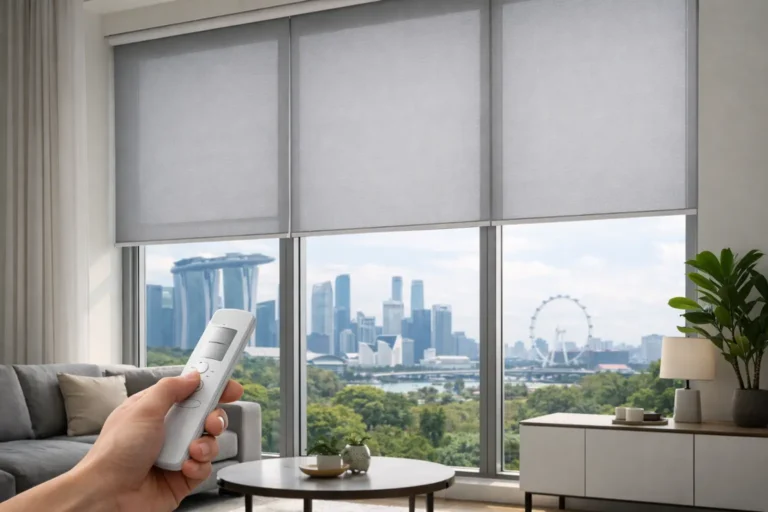
Motorised curtains and blinds can be useful in boardrooms, function rooms, show units and spaces with inaccessible windows. They allow several window coverings to move together and remove the need for staff to handle fabric at height. Plan motorisation around nearby power points, cable routes and control preferences. Also consider any smart-home or building-control requirements. Battery-operated options can reduce visible wiring. Before choosing them, consider charging access and how often staff will operate the system.
Safety also deserves attention. Where blinds have control chains or cords, the installation should account for their position and secure retention. In childcare, education, healthcare or public-facing premises, accessible controls, fabric edges and operating methods need particular thought. The appropriate approach depends on the users and the environment rather than a one-size-fits-all rule.
Coordinate curtain tracks before contractors finalise false ceilings, pelmets and built-in furniture. If the design includes a recessed ceiling pocket, match its width and depth to the selected track and curtain heading. A pocket that is too shallow can restrict movement; one that is too narrow may prevent a double-track arrangement for day and night curtains.
For an occupied office or retail unit, installation planning should also minimise disruption. Installers may need to move desks, displays or stock temporarily to reach the windows. Teams can sometimes schedule installation outside peak operating hours. Building access rules and project scale will determine whether this is practical. Clear site coordination helps prevent a completed curtain from being obstructed later by signage, shelving or a relocated partition.
Custom production lets the team match dimensions, fabric direction and heading style to the actual site. This avoids forcing a standard size onto an irregular window. Sincere Interior Service combines consultation, measurement, Singapore-based in-house sewing and production, installation and post-installation support, which helps keep responsibility clear from selection to final fitting.
The right treatment is one people can maintain. Vacuum curtains gently with a soft brush attachment to remove surface dust. Pay particular attention near air-conditioning outlets and busy entrances. Fabric-specific cleaning advice matters because not every curtain is suitable for the same washing method. Blinds are generally quicker to wipe down. In high-use areas, check their brackets, chains and mechanisms periodically.
Before approving a quotation, confirm four practical points: how the product operates, where it stacks when open, how much side light may remain and what cleaning the material requires. Those practical answers usually lead to a better decision than choosing solely from a fabric swatch. A site measurement and consultation give the installer the information needed to recommend a treatment that supports the work taking place behind the glass.
Not sure which curtain style, fabric or system suits your home? Speak with our team for personalised recommendations for your space.
GET IN TOUCH →