0
0

Motorised Curtain Systems Singapore: What to Look For
Read motorised curtain system reviews with clear advice on tracks, fabrics, smart controls, fitting, light control and long-term use for Singapore homes.
READ MORE →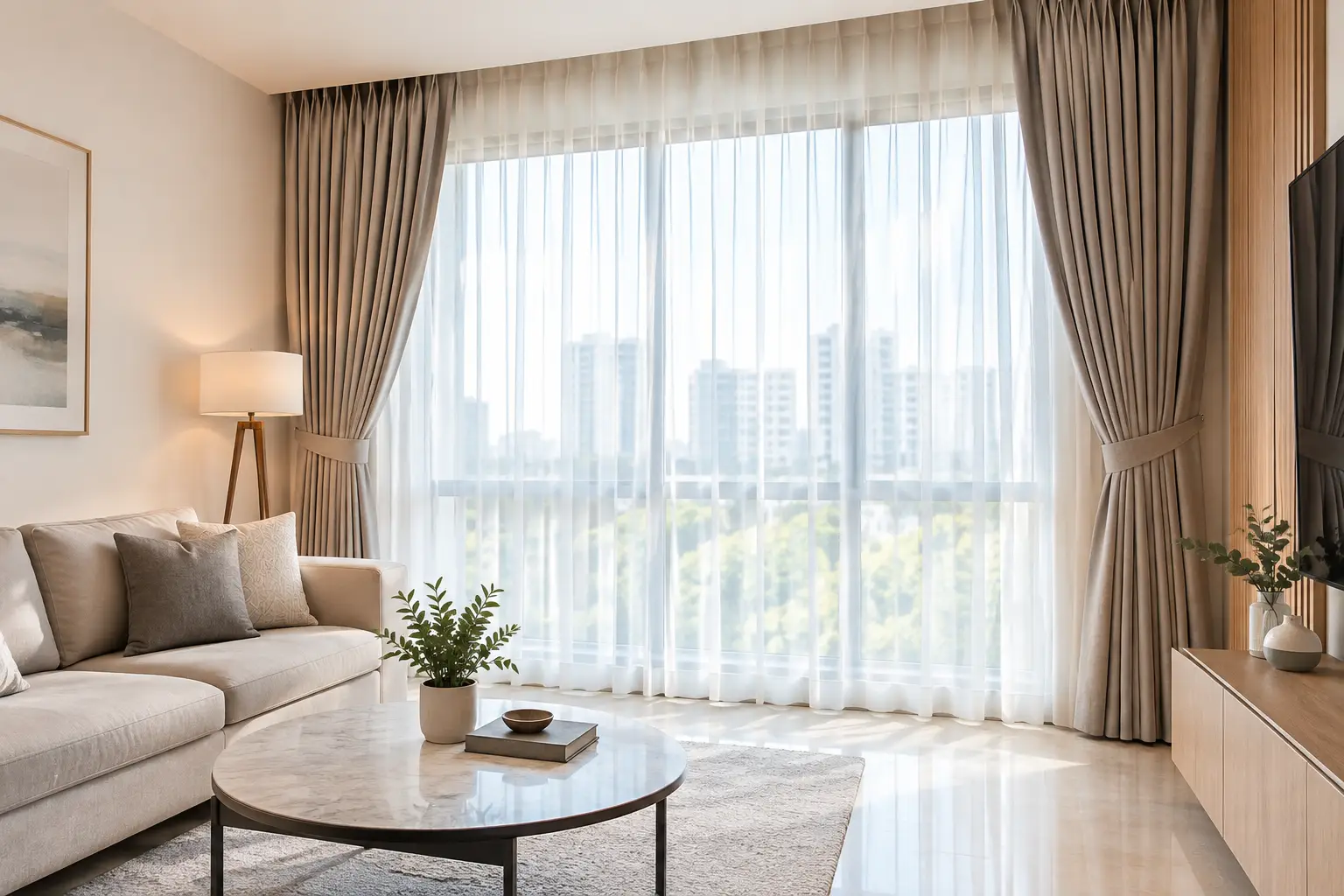

A living-room window may look straightforward until the curtain needs to clear a window ledge, conceal an air-conditioner trunking route and stack neatly beside a balcony door. That is why curtain pricing is rarely just a matter of multiplying width by a fabric rate. A useful quotation considers how the finished curtain will fit, operate and perform in your home for years.
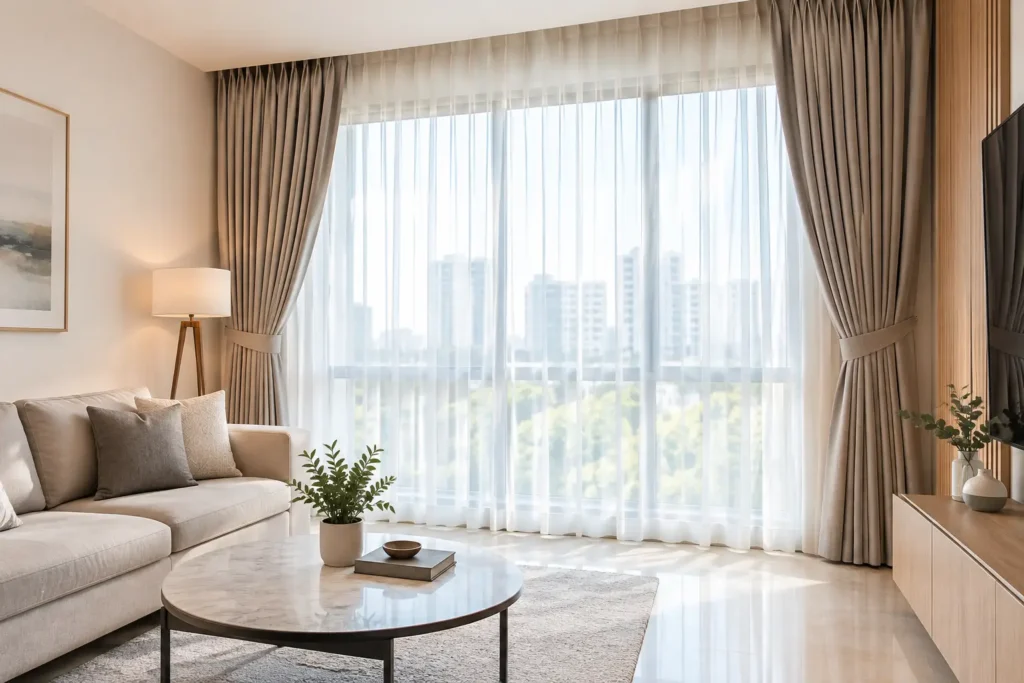
For HDB, BTO, condominium and landed-home owners, the most meaningful way to compare quotations is to check what the quotation includes and why the supplier recommends each component. A lower starting figure can look attractive, but may not include suitable lining, adequate fabric fullness, the right track, installation access or finishing details that affect everyday use.
The main influences are window dimensions, fabric type and quantity, curtain style, lining, track system, installation requirements and optional motorisation. Each affects not only the initial cost but also privacy, light control, appearance and durability.
Curtain Pricing Factors at a Glance
| What affects the quote | What it changes |
|---|---|
| Window size & height | Determines track length, curtain drop and the total amount of fabric required. |
| Fabric selection | Affects material cost, weight, drape, privacy and light-control performance. |
| Curtain fullness | More fullness creates a richer finished look but requires additional fabric. |
| Sheer, lining or blackout layers | Additional layers increase material, production and track requirements. |
| Track system | Single, double and motorised tracks require different hardware and installation planning. |
| Site & installation conditions | Ceiling type, access, window ledges, air-conditioning trunking and carpentry can affect fitting complexity. |
| Motorisation | Adds the motor, controls, compatible track and power or smart-home planning. |
These factors work together, which is why two windows of similar size can still receive different quotations.
A made-to-measure quotation uses the actual site measurement rather than the glass size alone. The track may need to extend beyond the window so the curtains can draw clear of the glass. The height may run from ceiling to floor, above a pelmet, or around a window ledge. These decisions change both fabric quantity and the track required.
A professional measurement is particularly useful in newer BTO flats and condominiums, where ceiling details, bulkheads, sprinkler positions, sliding doors and limited wall space can influence the installation method. In landed homes, very wide or tall openings may need heavier-duty tracks, joins planned carefully, or motorised operation to keep the curtains easy to use.
Fabric usually has the largest effect on curtain pricing because it determines the amount of material used and the way the curtain hangs. A lightweight sheer generally behaves differently from a thick textured dim-out fabric, even when both are made in a similar style.
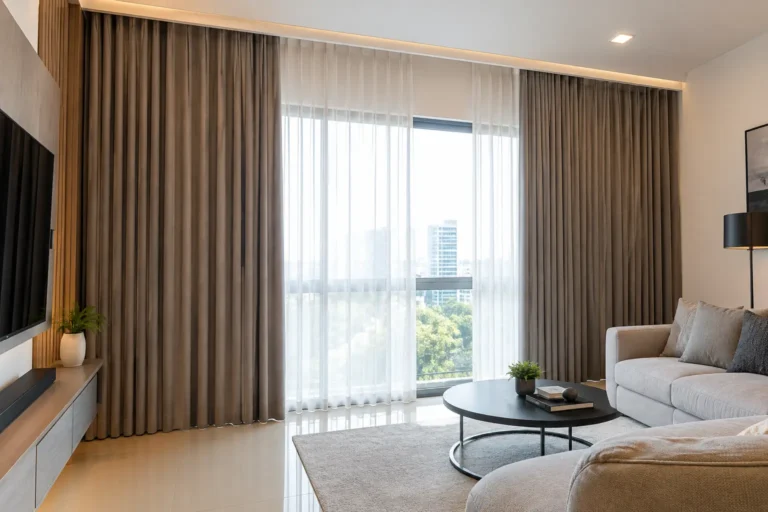
Sheers soften daylight and provide daytime privacy, but they do not provide bedroom darkness at night when indoor lights are on. Homeowners often pair sheers with a separate night curtain. This day-and-night arrangement costs more than a single layer, but gives far better control over glare, privacy and ambience in a living room.
For bedrooms, a dim-out fabric reduces light but may still allow noticeable brightness through the weave or around the sides. Blackout curtains generally give stronger light blocking, especially when paired with suitable lining and an installation that minimises side and top gaps. Do not expect an ordinary curtain to create complete darkness. Light can enter around tracks, through gaps beside the wall, below the hem and around air-conditioner ledges.
Pattern, texture, fabric width and fabric weight also matter. Some fabrics come in narrower widths and require more joined panels across a large window. Others have a design direction or repeat that needs additional allowance for matching. Heavier fabrics may need a more supportive track and properly spaced brackets.
Curtain makers normally make the curtain wider than the track. They add extra fabric to create folds and avoid a flat, stretched appearance when closed. The amount, known as fullness, depends on the fabric and heading style.
Ripple fold and S-fold curtains create neat, consistent waves, but require compatible ripple tape, carriers and a dedicated track. Installers plan the fabric allowance precisely, so the curtains look their best when the track is measured accurately. Pencil pleat curtains offer flexibility and suit many traditional settings, while eyelet curtains have a different look and need clearance for the curtain pole or rod.
Reducing fullness may lower fabric use, but it can make curtains look sparse and may reduce privacy between folds. Conversely, excessive fullness can make a compact bedroom feel visually heavy and leaves a larger stack when opened. The right balance depends on the fabric, window width and room proportions.
Tracks, brackets and fittings may be less visible than fabric, yet they strongly affect how well a curtain works. A smooth, properly supported track is especially important for wide day-and-night curtains, full-height panels and motorised systems.
A single track suits one curtain layer. Use a double track when the sheer and night curtain need to operate independently. In many living rooms, the double-track arrangement is worth considering because it allows the sheer to stay closed during the day while the night curtain remains open.
Track selection depends on ceiling or wall mounting, the curtain weight, the available fixing surface and obstacles around the window. A recessed ceiling pocket can give a clean, concealed finish. Measure its usable depth and access before confirming the track. A shallow recess may not accommodate two curtain layers comfortably. Where drilling is restricted or unsuitable, assess the installation method before confirming the order.
Lining is another cost consideration with a practical purpose. It can improve drape, protect the face fabric and enhance dim-out or blackout performance. A lined curtain usually feels fuller and hangs more elegantly, but it is heavier and may take longer to dry after cleaning. In a humid climate, regular ventilation and appropriate care are sensible, especially in rooms that are often closed up.
Curtain pricing can differ even when two windows have identical glass widths. One may have space for the curtain stack to sit fully off the glass when open; the other may end at a perpendicular wall or built-in cabinet. One may be a simple fixed window, while another includes a frequently used balcony door that needs a clear opening and an easy-to-reach overlap.
Stack-back refers to the space curtains occupy when open. It matters in compact HDB bedrooms and beside sliding doors. A thick blackout fabric with generous fullness creates a larger stack than a light sheer. If the stack covers too much glass, it can reduce the daylight you hoped to keep. This is a common reason to discuss fabric weight and track extension during the consultation rather than after installation.
High windows also add practical considerations. Measurements and installation may need special access arrangements, while manual cords, wands or curtain pulls should remain safely reachable. For windows that are difficult to access daily, blinds or motorised curtains may be more practical than long manual panels.
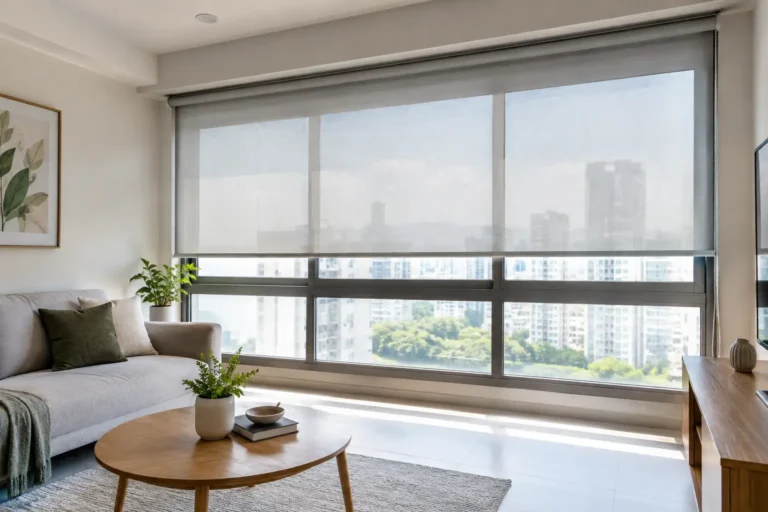
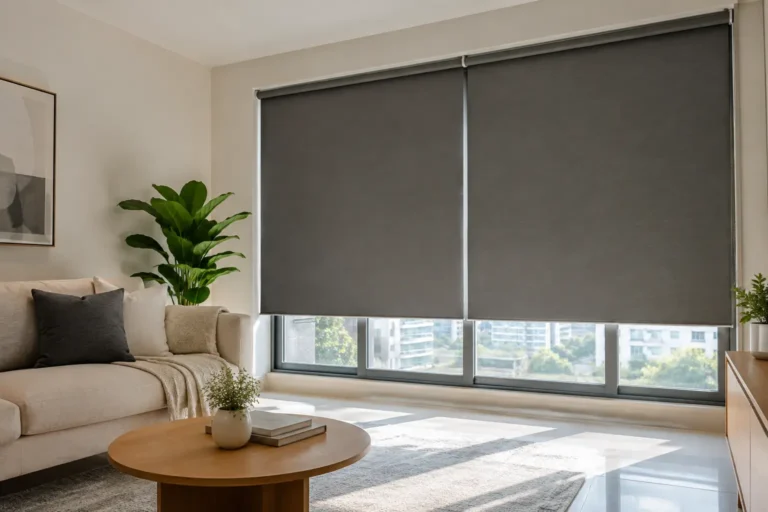
Curtains are not automatically the most suitable answer for every room. A roller blind can be a tidy, space-efficient choice for a study, kitchen-adjacent window or a narrow opening where a curtain stack would be inconvenient. Depending on the fabric selected, roller blinds can manage glare and daytime privacy well, although side light gaps remain more visible than with curtains that overlap the wall.
Korean or combi blinds use alternating sheer and opaque bands for adjustable filtered light, but they do not provide the same blackout effect as a well-planned blackout curtain. Honeycomb blinds can suit selected windows where a compact profile and softer appearance are preferred. Venetian blinds provide adjustable light direction, though the slats need more regular dusting than a roller blind.
The value of each option depends on the problem being solved. If the priority is a dark bedroom, a curtain with blackout fabric and careful gap management is usually more suitable. If the priority is controlling computer-screen glare in a home office while preserving a clean window line, a blind may make more sense.
Curtain pricing can increase with motorisation because the system includes the motor, compatible track or blind mechanism, controls and installation setup. They are particularly useful for large, tall or hard-to-reach windows, as well as households that open and close several window coverings each day.
Before choosing motorisation, consider the power arrangement. Some installations can use rechargeable battery motors, while others require a nearby power point or planning during renovation. Discuss the opening direction, curtain weight, track length and smart-home preferences early. Retrofitting may still work in some homes. However, planning before carpentry and electrical works usually produces a neater result.
Installation should include more than putting up a track. The installer needs to check level, bracket support, clearance from doors and windows, fabric drop, joining points and smooth operation. A properly fitted curtain should draw without snagging, sit at an appropriate height above the floor and return neatly when opened.
Ask whether the quotation states the fabric range, curtain style, fullness, lining, track type, number of layers, installation and any motorisation components. If blackout is important, ask how the installer will manage light gaps rather than relying on the word “blackout” alone. If you are comparing day-and-night curtains, confirm the quotation includes both layers, both tracks and installation.
Singapore’s Competition and Consumer Commission supports price transparency and advises businesses to be upfront about the prices they charge and avoid hidden charges.
It is also sensible to ask about cleaning guidance and after-sales support. Some fabrics are more forgiving of everyday dust and handling than others, while delicate sheers need gentler care. Serving Singapore since 1976, Sincere Interior Service provides professional site measurement, Singapore-based curtain production and installation, with a 12-month warranty and post-installation support. This helps homeowners compare the complete project scope rather than focusing only on an attractive starting fabric rate.
The most useful curtain quotation is one that explains the choices behind it. Bring photos of the windows, note how each room is used and be clear about where darkness, privacy or easy operation matters most. A measured consultation can then turn a broad budget into a solution that looks considered and works properly every day.
Not sure which curtain style, fabric or system suits your home? Speak with our team for personalised recommendations for your space.
GET IN TOUCH →