0
0

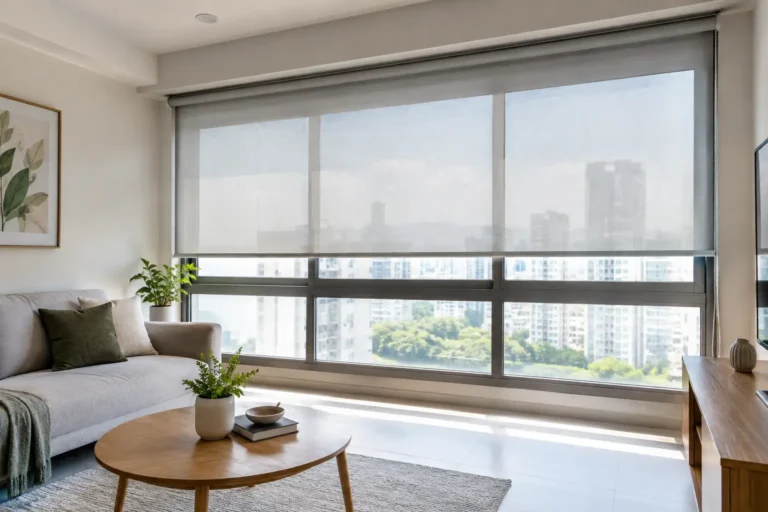
How to Reduce Window Glare in Singapore Homes
Learn how to reduce window glare with curtains and blinds suited to Singapore homes, from sheer layers to blackout fabrics, installation and…
READ MORE →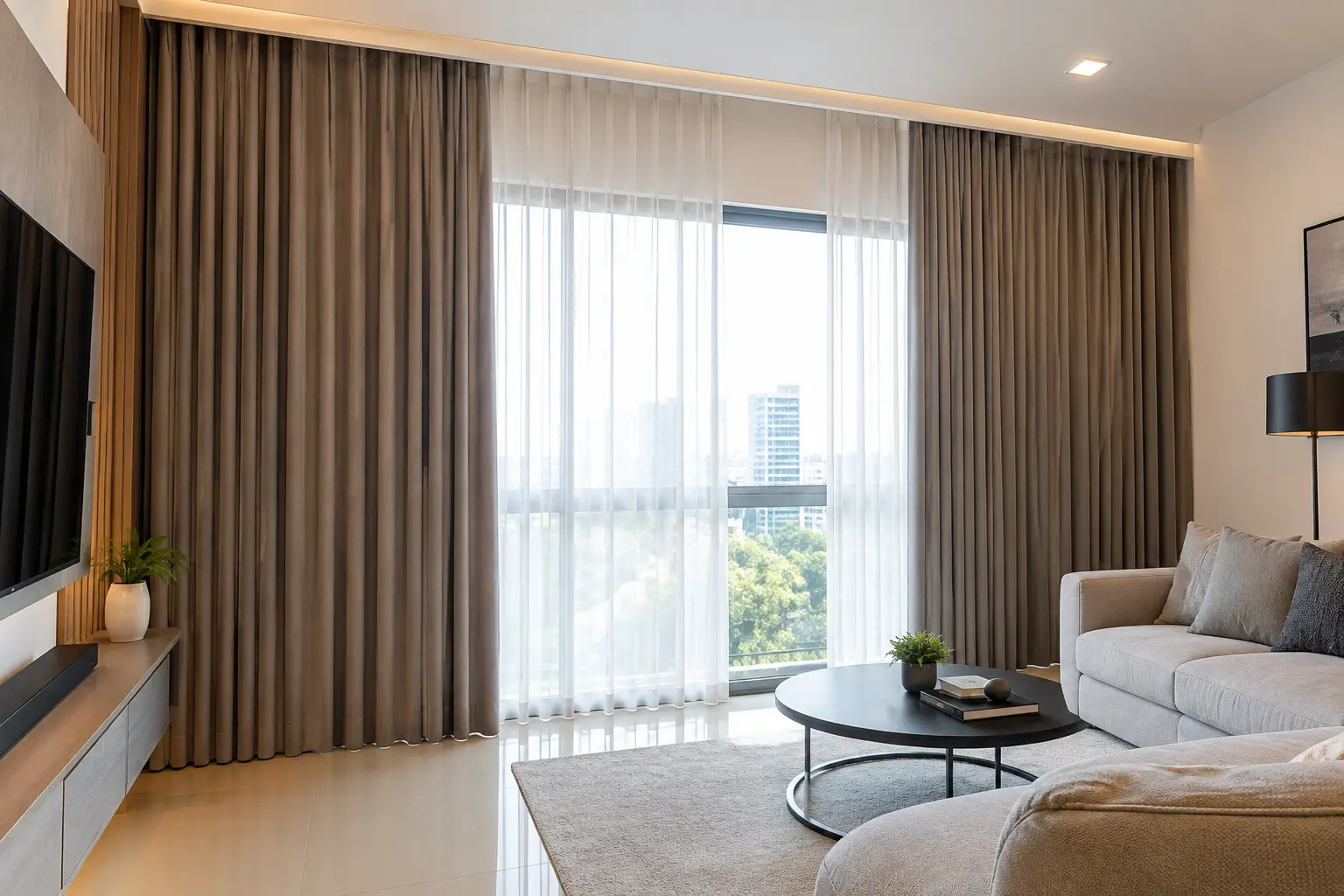

Motorised curtain systems are most useful for wide, heavy, high or frequently operated curtains. A reliable setup depends on more than the motor: track quality, curtain weight, heading style, stack-back, power access and controls must work together.
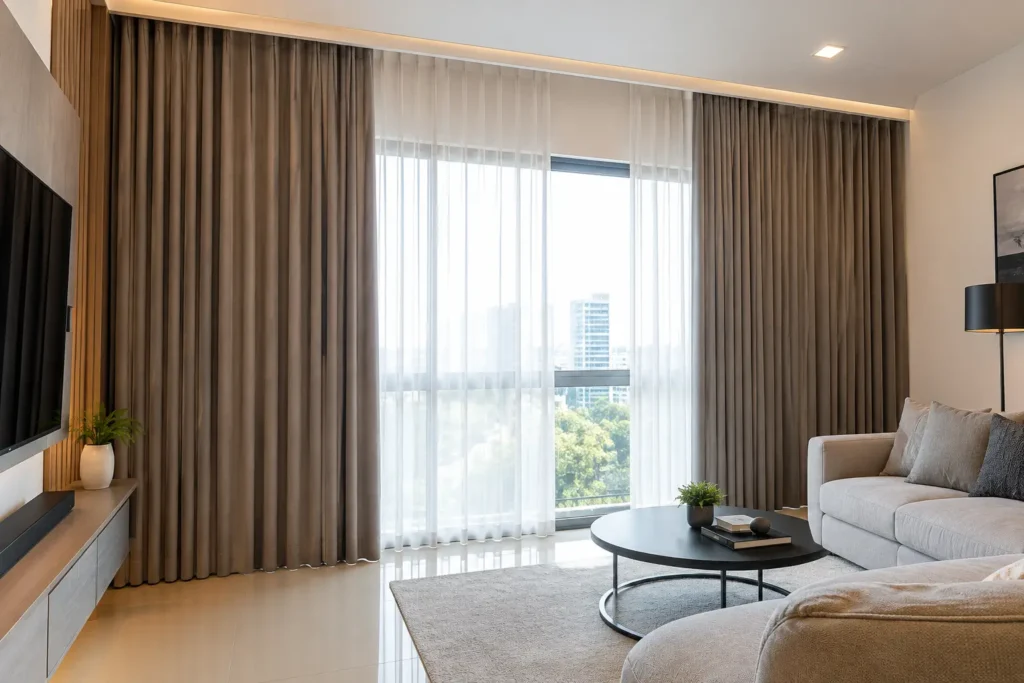
For Singapore homes, motorisation can be especially practical for full-height condominium glazing, wide HDB or BTO living-room windows and day-and-night curtains. This guide explains what to review before choosing a motorised curtain system, from track design and fabric load to controls, installation and long-term maintenance.
A good review should consider the motor, but it should not stop there. The motor is only one part of a working system. The track, brackets, curtain heading, fabric weight, window width and available stack-back space all affect the result.
A well-fitted system should open and close at an even pace without jerking or pulling the curtain fabric out of shape. The curtains should meet correctly at the centre for a centre-opening arrangement, or return fully to one side for a one-way draw. If the curtain does not sit properly when open, it may block part of the glass and reduce the view or daylight entering the room.
Noise also matters more than many homeowners expect. Some operational sound is normal, especially in a quiet bedroom at night. However, the movement should feel controlled rather than strained. A heavy blackout curtain on a long track needs an appropriate motor and properly supported track. Choosing a motor based only on price can lead to slower operation or unnecessary wear over time.
Reviews should also distinguish between convenience and necessity. For a narrow kitchen window or a rarely used study blind, manual operation may be the more sensible option. Motorisation is most useful where curtains are large, high, frequently adjusted, difficult to reach or part of a regular privacy and sunlight-control routine.
The track determines how smoothly a motorised curtain travels. This matters especially for ripple fold and S-fold curtains, which rely on consistent spacing to form even waves. Poor track, carrier or spacing choices can create uneven folds and bulky stack-back.
Motor and track selection should also reflect the curtain’s weight, width, opening style and available power supply. Somfy Singapore highlights these factors in its curtain-system selection checklist.
For a wide living-room frontage, installers should secure the track properly along its full length. This is not simply a matter of putting up more brackets. The installer needs to assess the ceiling or wall condition, the pelmet design, whether there are concealed services, and whether the track must clear window handles, air-conditioning trunking or nearby cabinetry.
A recessed ceiling pocket can give a clean, hotel-style appearance, but it needs early planning during renovation. In an existing flat, surface-mounted tracks are often more practical. Accurate installation can still produce a neat result, especially with a suitable pelmet or concealed ceiling detail.
Centre-opening curtains create a balanced look and are common on symmetrical windows. One-way draw can be more suitable where a balcony door is on one side, where furniture limits stack-back space, or where only one side of the window is regularly accessed.
This decision affects more than appearance. A one-way curtain needs sufficient clear wall space at its stacking side. If there is no room for it, the open curtain will cover part of the window. During a site measurement, it is worth checking where the curtain will sit when fully open, not only how it looks when closed.
Motorised tracks work with sheer, dim-out and blackout curtains, but each fabric behaves differently. A lightweight sheer generally gathers easily and produces a softer stack. A lined blackout curtain is heavier and bulkier, particularly when made with generous fullness for a richer appearance.
Homeowners often choose blackout curtains for bedrooms exposed to early sunlight. Yet homeowners should understand that blackout fabric alone does not remove every trace of light. Light can still enter around the sides, above the track, between two curtain panels, and at the bottom. A ceiling-mounted track with adequate overlap can reduce these gaps. However, assess the actual site before promising complete darkness.
For many bedrooms, a day-and-night curtain arrangement works well: a sheer curtain for daytime privacy and softened daylight, with a separate blackout or dim-out layer for evening use. Homeowners can motorise both layers, although this requires additional track and control planning. It is most suitable when the household will genuinely use both layers regularly.
In rooms facing strong afternoon sun, fabric choice should also consider glare and heat. A sheer can cut glare while keeping the room bright, but it will not provide the same room-darkening effect as a blackout curtain. A dim-out fabric sits between the two, offering more light reduction while retaining a softer feel than a full blackout lining.
Most homeowners find a remote control straightforward, particularly when upgrading an existing home. It avoids additional electrical works and gives simple control over one curtain or a group of curtains.
A wall switch may suit a renovation where the electrician is already planning the wiring. It can be convenient at the bedroom entrance or beside the bed. Plan the switch position carefully. A switch hidden behind a wardrobe, bedside table or door swing becomes less useful than expected.
Smart controls and scheduled operation can be helpful for households that open curtains at the same time each day, or for windows exposed to strong morning sun. They are not essential for everyone. Before choosing a connected system, ask whether it will be used regularly and whether the home’s Wi-Fi coverage reaches the intended motor location. Simple controls are often the most reliable choice for a rental unit or a household that prefers straightforward operation.
Motorised curtain systems need accurate measurement. Small differences in track length, ceiling level and overlap can affect how well the curtains close. This is especially noticeable with full-height windows, corner windows and sliding balcony doors.
Confirm the power-supply position before installation. Depending on the system, the motor may use a nearby power point, concealed wiring or another suitable power arrangement. A professional assessment prevents visible cables, inaccessible sockets or a motor location that clashes with carpentry.
Make the curtains to suit the final track position rather than relying on window dimensions alone. The finished drop must allow the fabric to fall neatly without dragging excessively on the floor. In compact BTO bedrooms, the clearance around beds, study desks and wardrobes should be checked so the curtains can travel freely.
For child safety, motorisation can reduce the need for accessible operating chains or cords. However, the rest of the room still needs sensible planning. Do not place loose curtain fabric where it will constantly catch on a cot, desk chair or frequently used balcony door.
Motorised curtains do not require complicated daily care. Regular vacuuming with a soft brush attachment helps remove dust from the fabric and track area. Follow the fabric care guidance before washing or dry-cleaning curtains, as some linings and heading tapes need more careful handling.
If a curtain begins to move unevenly, do not keep forcing it through repeated commands. Check whether furniture is obstructing the fabric, whether a hook has come loose, or whether the curtain has been pulled manually out of alignment. If the system suddenly sounds strained, stop using it and arrange an inspection.
Manual override can be useful during a power interruption or when controls are unavailable, but the correct method depends on the system. Homeowners should ask for a clear handover after installation: how to operate the curtain, what to avoid, how to change batteries where applicable, and whom to contact if adjustment is needed.
Motorised curtain systems are most worthwhile for large, heavy or hard-to-reach curtains. They also suit rooms where homeowners adjust privacy or daylight several times a day. For a small, easily reached window with lightweight curtains, a well-fitted manual track may remain the more practical choice.
At Sincere Interior Service, motorised curtain planning starts with the complete window arrangement rather than the motor alone. Serving Singapore since 1976, our team considers fabric weight, curtain heading, track route, stack-back, power access and everyday operation before recommending a system. Professional site measurement, custom production and installation help ensure the curtains remain practical long after the novelty of pressing a button has passed.
Not sure which curtain style, fabric or system suits your home? Speak with our team for personalised recommendations for your space.
GET IN TOUCH →