0
0

Motorised Curtain Systems Singapore: What to Look For
Read motorised curtain system reviews with clear advice on tracks, fabrics, smart controls, fitting, light control and long-term use for Singapore homes.
READ MORE →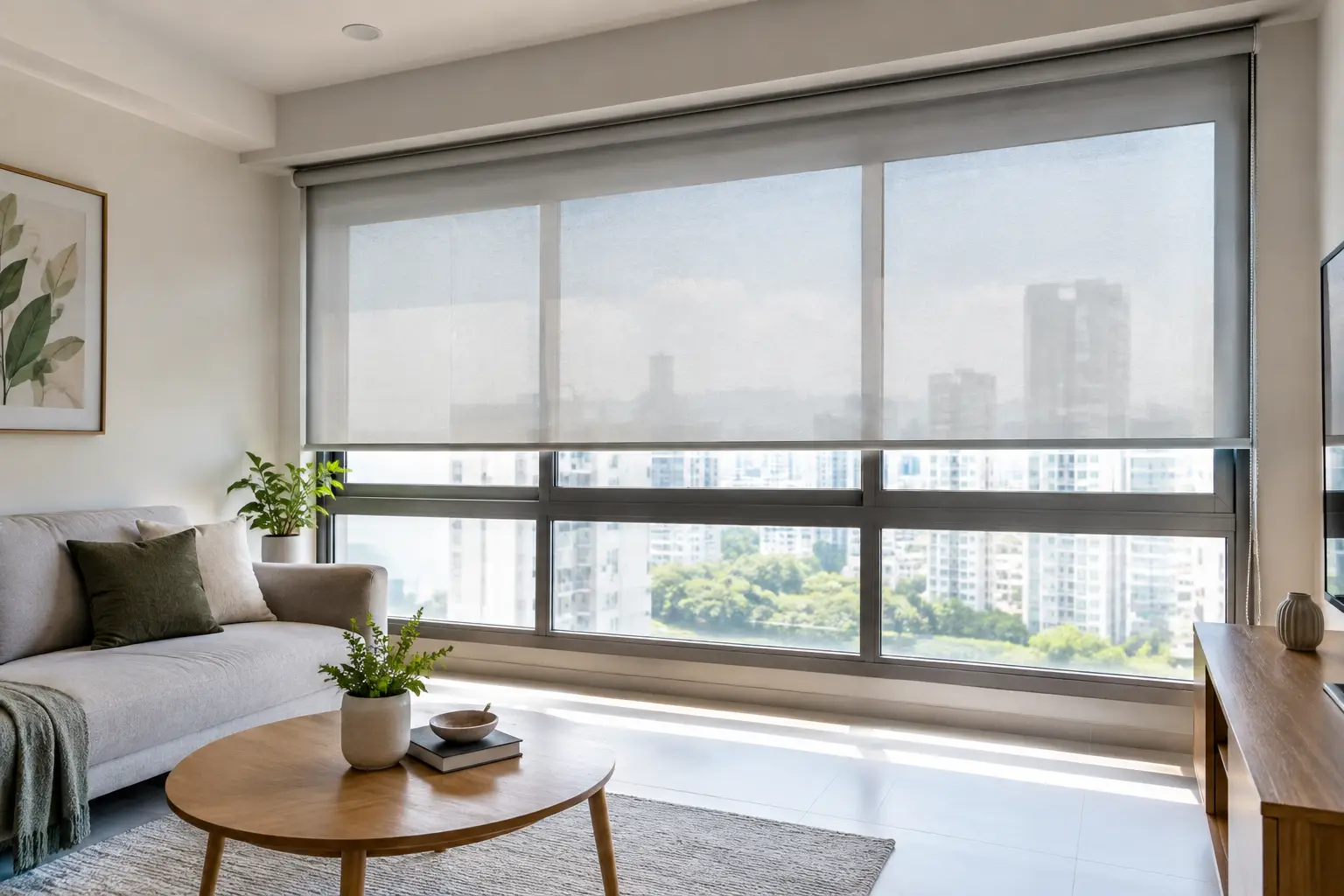

A bright window can make a room feel open. However, harsh reflected light on a television, laptop screen or glossy floor quickly becomes tiring. Knowing how to reduce window glare starts with identifying when and where it occurs. Then decide how much daylight you still want in the room. The right window furnishing should soften direct sun without making the home unnecessarily dark or closed in.
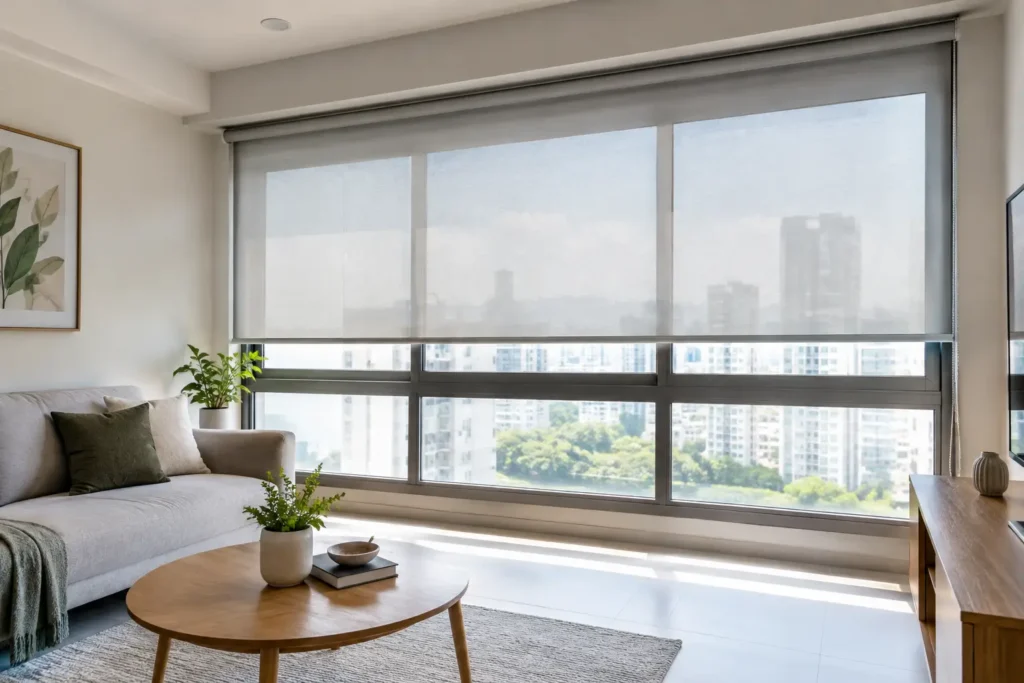
In Singapore, glare is often strongest around large windows or rooms exposed to low-angle sun. Common examples include condominium living rooms, afternoon-facing studies and bedrooms affected by early daylight. A made-to-measure solution matters because the direction of sunlight, window shape, privacy needs and available space around the window all affect what will work well.
To decide how to reduce window glare without losing useful daylight, first identify the glare source. Sheer curtains diffuse harsh light across wide windows. Sunscreen or Venetian blinds offer more adjustable control, while blackout or dim-out layers suit rooms that need stronger darkening.
Glare is not simply a bright room. It is excessive contrast: a patch of direct sunlight or reflection that is much brighter than the surrounding space. This is why a room may still feel uncomfortable even when air-conditioning is on and the temperature is manageable.
Sunlight striking a TV screen, computer monitor, polished table or tiled floor can create reflected glare. Direct low-angle sun can disrupt a home office. Strong daylight can also wash out a television picture in the living room. The aim is usually to diffuse or redirect light, rather than block every bit of it.
Singapore’s Building and Construction Authority treats glare control as part of good daylighting design. Its examples show how glare-control measures can preserve useful natural light.
Blackout curtains can reduce glare very effectively, but they are not automatically the most suitable first choice. In a living area, closing blackout curtains may solve the glare problem. However, it can also remove useful daylight from the room. Layering or adjustable blinds often give better control.
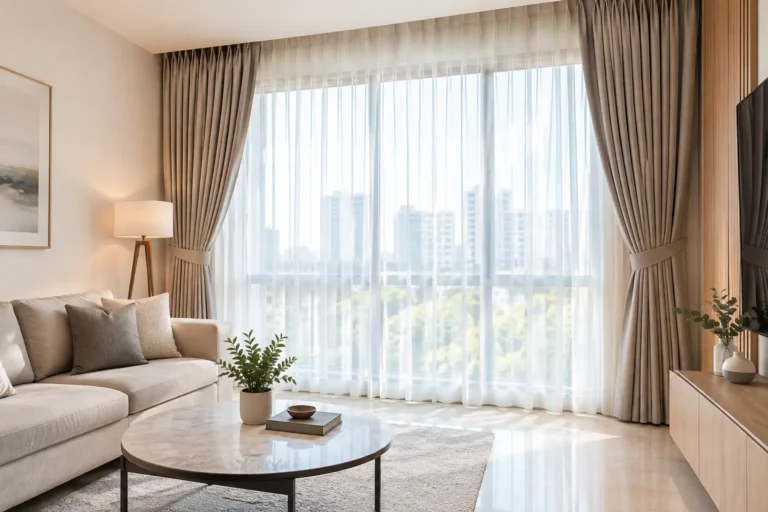
For many homes, sheer curtains are the most practical starting point. A quality sheer fabric diffuses sharp sunlight across the room. It reduces direct glare while maintaining a softer view outside. It also provides daytime privacy. However, people outside may still see silhouettes when indoor lighting is bright at night.
The fabric selection is important. A more open weave preserves a clearer view but offers gentler glare reduction. A denser sheer gives more diffusion and privacy, but may slightly soften the view and reduce daylight. During a site consultation, compare fabric samples against the actual window. Natural daylight can make the same colour and weave look very different from showroom lighting.
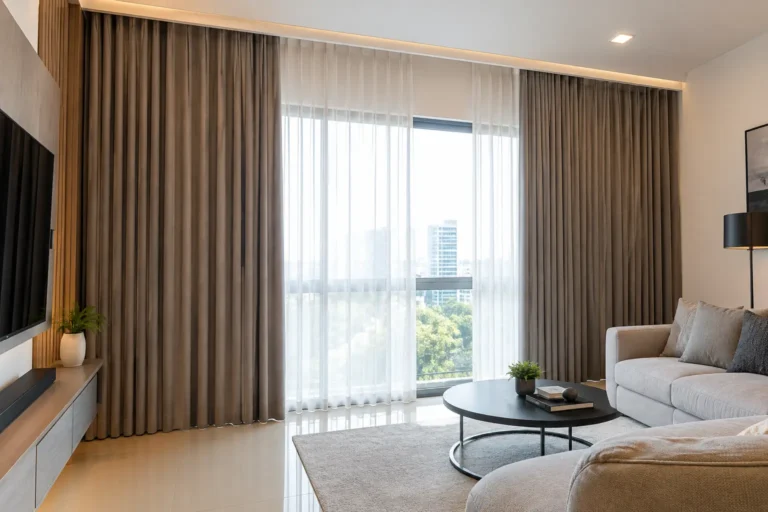
For stronger sun, day and night curtains are often a sensible combination. The sheer layer stays closed during the day to filter glare, while the dim-out or blackout layer can be drawn in the evening for privacy and sleep. This arrangement works particularly well for BTO and HDB living rooms where windows face neighbouring blocks and the room needs both daytime comfort and night-time privacy.
Curtains work particularly well across large windows and sliding doors. They also suit rooms where homeowners prefer a softer appearance. Ripple fold and S-fold curtains create even fabric waves and suit contemporary interiors. Allow enough space at the sides for their stack-back. When the curtains are fully opened, the gathered fabric needs space at the sides of the window. If the wall return is narrow, part of the glass may remain covered.
A ceiling-mounted track can help curtains cover more of the window height and reduce light entering above the fabric. For bedrooms, extending the track beyond both sides of the window also reduces side light gaps. This will not create complete darkness in every situation. Light can still enter around the bottom or through operational gaps, but accurate sizing can reduce these effects.
For daytime glare control, a sheer curtain on a properly selected track is often more useful than a heavy curtain alone. The sheer can remain closed for much of the day without making the space feel shut off. A second blackout or dim-out layer gives flexibility when stronger control is needed.
Blackout fabric blocks substantially more light through the material than dim-out fabric. It is generally more suitable for bedrooms, nurseries, media rooms or shift workers who need a darker environment during the day.
Dim-out curtains reduce brightness and soften glare, but they allow more ambient light through the fabric. They can be a better fit for a living room where screen reflections are troublesome but a completely dark room would feel impractical. The final result also depends on the curtain’s overlap, track position and the light gaps around the window, not just the fabric label.
Blinds are useful where you want to control the angle and amount of daylight with greater precision. They are also practical for compact rooms where full-length curtain fabric may feel bulky, or where furniture sits close to the window.
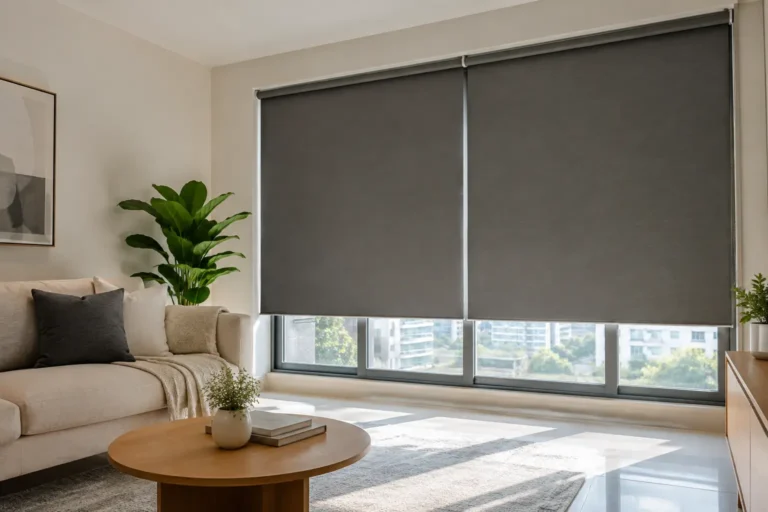
Roller blinds provide a clean, simple surface. Homeowners can choose sunscreen, dim-out or blackout fabrics according to the room’s needs. Sunscreen roller blinds are particularly helpful in studies and living rooms because they cut glare while maintaining some outward visibility during the day. Performance depends on the openness of the weave. A more open fabric gives a clearer view but admits more light. A tighter weave improves glare control but reduces outward visibility.
Korean or combi blinds use alternating sheer and opaque bands. By adjusting the bands, you can let in filtered daylight, increase privacy or block more light without fully raising the blind. They suit many bedrooms and living spaces, although the horizontal bands may not give the same uninterrupted view as a sheer curtain or sunscreen roller blind.
Venetian blinds offer direct control over light direction because you can tilt the slats. This can reduce glare on a screen while allowing daylight to bounce towards the ceiling. However, they have more individual surfaces to clean, and dust is more noticeable in Singapore’s humid environment. They are often chosen where precise adjustment matters more than a soft fabric look.
Honeycomb blinds are another option for rooms needing a neat appearance and a more enclosed feel. Their cellular construction can help soften incoming light. Check the available fabric and installation method before deciding whether honeycomb blinds meet your room-darkening or view-out needs.
The same product can perform very differently from one room to another. A west-facing living room may need a denser sheer, sunscreen blind or layered curtain arrangement because afternoon sun is lower and more intense. A bedroom facing east may benefit from blackout curtains with adequate overlap to manage early morning light.
For a study, begin with the workstation. If a monitor faces the window, even a good blind may not eliminate reflections entirely. Repositioning the desk slightly, then using a sunscreen roller blind or sheer curtain to diffuse the remaining light, usually provides a more comfortable result than relying on window furnishing alone.
In kitchens and service-yard-adjacent areas, select materials that suit moisture, grease and regular cleaning. Fabric curtains may be less practical close to cooking zones, while a wipeable blind may be easier to maintain. For sliding balcony doors, consider how frequently the door is used and whether the window furnishing will obstruct access when opened.
A well-chosen fabric cannot compensate for poor coverage. Window glare often enters through a narrow gap at the side of a blind, above a curtain track or between panels that do not overlap sufficiently.
An outside-mounted blind usually gives better coverage because it extends beyond the glass. This can reduce the light gaps created by an inside-recess installation. The installer should also check the surrounding wall space, window handles and nearby cabinetry. For curtains, the installer needs to assess ceiling height, pelmet details, air-conditioner trunking, curtain track clearance and whether the fabric will brush against furniture.
Professional measurement is especially valuable for bay windows, unusually high windows, curved areas and wide panels. In many condominium and landed homes, large glazed areas may also require consideration of panel weight and track support so that daily operation remains smooth over time.
Consider motorised curtains or blinds when glare changes throughout the day or when windows are difficult to reach. They can also make frequently used wide curtains easier to operate. The main benefit is convenience and consistency: it is easier to lower a blind before the afternoon sun reaches the room when doing so takes one command rather than several manual adjustments.
Plan motorisation early during renovation where possible. This is especially important when the design requires a concealed track or dedicated power point. Battery-operated options may suit some situations. However, allow practical access for future charging or battery replacement. The right choice depends on window access, usage habits and the preferred level of automation.
Before selecting a curtain or blind, observe the room for a few days. Note the time glare appears, which surface reflects it, whether privacy is also a concern and how often the window needs to be opened. Photos taken at the troublesome time can also help during a consultation.
At Sincere Interior Service, we base the recommendation on these practical details rather than fabric appearance alone. Serving Singapore since 1976, our team combines professional site measurement with made-to-measure curtains and blinds. We then match the track, blind position and installation method to the actual window for practical everyday glare control.
Not sure which curtain style, fabric or system suits your home? Speak with our team for personalised recommendations for your space.
GET IN TOUCH →