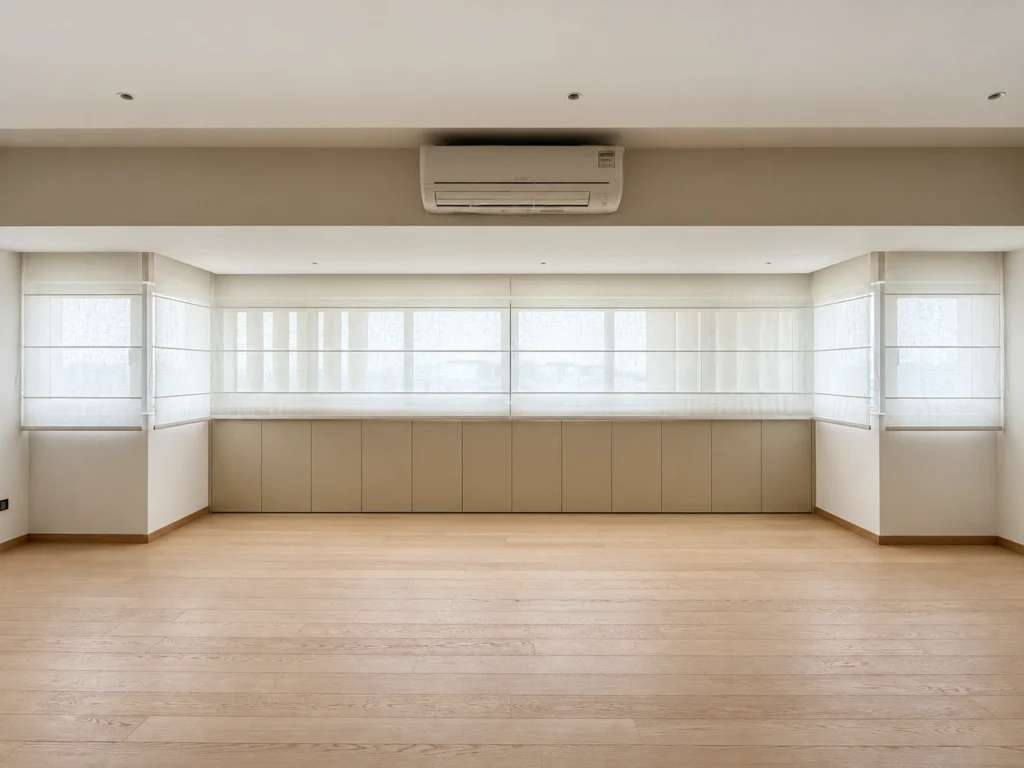
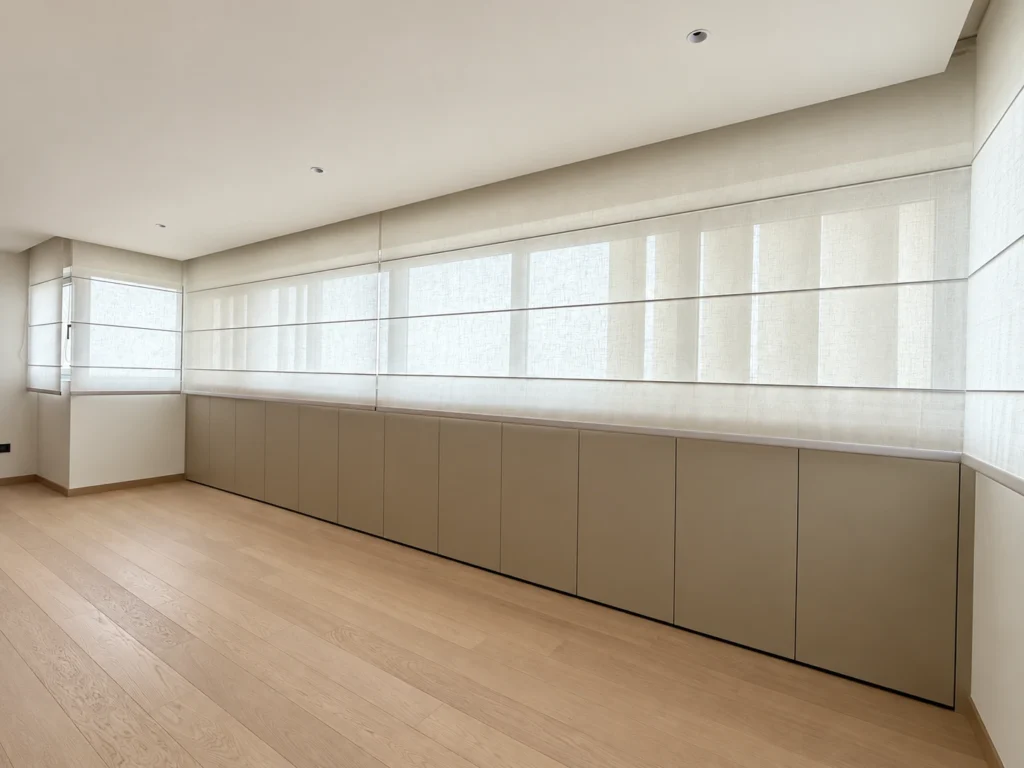
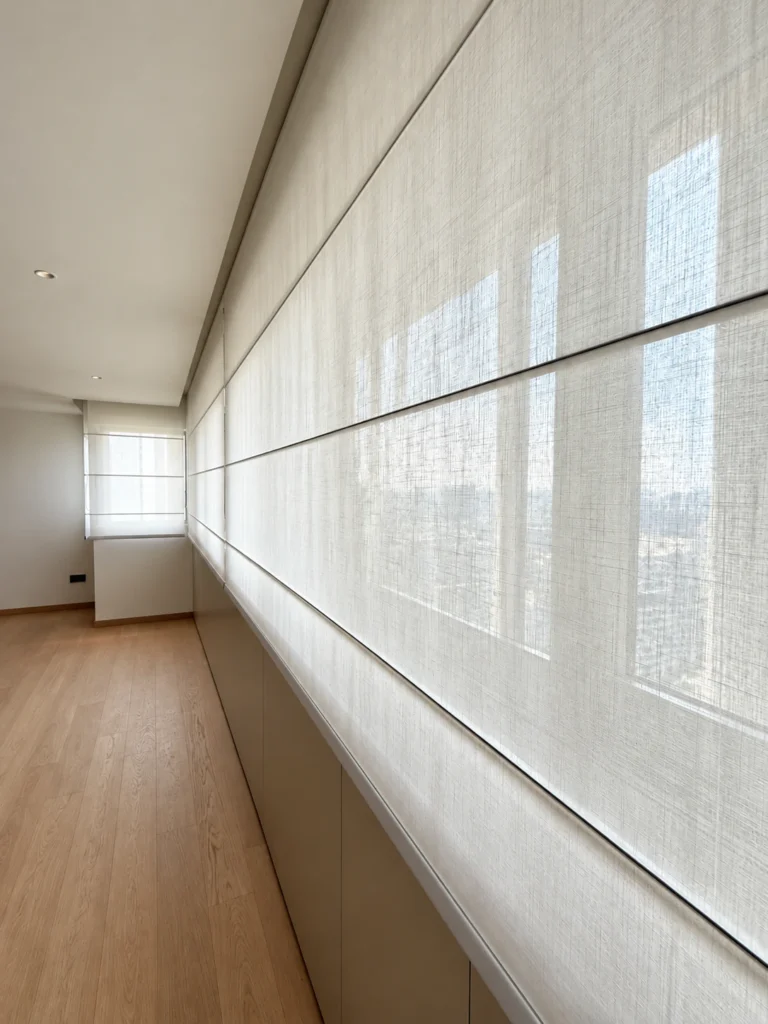
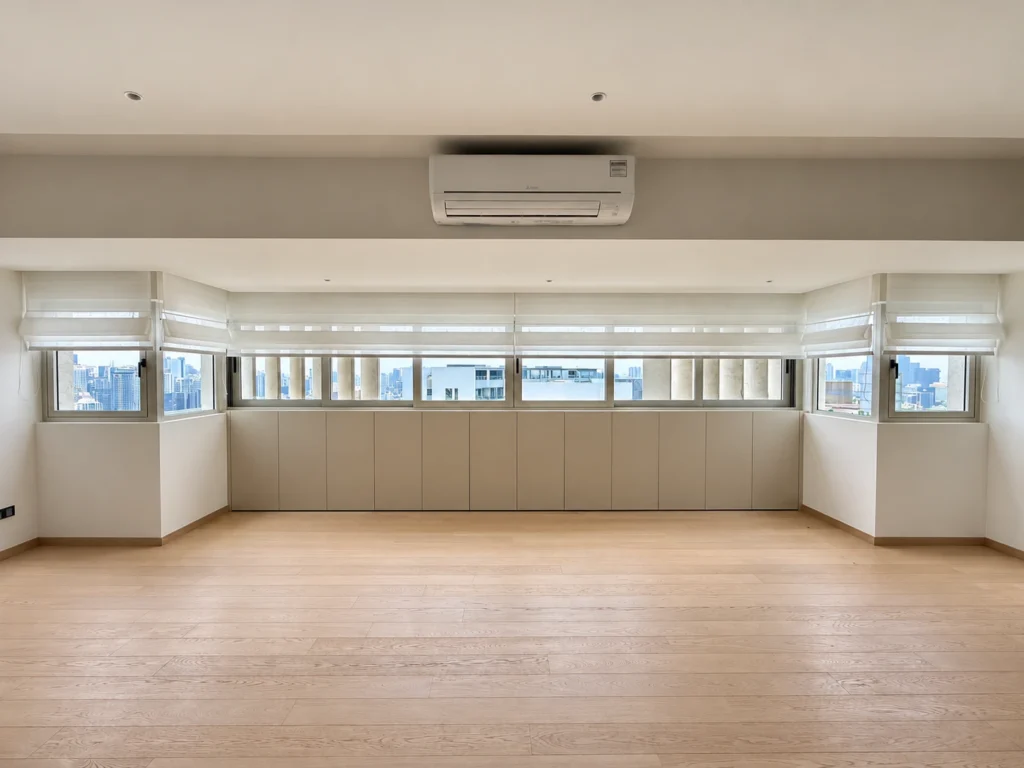
A west-facing BTO living room can feel very different at 4pm from how it looked during the showroom visit. That is why choosing blinds Singapore homeowners will be happy with is not simply about matching colours. The right blind needs to manage glare, maintain privacy, suit the window size and remain practical for everyday use in Singapore’s heat and humidity.
For some homes, a clean roller blind is the sensible answer. For others, the ability to adjust light with Venetian slats, or the softer appearance of a Roman blind, makes more sense. A proper choice starts with how each room is used, not with a catalogue alone.
What to consider before choosing blinds in Singapore
Start with the direction of the window. East- and west-facing windows usually receive stronger direct sun, so homeowners often need better glare control and materials that can reduce the harshness of the light. Window coverings can also help reduce unwanted solar heat entering the home, particularly for windows exposed to stronger daytime sun. In bedrooms, the key question is usually privacy and darkness. In kitchens, service yards and bathrooms, moisture resistance and easy cleaning are often more important than decorative fabric.
Window shape also matters. A wide set of condominium windows may need multiple blind panels for smoother operation, while a narrow HDB bedroom window may suit a single made-to-measure blind. For full-height windows or balcony doors, consider how often the opening is used. A blind that looks good but obstructs access can quickly become inconvenient.
It also helps to decide what you need most: filtered daylight, daytime privacy, a darker room, heat and glare reduction, or a specific interior look. One blind type can rarely perform every role equally well. In many homes, combining blinds with curtains provides a more flexible solution.
Popular blinds Singapore homeowners choose for modern homes
Roller blinds Singapore homeowners choose for practical living
Roller blinds remain a popular choice for HDB flats, BTO homes, offices and commercial spaces because they are neat, compact and straightforward to operate. They sit close to the window when raised and work well where there is limited space around the window.
When comparing blinds Singapore homeowners often choose roller blinds for their clean appearance and practical everyday use. The fabric selection makes a significant difference. Sunscreen roller blinds filter daylight and reduce glare while preserving some outward visibility during the day. They are useful in living rooms, studies and offices, although they do not offer complete privacy at night when indoor lights are on. Dim-out and blackout roller blinds provide stronger privacy and light control, making them more suitable for bedrooms or media rooms.
Blackout does not always mean total darkness. Light can still enter around the sides of the blind, especially if there are no side channels. For customers with a strong blackout requirement, accurate measurement, the right mounting method and expectations about edge gaps should be discussed before installation.
Venetian blinds for adjustable light control
Venetian blinds use horizontal slats that can be tilted to direct or block light. This gives them an advantage where fine control is needed. You can soften the sun without fully closing the window treatment, which is useful in studies, kitchens and rooms facing nearby blocks.
Aluminium Venetian blinds are generally a practical option for areas exposed to moisture, while timber-look or faux-wood finishes can bring a warmer feel to dry spaces. The trade-off is maintenance. Individual slats collect dust more readily than a roller blind, so regular wiping is needed. They may also be less suitable for households that prefer a softer, fabric-led interior style.
Korean blinds for flexible day and night use
Korean blinds, often called combi blinds, use alternating sheer and opaque fabric bands. By adjusting the layers, you can switch between filtered light, partial privacy and a more closed setting without raising the whole blind.
They suit homeowners who like a contemporary, layered appearance and want greater flexibility during the day. They are often selected for living rooms and bedrooms, particularly in newer BTO and condominium homes. However, they are not the same as a fully lined blackout curtain. If you are sensitive to morning light, choose a more opaque fabric and consider pairing the blind with blackout curtains.
Roman blinds for a softer, tailored look
Roman blinds use fabric that folds into horizontal sections when raised. They offer a more furnished appearance than roller blinds and can work beautifully in bedrooms, study rooms and landed homes where fabric texture is part of the design scheme.
Their appeal is also their consideration: fabric Roman blinds require more care than wipe-clean options, and the folded stack occupies more space above the window when open. They are best selected with a suitable fabric, reliable mechanism and careful measurement so the folds sit neatly.
Outdoor blinds for balconies and sheltered spaces
Outdoor blinds can improve comfort at a balcony, patio, terrace or sheltered dining area by reducing sun, wind-blown rain and glare. They need materials and components appropriate for exterior exposure, rather than indoor blinds installed outside as an afterthought.
For Singapore’s changing weather, operation and anchoring are especially important. Outdoor blinds should be raised in severe wind conditions unless the system is specifically designed to withstand them. A site assessment helps determine whether the area is sufficiently sheltered and what installation method is appropriate.
Manual or motorised blinds?
Motorised blinds are particularly useful for high windows, large window banks and homes where convenience is a priority. They can be operated by remote control, wall switch or, depending on the system, integrated with smart-home controls. For elderly family members or anyone who finds repeated reaching and pulling difficult, motorisation can make daily use more comfortable.
Manual blinds remain a sound option for many rooms. They are usually more economical, have fewer electrical considerations and work well on accessible windows. The decision depends on the number of blinds, window height, usage frequency and budget. Motorisation is most valuable where it solves a real practical issue rather than being added to every window automatically.
For motorised systems, plan early during renovation. Power points, wiring routes and access for future servicing should be considered before carpentry and false ceilings are completed. Battery-operated options may suit some situations, but they will still need recharging or battery replacement over time.
Choosing blinds Singapore homeowners can match to each room
When choosing blinds Singapore homeowners should start with how each room is actually used. In bedrooms, privacy and sleep quality tend to lead the decision. Blackout roller blinds, dim-out blinds or Korean blinds combined with curtains are common choices. A child’s room may benefit from cordless or child-safe operating options, with cords and chains kept properly secured.
Living rooms often need a balance between natural light and privacy. Sunscreen roller blinds can reduce glare without making the room feel closed in during the day. Where the room faces another block at close range, Korean blinds or curtains with sheers may provide more adaptable privacy.
For kitchens and service yards, select materials that are easier to wipe and less affected by humidity. Aluminium Venetian blinds or suitable roller blind fabrics are usually more practical than delicate fabric treatments. In a home office, screen fabrics can help reduce monitor glare while allowing daylight into the room.
Commercial projects require a different assessment. Offices may prioritise glare reduction, consistency across many windows and easy maintenance. Retail and hospitality spaces may place greater weight on appearance, branding and operation. In each case, custom sizing and professional installation are important for a tidy, durable result.
Why measurement and installation matter
A blind can only perform as well as its fit allows. Small measurement errors can result in uneven coverage, unnecessary light gaps, a blind that catches on a window handle, or an installation that looks out of proportion. This is especially relevant for irregular windows, bay windows, full-height glass and windows with grilles.
During a professional measurement, the installer should consider the window recess, wall clearance, handles, grilles, curtain tracks and the opening direction of doors. The mounting position – inside the recess, on the wall or above the window – affects both appearance and performance.
With more than 40 years of window furnishing experience, Sincere Interior Service supports customers from consultation and site measurement through custom production and installation. Singapore-based in-house sewing and production, direct factory pricing and professional project management help keep the process clear, while a 12-month warranty and post-installation service provide added reassurance.
Keeping your blinds in good condition
Most blinds benefit from simple, regular care. Dust roller and Korean blinds gently with a soft brush attachment or dry cloth. Wipe Venetian slats individually with a lightly damp cloth, then dry them to avoid water marks. Avoid harsh cleaning chemicals, particularly on coated fabrics and mechanisms.
Operate blinds gently and keep chains, cords and tracks free from obstruction. If a blind begins to pull unevenly or a mechanism feels stiff, avoid forcing it. Early adjustment is usually easier than repairing a damaged component later.
The most satisfying blinds Singapore homeowners choose are the ones that quietly make each room more comfortable every day. Before deciding, view the material in your own home, consider the changing daylight, and choose a blind system that suits the way you actually live.A ripple fold curtain should look calm even when it is closed. Its evenly spaced waves bring order to wide windows, soften hard condominium lines and give a new BTO living room a more finished feel. That is why ripple fold curtains Singapore homeowners choose are often considered for spaces where a neat, contemporary look matters as much as privacy and sunlight control.
Unlike a conventional pleated curtain, ripple fold curtains run on a specially designed track with carriers set at fixed intervals. The fabric forms consistent, rounded waves across the width of the window. The result is clean and tailored, without looking stiff.
Why ripple fold curtains work well in Singapore homes
Singapore homes often have generous window areas but limited floor space. A ripple fold curtain sits close to the track and stacks back neatly, making it a sensible choice for living rooms, bedrooms and full-height balcony doors. It is particularly suited to contemporary HDB, BTO and condominium interiors, where a simple window treatment can make the room feel wider and less cluttered.
The style is also versatile. A sheer ripple fold curtain can diffuse the strong afternoon sun while retaining a bright, open atmosphere. A heavier dim-out or blackout fabric can improve bedroom darkness and privacy. For many homes, a day and night arrangement is the most practical option: sheer curtains for daytime use and a separate blackout layer for evenings, sleeping and glare control. Curtains can also help manage unwanted solar heat entering through windows, particularly in spaces exposed to stronger daytime sun.
There is a trade-off. Ripple fold curtains are designed around their wave pattern, so they need the correct track, carrier spacing and fabric fullness. They are not simply fabric panels hung on any existing rod. Careful measurement and professional installation make a visible difference to how straight the waves fall and how well the curtains draw.
Choosing ripple fold curtains in Singapore
Start with how the room is used
The best fabric is not always the heaviest or darkest one. In a living room, many homeowners prefer a textured sheer that reduces glare and daytime visibility from nearby blocks while allowing natural light in. For a west-facing room, a denser sheer or a second curtain layer may be worth considering, especially where direct sun affects comfort or television viewing.
Bedrooms usually require more privacy. A blackout fabric is useful for shift workers, young children and anyone sensitive to early morning light. However, no curtain can eliminate every trace of light if there are gaps at the sides, above the track or around an uneven window recess. A site measurement helps determine whether wall-to-wall coverage, a ceiling-mounted track or a wider overlap will give better results.
In a study, the decision may depend on screen glare rather than full darkness. A dim-out curtain or roller blind may be sufficient. For commercial spaces such as meeting rooms, blackout capability and easy operation may take priority over the soft drape of a decorative sheer.
Select fabric with the waves in mind
Ripple fold curtains need fabric that drapes well. A fabric that is too stiff may create angular folds, while one that is very light may not hold a defined wave across a tall window. During a consultation, it is helpful to view a sample both flat and gathered so you can understand its texture, thickness and fall.
Sheers are available in plain, linen-look and subtly textured finishes. Linen-look fabrics can give a relaxed, natural appearance, though their weave may offer less privacy at night when interior lights are on. If privacy is a key concern in an overlooked HDB or condominium unit, choose a denser sheer or pair it with a night curtain.
For blackout curtains, consider the feel as well as the light-blocking performance. Coated blackout fabrics can provide strong room darkening, while woven dim-out fabrics may feel softer and are often suitable where complete darkness is not essential. A well-chosen neutral colour usually works for longer, particularly if you expect to change furnishings over time.
Plan the track and stack-back space
The track is central to the appearance and operation of a ripple fold curtain. It can be ceiling mounted for a full-height look, or wall mounted where the ceiling condition, pelmet design or existing features make this more suitable. Ceiling mounting is popular in BTO flats and condominiums because it draws the eye upwards and can make a standard-height room feel more spacious.
Before deciding on the track length, allow for the stack-back. This is the width occupied by the curtain when it is fully open. A ripple fold curtain generally stacks more neatly than some traditional heading styles, but it will still cover part of the glass when open. This matters for narrow windows, sliding balcony doors and windows with a desirable view.
Existing air-conditioning trunking, false ceilings, sprinklers, cove lighting and window grilles can all affect the installation. These details are easy to miss when measuring with a tape at home. An experienced installer will check clearances and advise whether a single or double track is feasible before production begins.
Ripple fold, S-fold and pleated curtains: what is the difference?
The terms ripple fold and S-fold are often used interchangeably because both create a continuous wave across the window. In practice, the final appearance depends on the track system, carrier spacing, fabric and fullness used. The important point is to select a compatible system rather than mixing a fabric heading with an unsuitable track.
Compared with pencil pleat curtains, ripple fold curtains look more uniform and contemporary. Pencil pleats offer flexibility and a fuller traditional appearance, and they can be a good choice for classic interiors or windows where an existing rod will be retained. Eyelet curtains are straightforward and casual, but the curtain rod remains visible and they may not glide as smoothly across wide openings.
For a minimalist home, ripple fold curtains are usually the stronger choice. For a more decorative or heritage-inspired interior, pleated headings may suit the furniture and detailing better. Neither is inherently better – the room, budget and preferred maintenance level should guide the decision.
Should you choose manual or motorised operation?
Manual ripple fold curtains are reliable and suitable for many standard windows. When choosing ripple fold curtains Singapore homeowners should consider how often the curtains will be used and the size of the opening. A wand or hand-drawn system avoids repeated contact with the fabric, which can help keep sheers looking cleaner. For a large living room window, double-height space or frequently used balcony door, motorised curtains offer worthwhile convenience.
Motorisation is especially useful for day and night curtains because both layers can be opened and closed without handling the fabric. It can also be considered where windows are difficult to reach behind furniture. The additional cost should be weighed against the window size, daily use and whether you want remote, wall-switch or smart-home control. It is best to discuss power points and cable routing early in a renovation, although some battery options may be possible depending on the system.
What affects the cost of ripple fold curtains?
A quotation is based on more than the visible window width. Fabric grade, curtain height, fullness, track type, the number of layers, motorisation and installation conditions all affect the final price. Full-height curtains naturally use more fabric, and a double-track day and night set-up costs more than a single sheer or blackout layer.
Unusual layouts can also add complexity. Bay windows, curved walls, very wide spans and access restrictions may require more detailed planning. For this reason, comparing quotations only by price can be misleading. Check whether the quotation includes measurement, suitable tracks, fabrication, installation and after-installation support.
With Singapore-based in-house sewing and production, Sincere Interior Service can match the fabric, heading and track to the actual site conditions rather than relying on standard ready-made sizes. Direct factory pricing, professional installation, a 12-month warranty and post-installation service provide reassurance when investing in a made-to-measure system.
Care and maintenance for lasting waves
Regularly vacuum the curtains on a low setting with a soft brush attachment, working gently from top to bottom. This removes dust before it settles into the weave. Avoid pulling the fabric sideways or forcing a curtain that is catching on the track. If the curtain does not glide smoothly, have the track and carriers checked rather than applying household lubricant.
For deeper cleaning, follow the fabric care instructions. Some fabrics can be carefully washed, while others need professional dry cleaning to avoid shrinkage, coating damage or changes to the drape. After cleaning, proper rehanging is important because the snap positions create the curtain’s regular wave.
A well-planned ripple fold curtain is not just a styling choice. It can shape daylight, improve privacy and make an everyday room feel considered. Bring your floor plan, window photographs and priorities to a consultation, and the right fabric, track and installation method can be chosen with confidence.
MADE-TO-MEASURE ROLLER BLINDS
Roller Blinds Singapore by Sincere Interior are made to measure for homes and commercial spaces, combining clean design, practical light control and an operating system suited to the window. Different fabric types and operating systems are available to suit the window size, preferred level of light control and everyday use.
Although the design is simple, a well-made roller blind depends on the right combination of fabric, roller tube, mechanism, blind size and installation position. These details become more important when the blind is larger, heavier or used frequently.
Choose from sunscreen, light-filtering, privacy and blackout fabrics depending on the level of daylight, glare control and privacy required.
02
System Options
Choose from standard chain, spring chain, spring type, cordless, heavy-duty and motorised systems according to the window and how the blind will be used.
03
Made to Measure
Each roller blind is custom-made to size, allowing the blind proportions, mounting position and operating system to be considered together.
04
Manual or Motorised
Choose the operating method based on blind size, accessibility, frequency of use and the level of convenience preferred.
PRODUCT GUIDE
What Are Roller Blinds?
A roller blind uses a single fabric panel secured to an aluminium roller tube through a tape-and-slot fixing. When raised, the fabric rolls neatly around the tube. When lowered, it unrolls across the window, while a flat or rounded aluminium bottom bar helps the fabric hang neatly.
A conventional pulley chain or spring-assisted chain system can operate the blind. Other options include spring type, cordless, heavy-duty and motorised mechanisms.
While the construction is relatively straightforward, overall performance still depends on how the components work together. Tube size, fabric weight, blind dimensions and operating mechanism all affect how smoothly and consistently the blind operates.
FABRIC SELECTION
Choosing Fabrics for Roller Blinds Singapore Homes
Sunscreen / Solar Fabrics
Sunscreen fabrics help filter strong daylight and reduce glare while still allowing some outward visibility during the day. Different openness levels affect the balance between view, light and privacy. However, privacy is reduced at night when the interior lights are switched on.
Light-Filtering Fabrics
Light-filtering fabrics soften incoming daylight and create a brighter, more diffused effect at the window. They suit spaces where natural light is preferred without the more open appearance of sunscreen fabric.
Privacy Fabrics
Privacy fabrics have a more opaque construction for stronger visual screening while still allowing some daylight into the room. The actual level of privacy and light transmission depends on the fabric selected.
Blackout Fabrics
Blackout fabrics block light through the fabric itself and provide stronger privacy and room darkening. However, some light can still enter around the edges of a conventional roller blind, so blackout fabric does not always mean complete room blackout.
SYSTEM BASICS
How a Roller Blind Works
Mounting brackets support the roller assembly above or within the window opening. The fabric connects to an aluminium roller tube, while the selected mechanism rotates the tube as the blind is raised or lowered. A flat or rounded aluminium bottom bar helps keep the fabric neat and properly weighted.
With a conventional chain system, the beaded chain operates a side-mounted clutch connected to the roller tube. Other systems may use an additional spring inside the tube, a spring-type mechanism, cordless operation or an electric motor.
As a blind becomes wider or heavier, the correct tube size and mechanism become more important. An appropriately sized system provides better support and helps the blind roll more consistently across the window.
OPERATING OPTIONS
Roller Blind Operating Systems
1. Standard Manual Chain
A beaded side chain controls the pulley mechanism to raise or lower the blind. It is a simple and practical option for many standard residential and commercial windows, with the chain position and length considered during installation for comfortable everyday use.
2. Spring Chain System
The spring chain system operates like a standard chain roller blind but includes an additional spring inside the roller tube. The spring helps support part of the blind’s weight, making wider or heavier blinds easier to raise manually.
3. Spring Type Roller Blind
This system operates without a side pulley chain. The blind is controlled from a pull point around the centre of the bottom bar. Pull it down to the required height, then use a light pulling action to release the spring mechanism and allow the blind to roll back up.
4. Cordless Roller Blind
A cordless roller blind is operated directly by hand using the bottom bar. The internal tension mechanism assists the movement and holds the blind at the selected height. It provides a clean, chain-free appearance where the bottom bar remains easy to reach.
5. K55 Heavy-Duty System
The K55 system uses a larger and more robust roller tube for wider or heavier blinds. The larger tube provides better support across wider spans and helps reduce excessive tube bending. Final suitability depends on the window size and fabric weight.
6. Motorised / Automated
Motorised roller blinds use an electric motor to raise and lower the blind. They are useful for large blinds, high windows or rooms with multiple blinds. Depending on the selected system, controls may include a remote, wall controller, smartphone, tablet or compatible smart-home integration.
PROPER SYSTEM SELECTION
The Right Mechanism Depends on the Window
Selecting a roller blind involves more than choosing a fabric. Blind width and height, fabric weight, roller tube size, mounting position, operating method and frequency of use all affect how the finished system performs.
For a standard window, a conventional chain-operated system may be entirely suitable. By comparison, a wider or heavier blind may benefit from spring assistance, a larger roller tube or motorised operation. Professional measurement and advice help ensure these factors are considered together before the blind is made.
Motorisation makes roller blinds more convenient to operate, especially when the blinds are large, positioned out of comfortable reach or installed in groups.
Depending on the motor and control system, operation may include a handheld remote, wall-mounted controller, smartphone, tablet or compatible smart-home platform. In addition, certain systems may allow several blinds to operate together, move to preset positions or follow scheduled routines.
Control options vary between different motors and automation systems. For this reason, the required functions should be discussed before the system is selected so that the motor, controller and intended integration are properly matched.
Large Blinds
Motorisation provides convenient everyday operation for larger blinds that may otherwise require more effort to operate manually.
High Windows
For windows that are difficult to reach comfortably, motorised control provides a more practical solution.
Multiple Blinds
Compatible systems can allow several blinds to operate together, making it easier to manage rooms with multiple windows.
Smart-Home Integration
Where supported, roller blinds can connect to compatible smart-home systems for more integrated control.
Sunscreen or light-filtering fabrics provide a clean way to manage strong daylight and glare while maintaining the simple, minimalist appearance of roller blinds.
Bedrooms
Privacy and blackout fabrics provide stronger visual privacy and room darkening. The operating system can then be selected according to the size and accessibility of the window.
Home Offices & Studies
Sunscreen fabrics can help reduce harsh daylight and screen glare while still allowing useful natural light into the room.
Commercial & Office Spaces
The compact design of roller blinds provides a neat and consistent appearance across multiple windows, with manual or motorised options available according to the project requirements.
Large Windows
Wider windows require careful consideration of fabric weight, roller tube size, blind division and operating mechanism rather than simply using a larger standard blind.
Full-Height Glazing
Full-height windows can use custom-made roller blinds with a suitable tube and operating system to maintain practical and consistent operation.
REAL INSTALLATIONS
Roller Blinds Projects in Singapore
Explore real roller blind installations completed by
Sincere Interior across residential and commercial spaces
in Singapore, including light-filtering, sunscreen,
blackout and day-and-night applications.
SELECTED INSTALLATIONS
PROJECT 01 · LIGHT-FILTERING
Wabi Sabi Living & Dining Room
Light-Filtering Roller Blinds
Living & Dining Room
Light-Filtering Roller Blinds
Half-Height Position
PROJECT 05 · SAME LIVING ROOM
Living Room — Light Filtering Roller Blinds
Closed
Privacy & Filtered Daylight
Partially Open
Increased Daylight & Outward View
PROJECT 06 · SUNSCREEN
High-Ceiling Living Room
Sunscreen Roller Blinds
High-Ceiling Living Room
PROJECT 07 · SUNSCREEN
Living Room
Sunscreen Roller Blinds
Daylight & Glare Control
PROJECT 08 · BEDROOM
Common Bedroom
Light-Filtering Roller Blinds
Common Bedroom
PROJECT 09 · BLACKOUT
Bedroom
Blackout Roller Blinds
Privacy & Room Darkening
PROJECT 10 · BLACKOUT
Bedroom Bay Window
Blackout Roller Blinds
Bedroom Bay Window
PROJECT 11 · BLACKOUT
Bedroom Bay Window
Blackout Roller Blinds
Bedroom Bay Window
PROJECT 12 · DAY & NIGHT
Bedroom Bay Window
Day & Night Roller Blinds
Bedroom Bay Window
PROJECT 13 · SAME BEDROOM
Day & Blackout Roller Blinds
Day Layer
Filtered Daylight
Day & Blackout Layers
Flexible Privacy & Light Control
PROJECT 14 · BUILT-IN DETAIL
Roller Blind with Built-In Carpentry
Light-Filtering Roller Blind
Installed Flush with Built-In Carpentry
FEATURED PROJECT VIDEO
Motorised Roller Blinds in Action
Watch six completed installations across residential, office and Luxury Retail @ MBS projects, showing how motorised roller blinds operate in real spaces.
6 REAL INSTALLATIONS · 51 SECONDS
OUR SERVICE
Professional Specification, Measurement & Installation
Serving Singapore Since 1976
Sincere Interior has been serving residential and commercial window-furnishing projects in Singapore since 1976, with professional measurement, system selection and installation for made-to-measure roller blinds.
Window Assessment
We look beyond just the width and height of the window. Mounting position, recess depth, window handles, grilles and surrounding finishes can all affect how the roller blind should be installed.
System Specification
We consider blind size, fabric weight, roller tube size, accessibility and operating method together so that the system suits its intended use.
Professional Installation
Careful mounting, alignment and adjustment help the blind sit neatly at the window and operate smoothly in everyday use.
What are roller blinds?
Roller blinds use a single fabric panel that rolls around an aluminium tube above the window. Depending on the system selected, a chain, spring mechanism, cordless control or motor can operate the blind.
What is the difference between sunscreen and blackout roller blinds?
Sunscreen fabrics help filter daylight and reduce glare while retaining some outward visibility during the day. Blackout fabrics prevent light from passing through the fabric itself and provide stronger privacy and room darkening.
Do blackout roller blinds make a room completely dark?
Not always. Blackout fabric stops light from passing through the material, but some light can still enter around the edges of a conventional roller blind depending on the window and installation.
Do sunscreen roller blinds provide privacy at night?
Sunscreen fabrics should not normally be relied on for complete night privacy. When the lights are switched on inside, visibility through the fabric from outside can increase.
What is a spring chain roller blind?
A spring chain system uses a conventional side chain together with an additional spring inside the roller tube. The spring supports part of the blind’s weight and can make larger or heavier blinds easier to raise manually.
What is the difference between a chain and cordless roller blind?
A chain roller blind uses a side pulley chain to raise and lower the blind. A cordless roller blind moves directly by hand using the bottom bar. Cordless operation is most suitable where the bottom bar remains easy to reach.
When is a heavy-duty roller blind system required?
A heavy-duty system may be suitable for wider, taller or heavier blinds where a standard roller tube may not provide enough support. The final system should be selected according to the actual blind dimensions and fabric weight.
Can roller blinds be motorised?
Yes. Motorised roller blinds can be useful for large blinds, high windows, multiple blinds or spaces where convenient electronic operation is preferred.
Can motorised roller blinds connect to a smart-home system?
Some motor systems can connect to compatible smart-home platforms. Available functions depend on the motor, controller and automation system selected, so compatibility should be checked when the system is specified.
Are roller blinds suitable for large windows?
Yes, provided the correct system is used. Wider or heavier blinds may require a larger roller tube, spring assistance, a heavy-duty system, motorisation or division into more than one blind.
Can one large roller blind cover an entire wide window?
Sometimes, but one very wide blind is not always the best solution. Fabric weight, roller tube size, operating load and the window layout should be considered before deciding whether to use one large blind or divide the opening.
Does Sincere Interior provide roller blind measurement and installation in Singapore?
Yes. Sincere Interior provides professional on-site measurement, product guidance and installation for custom roller blinds in Singapore, including manual and motorised options.
REAL PROJECTS
Motorised Roller Blinds in Real Spaces
See how our motorised roller blinds look and operate across real residential, office and Luxury Retail @ MBS installations.
A closer look at six completed roller blind projects · 51 seconds
Made-to-measure Combi Blinds Singapore for flexible light, privacy and everyday control.
Combi Blinds Singapore: Korean / Zebra Blinds for Flexible Light & Privacy
At Sincere Interior, Combi Blinds Singapore are made to measure for homes and commercial interiors. Their dual-layer fabric uses alternating sheer and opaque horizontal bands, allowing you to adjust daylight, outward visibility and privacy without fully raising the blind.
Also known as Korean blinds or zebra blinds, Combi blinds provide a clean, contemporary window treatment with more intermediate light-control positions than a conventional single-fabric roller blind.
Shift the fabric layers to move between filtered daylight and stronger screening.
02
Adjustable Privacy
Change the overlap according to the room, time of day and level of privacy required.
03
Dual-Layer Design
Alternating sheer and opaque bands create multiple light-control positions within one blind.
04
Made to Measure
Window size, mounting position, fabric and operating system are considered before fabrication.
PRODUCT GUIDE
What Are Combi Blinds?
Combi blinds are dual-layer window blinds made from a continuous fabric with alternating horizontal bands of sheer and opaque material. The fabric loops through the blind so two layers sit in front of the window.
As the blind moves, the bands on the front and rear layers shift relative to one another. When the sheer sections align, more daylight and outward visibility pass through. When the opaque sections overlap the sheer openings, the blind provides stronger privacy and shade.
The complete blind can also be raised when a clearer, unobstructed window is preferred. Therefore, Combi blinds combine band alignment with normal raising and lowering in one compact system.
HOW THE SYSTEM WORKS
Combi Blinds Singapore: How the Dual-Layer System Works
01
Sheer Alignment
When the sheer bands on the two fabric layers line up, more natural light enters the room and the view through the window becomes clearer. For example, this setting works well when you want daylight without fully exposing the window.
BEST FORFiltered daylight · Softer glare · Greater outward visibility
02
Opaque Overlap
Shift the layers so the opaque bands cover the sheer openings. As a result, the blind provides stronger screening, shade and privacy.
BEST FORPrivacy · Stronger shade · Reduced outward visibility
03
Blind Fully Raised
Raise the complete blind when you want the glass largely clear. This is useful when maximum daylight, ventilation or window access is preferred.
BEST FOROpen window · Maximum daylight · Window access
THE DEFINING ADVANTAGE
Light Control Without Fully Raising the Blind
Unlike a conventional single-fabric roller blind, Combi blinds can change the relationship between daylight and privacy while the blind remains lowered. Small adjustments to the band alignment create several usable positions between a brighter sheer setting and a more private opaque setting.
Light-filtering fabrics soften incoming daylight while retaining the alternating sheer-and-opaque appearance that defines a Combi blind. In addition, they make it easier to balance daytime brightness with privacy.
When the sheer bands align, the room receives brighter filtered daylight. Meanwhile, shifting the opaque bands across the sheer openings increases privacy and reduces glare.
These fabrics work particularly well in living rooms, dining areas, studies and spaces where flexible daylight control matters more than strong room darkening.
02
Blackout Combi Fabrics
Blackout Combi fabrics use more light-blocking opaque bands to provide stronger room darkening when the bands overlap.
In rooms without intense direct sunlight, or where the sun does not strike the blind at a strong high angle, the effect can be very dark. However, the complete blind system should not be described as 100% blackout. Therefore, the expected room-darkening result should be assessed together with the actual window conditions.
Light may still enter through the layered construction and around the installation edges, especially at the top, sides, bottom or between two adjacent blind panels.
IMPORTANT TO KNOW
Blackout Fabric Does Not Mean a Completely Blackout Combi Blind
The opaque bands can use blackout-type fabric, but the final room-darkening result also depends on window size, mounting position, panel gaps, full-height glazing, sunlight intensity and the angle of direct sun. If near-total darkness is the priority, a dedicated blackout roller blind or properly planned blackout curtain may provide better overall light coverage.
PRODUCT COMPARISON
Combi Blinds vs Roller Blinds: What Is the Difference?
Feature
Combi Blinds
Roller Blinds
Fabric design
Alternating sheer and opaque bands in a dual-layer system
Single continuous fabric panel
Light adjustment
Band alignment plus blind height
Mainly blind height and selected fabric type
Daytime view
Adjustable through aligned sheer bands
Depends on whether sunscreen, light-filtering or other fabric is selected
Privacy
Adjustable through band overlap
Depends mainly on the selected fabric and blind position
Strong room darkening
Possible with blackout-type opaque bands, but some light leakage remains
Blackout roller fabric generally provides stronger uninterrupted coverage
Visual character
Layered horizontal bands
Clean, uninterrupted fabric panel
Neither option is automatically better. Choose Combi blinds when adjustable band alignment and a layered contemporary look are priorities. A roller blind may suit you better when a simpler uninterrupted panel, sunscreen performance or stronger blackout coverage is more important. Explore our roller blinds in Singapore for a detailed comparison.
OPERATING OPTIONS
Manual & Motorised Combi Blinds Singapore Options
01
Manual Chain Operation
A side chain raises, lowers and fine-tunes the blind. Small chain movements shift the front and rear fabric layers, allowing you to change the relationship between the sheer and opaque bands.
Manual operation is practical for many accessible residential windows and allows precise everyday adjustment without electrical components. By contrast, motorised operation is useful when convenience, reach or repeated adjustment becomes more important.
02
Motorised Combi Blinds
Selected Combi blind systems can be motorised for more convenient operation, particularly on larger, taller or frequently adjusted windows.
Depending on the compatible motor and controller selected, operation may include remote control, wall control or compatible smart-home integration. Available functions depend on the chosen motorised system.
PROPER SYSTEM SELECTION
The Window Still Determines the Right Blind
Fabric is only one part of a well-specified Combi blind. Width, height, recess depth, window handles, grilles, mounting position, overall blind weight, panel division and frequency of use should also be considered before selecting the operating system.
On larger openings, dividing one wide window into more than one blind may provide smoother operation and more flexible control. Professional measurement helps determine the most practical configuration before production.
Adjust filtered daylight and privacy throughout the day while keeping a clean, contemporary horizontal finish.
Bedrooms
Use the opaque overlap for stronger screening and room darkening, while keeping expectations realistic about edge and panel light gaps.
HDB & BTO Homes
A compact option for windows where close-facing blocks make adjustable daytime privacy especially useful.
Condominiums
Suitable for contemporary interiors and many larger glazed openings when blind width, weight and panel division are properly specified.
Home Offices & Studies
Fine-tune the band alignment to soften daylight and reduce screen glare without necessarily making the room fully dark.
Dining Areas
Keep brighter filtered daylight during the day, then shift the opaque bands for stronger evening privacy.
REAL INSTALLATIONS
Combi Blinds Projects in Singapore
Explore real Combi blind installations completed by Sincere Interior across Singapore.
The paired projects show how the same blind changes between opaque overlap for stronger privacy
and sheer alignment for brighter filtered daylight.
FEATURED PRODUCT DEMONSTRATION
See Combi Blinds in Action
See how Combi blinds operate manually and with motorisation,
including how the dual-layer sheer and opaque fabric system
adjusts daylight and privacy.
REAL INSTALLATIONS · 36 SECONDS
SELECTED INSTALLATIONS
PROJECT 01 · MASTER BEDROOM
Master Bedroom with Built-in Carpentry
Closed for PrivacyOpaque bands overlapped
Open for Filtered DaylightSheer bands aligned
PROJECT 02 · BEDROOM
Grey Combi Blinds
Closed for PrivacyOpaque bands overlapped
Open for Filtered DaylightSheer bands aligned
PROJECT 03 · BEDROOM
Dark Combi Blinds
Closed for PrivacyOpaque bands overlapped
Open for Filtered DaylightSheer bands aligned
PROJECT 04 · HIGH-CEILING BEDROOM
Platform Bedroom
Closed for PrivacyOpaque bands overlapped
Open for Filtered DaylightSheer bands aligned
PROJECT 05 · STUDY ROOM
Independent Blind Operation
One panel is raised halfway while the neighbouring panel remains fully lowered.
Independent ControlRaised and lowered panels
PROJECT 06 · BUILT-IN STUDY AREA
Combi Blinds Above Study Carpentry
ClosedBuilt-in study area
PROJECT 07 · MASTER BEDROOM
Black Combi Blinds
ClosedBlack Combi blinds across multiple windows
PROJECT 08 · MASTER BEDROOM
Two-Panel Combi Blind Installation
ClosedTwo-panel bedroom installation
OUR SERVICE
Professional Specification, Measurement & Installation
Serving Singapore Since 1976
Sincere Interior has been serving residential and commercial window-furnishing projects in Singapore since 1976, with professional measurement, product guidance and installation for made-to-measure blinds.
Window Assessment
We look beyond the width and height of the window. Mounting position, recess depth, handles, grilles, surrounding carpentry and access can all affect how the Combi blind should be installed.
System Specification
We consider blind size, fabric type, panel division, operating method and accessibility together so the selected Combi blind system suits its intended use.
Professional Installation
Careful mounting, alignment and adjustment help the two fabric layers track neatly and allow the sheer and opaque bands to line up consistently during everyday use.
What are Combi blinds?
Combi blinds use a continuous dual-layer fabric with alternating sheer and opaque horizontal bands. Adjusting the fabric changes how the front and rear bands overlap, allowing different levels of daylight, outward visibility and privacy.
Are Combi blinds the same as Korean blinds or zebra blinds?
Yes. In Singapore, the terms Combi blinds and Korean blinds are commonly used for this alternating sheer-and-opaque dual-layer blind style. Zebra blinds is another widely used name for the same general type of system.
How do Combi blinds control light and privacy?
Align the sheer bands for brighter filtered daylight and greater outward visibility. Shift the layers so the opaque bands cover the sheer openings for stronger screening and privacy. The whole blind can also be raised when you want the window more open.
Combi Blind Fabrics: Light-Filtering or Blackout
What is the difference between light-filtering and blackout Combi fabrics?
Sincere Interior offers light-filtering and blackout-type Combi fabrics in different colours, textures and band designs. Both options use the same dual-layer Combi blind system and can provide privacy when the opaque bands overlap. The main difference is room darkening: blackout-type fabrics block more light through the opaque bands, while light-filtering fabrics allow a brighter overall effect. The appropriate choice depends on the room, desired brightness and window orientation.
Do blackout Combi blinds provide complete blackout?
No. The opaque bands can use blackout-type fabric and may create a very dark room under favourable conditions, but the complete blind system is not fully blackout. Light can still enter between fabric overlaps, around the top, sides and bottom, and between adjacent blind panels.
Why does the blackout effect vary between rooms?
Window size, mounting position, full-height glazing, direct sunlight intensity and sun angle all affect the visible light gaps. A room with weaker or less direct sunlight may appear much darker than a room receiving strong direct sun from a high angle.
What is the difference between Combi blinds and roller blinds?
Combi blinds use two overlapping fabric layers with alternating sheer and opaque bands, so you can adjust light through band alignment. Roller blinds use one continuous fabric panel and control the window mainly by raising or lowering that panel.
Are Combi blinds suitable for bedrooms?
Yes, especially when adjustable privacy and flexible daylight control are priorities. If near-total darkness is essential, discuss whether a dedicated blackout roller blind, blackout curtain or layered treatment would provide better overall coverage.
Are Combi blinds suitable for HDB, BTO and condominium windows?
They can be. The final specification should consider recess depth, window handles, grilles, opening direction, blind width and mounting position. Professional measurement helps determine whether one blind or multiple panels will operate more comfortably.
Are Combi blinds suitable for large windows?
Yes, but blind width, fabric weight and operating system become more important as the opening gets larger. In some cases, dividing a wide opening into multiple blinds provides smoother operation and more flexible control.
Motorised Combi Blinds & Professional Installation
Can Combi blinds be motorised?
Yes. Selected compatible Combi blind systems can be motorised. Depending on the chosen motor and controller, operation may include remote control, wall control or compatible smart-home integration.
Does Sincere Interior provide measurement and installation?
Yes. Sincere Interior provides professional on-site measurement, product and fabric guidance, and installation for made-to-measure Combi blinds in Singapore.
MADE-TO-MEASURE VENETIAN BLINDS
Venetian Blinds Singapore: Precise Light & Privacy Control
Venetian Blinds Singapore from Sincere Interior are made to measure for homes and commercial spaces. In practice, adjustable horizontal slats let you fine-tune daylight, reduce glare and increase privacy without raising the entire blind. When you want a clearer view, you can also lift the blind fully.
Choose from aluminium, polystyrene and natural wood, with 25mm, 35mm and 50mm slat options depending on the material. In addition, we offer manual operating systems and selected motorised configurations according to the blind size, window conditions and preferred method of control.
Tilt the horizontal slats to redirect daylight and reduce glare without completely covering the window.
02
Adjustable Privacy
Change the slat angle throughout the day to balance privacy, natural light and outward visibility.
03
Material Choices
Choose from aluminium, polystyrene or natural wood according to the appearance and practical requirements of the space.
04
Made to Measure
We measure and specify each Venetian blind according to the window dimensions, material, slat width and operating system.
PRODUCT GUIDE
What Are Venetian Blinds?
Venetian blinds use adjustable horizontal slats that tilt to control the direction and amount of daylight entering a room. As a result, you can manage glare, privacy and outward visibility without raising the whole blind.
You can also lift the complete blind when you want a clearer view through the window. Therefore, the combination of slat tilting and blind lifting gives Venetian blinds more precise light and privacy control than window coverings that only move up and down.
Material and slat width also change the finished appearance. For example, aluminium creates a lighter, slimmer profile, while natural wood and polystyrene give the window a broader and more substantial slatted look.
Natural wood Venetian blinds bring genuine timber grain, warmth and natural variation to the window, making them well suited to interiors where the blind is intended to form part of the overall design.
For example, homeowners often choose natural wood for living rooms, bedrooms and studies when they want a warmer, more organic finish.
However, Singapore’s humidity makes the installation environment important when you choose genuine timber. Natural wood performs best in dry indoor areas rather than spaces exposed to frequent moisture, steam or direct splashing.
SLAT WIDTHS35mm · 50mm
02
Polystyrene Venetian Blinds
Polystyrene Venetian blinds offer a fuller, wood-inspired appearance while using a synthetic slat material that is more tolerant of humid conditions than natural timber and straightforward to maintain.
As a result, we use polystyrene slats to provide a consistent finish in a choice of wood-inspired colours and tones.
Consumers often describe similar products as faux wood Venetian blinds. However, we identify the material accurately as polystyrene so you can compare it properly with genuine natural wood.
SLAT WIDTHS35mm · 50mm
03
Aluminium Venetian Blinds
Aluminium Venetian blinds use lightweight metal slats to create a slim, structured and contemporary appearance.
For this reason, aluminium works well in modern homes, studies, offices and commercial interiors where easy adjustment and a clean window finish are priorities.
Meanwhile, you can tilt the slats precisely to manage daylight, screen glare, privacy and outward visibility throughout the day.
SLAT WIDTHS25mm · 50mm
MATERIAL GUIDE
Aluminium, Polystyrene or Natural Wood Venetian Blinds — Which Should You Choose?
Natural Wood
Choose natural wood when genuine timber grain, warmth and a premium organic finish are the priority.
Polystyrene
Choose polystyrene when you prefer a substantial wood-inspired appearance with straightforward maintenance and better tolerance of humid conditions.
Aluminium
By contrast, choose aluminium when you want a lighter, slimmer and more contemporary appearance for residential or commercial interiors.
THE DEFINING ADVANTAGE OF VENETIAN BLINDS
Precise control over daylight and privacy through adjustable horizontal slats.
SIZE GUIDE
Venetian Blind Slat Sizes
Sincere Interior offers aluminium Venetian blinds in 25mm and 50mm slats, while natural wood and polystyrene Venetian blinds come in 35mm and 50mm slats. In practice, slat width changes the visual proportion of the blind, so consider it together with the window size, material and operating system.
ALUMINIUM
25mm
A finer, more detailed profile with a greater number of horizontal slats across the opening.
50mm
A wider profile with fewer horizontal lines and a stronger architectural presence.
NATURAL WOOD & POLYSTYRENE
35mm
A slightly finer profile suits windows where you want a lighter visual proportion.
50mm
A broader and more substantial profile that emphasises the architectural character of wood and wood-inspired Venetian blinds.
For aluminium Venetian blinds, the operating system determines how you tilt the slats and raise or lower the blind. Available manual options include the traditional Cord System, the cleaner single-control Chain System and the minimalist One-Pole System.
01
Cord System
The Cord System is the traditional Venetian blind operating method.
Separate controls operate the two primary functions: one adjusts the angle of the slats, while the lifting cord raises or lowers the complete blind.
As a result, you control slat tilt and blind height independently, making this a straightforward choice if you prefer familiar manual operation.
02
Chain System
The Chain System combines the main Venetian blind functions into a cleaner single-control arrangement.
In addition, a continuous operating chain lets you adjust the aluminium slats and raise or lower the blind through the same control system.
Reducing the number of separate hanging controls gives the blind a tidier and more streamlined appearance.
03
One-Pole System
The One-Pole System provides a minimalist alternative to conventional hanging cords and chains.
Meanwhile, a single operating pole controls the Venetian blind, reducing loose operating components around the window while retaining control over blind position and slat angle.
It is particularly suitable for contemporary interiors where a neat window finish and uncomplicated manual operation are important.
Natural wood and polystyrene Venetian blinds use wider, more substantial slats, so blind size and weight become increasingly important when you choose the lifting system. Accordingly, available options include Cord Lock, Easy Lift and Mono Control systems.
01
Cord Lock System
The Cord Lock System is the conventional operating method for natural wood and polystyrene Venetian blinds.
Separate controls let you tilt the slats for light and privacy while another cord raises or lowers the complete blind.
Once you reach the preferred height, the internal locking mechanism holds the blind securely in position.
02
Easy Lift System
The Easy Lift System reduces the manual effort required when you raise larger or heavier Venetian blinds.
An assisted lifting mechanism supports part of the blind’s weight. As a result, you can raise the blind more smoothly and with less effort than with a conventional lifting arrangement.
In particular, this can be useful for wider or taller natural wood and polystyrene Venetian blinds.
03
Mono Control System
The Mono Control System combines the primary operating functions into a single control cord.
Operating the control in one direction progressively changes the slat angle before the blind begins to rise. Operating it in the opposite direction reverses the sequence as the blind lowers.
Consequently, the result is a cleaner operating arrangement while retaining control over daylight and privacy.
PROPER SYSTEM SELECTION
The Right Venetian Blind System Depends on the Window
No single Venetian blind mechanism suits every installation. Therefore, we consider the material, slat width, blind dimensions, overall weight, installation height and frequency of use together before recommending an operating system.
We can motorise selected Venetian blind systems to make regular operation more convenient, particularly on large, tall or difficult-to-reach windows. Depending on the compatible system, motorisation may control blind lifting, slat adjustment or both.
For example, control options vary by motor and configuration and may include a handheld remote, wall control or compatible smart-home integration. Therefore, we confirm the required functions before specifying the blind and motor system.
Adjust privacy, daylight and outward visibility throughout the day without necessarily covering the entire window.
Bedrooms
Change the slat angle to increase privacy while still controlling the amount and direction of natural light.
Home Offices & Studies
Use adjustable slats to help manage strong daylight and glare around screens and working areas.
Offices & Commercial Spaces
Aluminium Venetian blinds provide a clean and consistent finish together with adjustable glare and privacy control.
Large Windows
Larger blinds require additional consideration of material, blind weight and the selected lifting mechanism.
HDB, BTO & Condominium Homes
Made-to-measure Venetian blinds can suit many Singapore homes. In addition, during measurement, we check recess depth, window handles, grilles, opening direction and the intended mounting position before recommending the fit.
REAL INSTALLATIONS
Venetian Blinds Projects in Singapore
Explore real Venetian blinds installations completed by Sincere Interior across Singapore.
These projects show how Venetian blinds can be adjusted for privacy, natural light control
and a clean, tailored finish across living rooms, bedrooms, dining spaces and bathrooms.
FEATURED PRODUCT DEMONSTRATION
Motorised Venetian Blinds in Action
See how motorised Venetian blinds tilt and operate smoothly with remote control,
giving precise light control, privacy and a clean finished look in a completed
Sincere Interior installation.
REAL INSTALLATION · 21 SECONDS
SELECTED INSTALLATIONS
PROJECT 01
Custom Built-in Settee Bay
Venetian blinds integrated into a warm timber-framed window seat.
Open
Closed
PROJECT 02
Nyonya-Style Dining Area
Wood-inspired Venetian blinds complementing a warm, character-led interior.
Closed
Open
PROJECT 03
Living Room
A Venetian installation demonstrating privacy and natural-light adjustment in the same room.
Closed
Open
PROJECT 04
Living Room
Venetian blinds across two window openings with adjustable privacy and light control.
Closed
Open
PROJECT 05
Bedroom — Without Decorative Tape
A cleaner Venetian configuration without contrasting decorative tape.
Closed
Open
PROJECT 06
Master Bedroom with Day & Night Curtains
Venetian blinds paired with soft curtain layers for a more complete bedroom window treatment.
Venetian Blinds with Day & Night Curtains
PROJECT 07
Master Bedroom
Warm Venetian blinds providing a structured finish across a wide bedroom window.
Closed
PROJECT 08
Living Room
A light-toned Venetian installation complementing a contemporary living space.
Closed
PROJECT 09
Wide Living Room Windows
A large Venetian blind installation spanning an extended bank of windows.
Closed
PROJECT 10
Powder Room
Dark Venetian blinds forming a strong architectural backdrop to the vanity area.
Closed
PROJECT 11
Master Bathroom
Dark Venetian blinds used beside the bathtub for adjustable privacy and daylight control.
Closed
Open
OUR SERVICE
Professional Venetian Blind Measurement & Installation in Singapore
Serving Singapore Since 1976
Sincere Interior has served residential and commercial window-furnishing projects in Singapore since 1976. Moreover, we provide made-to-measure curtains and blinds with professional site measurement, product guidance and installation.
Window Assessment
For this reason, we consider window dimensions, mounting position, surrounding finishes, accessibility and other conditions that may affect how we specify the Venetian blind.
Material & System Guidance
We consider material, slat width, blind size and operating mechanism together so the finished blind suits both the interior and its intended everyday use.
Professional Installation
Careful mounting, alignment and adjustment help the blind sit neatly at the window, tilt evenly and operate smoothly.
What are Venetian blinds?
Venetian blinds use horizontal slats that tilt to control daylight, glare and privacy. You can also raise the complete blind when you want a clearer, more open view.
What Venetian blind materials does Sincere Interior offer?
Sincere Interior offers aluminium, polystyrene and natural wood Venetian blinds. Each material has a different appearance, weight and maintenance profile, so the best option depends on the room, window size and finish you prefer.
Are polystyrene Venetian blinds the same as faux wood blinds?
Consumers often group polystyrene Venetian blinds under the term “faux wood” because they can have a wood-inspired appearance. However, Sincere Interior identifies the actual slat material as polystyrene so you can compare it accurately with genuine natural wood.
What is the difference between natural wood and polystyrene Venetian blinds?
Natural wood offers genuine timber grain and natural variation. Polystyrene provides a more consistent wood-inspired finish, is easier to maintain and is generally more tolerant of humid conditions than natural timber.
What Venetian blind slat sizes are available?
We offer aluminium Venetian blinds in 25mm and 50mm slats. Natural wood and polystyrene Venetian blinds come in 35mm and 50mm slats.
Operation, Light Control & Motorisation
Which Venetian blind control system should I choose?
The best operating system depends on the blind material, width, height, overall weight, installation position and how frequently you use the blind. Therefore, Sincere Interior assesses these factors before recommending a suitable manual or compatible motorised configuration.
Can Venetian blinds be motorised?
Yes. We can motorise selected Venetian blind systems, particularly for larger, taller or frequently operated blinds. Available functions depend on the compatible motor and blind system and may include remote, wall control or smart-home integration.
Do Venetian blinds provide complete blackout?
No. Venetian blinds provide flexible light and privacy control, but small amounts of light can pass between slats and around the edges. If near-darkness is the priority, a blackout curtain or suitable blackout blind may be a better option or can be layered with Venetian blinds.
Are Venetian blinds suitable for large windows?
Yes, but larger blinds require careful consideration of material, slat width, blind weight and lifting mechanism. Depending on the opening, assisted lifting, motorisation or dividing the window into more than one blind may provide more practical operation.
Suitability & Installation
Are Venetian blinds suitable for HDB, BTO and condominium windows?
They can be. However, the final specification depends on the actual window, including recess depth, grilles, handles, opening direction and mounting position. Professional measurement helps us determine the most practical fit before production.
Are aluminium Venetian blinds suitable for offices?
Yes. In particular, their slim profile, adjustable horizontal slats and precise glare control make aluminium Venetian blinds practical for offices, studies and other commercial interiors where daylight changes throughout the day.
Does Sincere Interior provide Venetian blind measurement and installation in Singapore?
Yes. Sincere Interior provides professional on-site measurement, product and system guidance, and installation for made-to-measure Venetian blinds in Singapore.
Honeycomb blinds are also known as cellular shades. They are called honeycomb blinds because of their unique shape. Honeycomb blinds have pieces of fabric connecting them and stacking them throughout like an accordion, and it looks like a bee’s honeycomb between each section. Unlike other blinds, honey comb blinds are unique in the own manner. Available in these options depending on your requirements:
Standard System (Normal Up Down Effect)
Top-Down, Bottom up System (Allows you to lower the shades down from the top and the bottom for privacy and light control)
Day and Night Shades in a single window treatment. (Utilizes both light filtering and room darkening fabric. The middle bar separating the two fabrics can be pushed down when light and privacy are desired, pushed up when greater light blockage is needed, or completely raised for a full view to the outside)
Made-to-measure Roman Blinds Singapore with Equal Fold and Step Fold styles, curtain or blind fabrics, lining choices, manual operation and motorisation.
Roman Blinds Singapore
For homeowners considering Roman Blinds Singapore, this style combines the softness of fabric with the practical up-and-down operation of a blind. Instead of rolling the material around a tube, the lifting system draws it into a series of horizontal folds beneath the headrail. This creates a tailored window treatment with more visible texture and fabric character than a conventional roller blind.
Sincere Interior provides made-to-measure Roman blinds in Singapore with Equal Fold and Step Fold designs, manual Cord Type and Chain Type systems, compatible motorised options, and a range of suitable curtain fabrics or selected blind fabrics. The final specification should consider the fabric, fold style, blind dimensions, lining, mounting position and operating system together.
Evenly proportioned folds collect into a cleaner, more closely aligned stack as you raise the blind.
02
Step Fold
Progressively visible folds create a deeper, more layered appearance as the blind moves upward.
03
Fabric & Lining Choices
Choose suitable curtain fabrics, sheer fabrics or selected blind fabrics according to the required appearance and light control.
04
Manual or Motorised
Choose Cord Type, Chain Type or a compatible motorised system according to the selected Roman blind configuration.
ROMAN BLIND BASICS
What Are Roman Blinds?
Made-to-measure Roman blinds rise into horizontal folds rather than winding around a tube. When lowered, the selected fabric forms a broad panel across the window. As you raise the blind, the lifting system draws the material upwards from the bottom and creates a progressive stack beneath the headrail.
This gives Roman blinds a different visual character from most other blinds. More fabric remains visible when the blind is open, so plain materials, lightly textured fabrics, linen-look fabrics and patterned designs can contribute directly to the interior scheme rather than acting only as a flat window covering.
THE DEFINING CHARACTERISTIC OF A ROMAN BLIND
When raised, the fabric forms a visible stack instead of winding around a roller tube.
HOW IT WORKS
How the Roman Blind Folding System Works
The Roman blind construction sets planned horizontal fold intervals across the fabric. Vertical lifting points behind the blind draw the lower part upwards progressively. Support points then guide the material into controlled folds instead of allowing it to bunch randomly during operation.
Overall, the finished result depends on the complete specification. Fabric weight and stiffness, blind width and drop, fold spacing, lining and the selected lifting system all influence how the Roman blind hangs when lowered and how neatly it stacks when raised.
Fabric Behaviour
The selected material needs enough stability to hang square and form consistent folds without becoming unnecessarily bulky.
Fold Geometry
Equal Fold and Step Fold constructions create different stacking patterns and different amounts of visible fabric when raised.
Blind Dimensions
Wider or taller Roman blinds carry more fabric, so finished weight, lifting points and operating system become increasingly important.
Lining
The lining changes the overall body, opacity and thickness of the blind and can influence the depth of the raised stack.
Mounting Position
Inside-recess and outside-recess installations can affect available clearance, visible glass area and the amount of light around the blind.
Operating System
Select the cord, chain or motorised system according to the blind size, intended use and required level of convenience.
FOLD STYLES
Roman Blinds Singapore: Equal Fold or Step Fold?
Sincere Interior offers two main Roman blind fold styles: Equal Fold and Step Fold. Both use the same basic Roman blind principle, but their fold geometry creates a different appearance as the blind rises.
01 · EQUAL FOLD
Equal Fold Roman Blinds
This fold style uses evenly proportioned horizontal sections. As you raise the blind, the folds collect into a balanced and more closely aligned stack near the top of the window.
This creates a cleaner and more orderly appearance and will generally occupy less vertical space than a comparable Step Fold construction. It suits windows where a more compact raised stack matters.
In wider Roman-blind terminology, this is similar to a standard or aligned Roman fold.
02 · STEP FOLD
Step Fold Roman Blinds
The Step Fold layout keeps successive folds progressively visible as the blind rises. Instead of finishing at approximately the same level, the fold edges create a stepped, layered effect.
The result is more decorative and dimensional, but the raised blind generally forms a deeper stack. Consider the window proportions, available space and amount of glass you want to keep visible before choosing this style.
In wider Roman-blind terminology, this style is similar to a cascading or waterfall fold.
IMPORTANT TO KNOW
Roman Blinds Retain a Fabric Stack When Raised
Opening a Roman blind does not make the fabric disappear into a compact roller. The material folds upwards and leaves a visible stack beneath the headrail even at the fully open position.
Stack depth depends on the blind drop, number and style of folds, fabric thickness, lining and overall construction. Equal Fold Roman blinds will generally create the more compact stack, while Step Fold designs deliberately retain more visible layering.
WHY THIS MATTERS
Where maximum exposed glass or an outward view matters, account for the raised stack during measurement rather than after production.
FABRIC & CONSTRUCTION
Roman Blinds Made with Selected Curtain Fabrics
Traditional Roman blinds can be sewn using a wide range of suitable curtain fabrics. The fabric does not need to be highly decorative or patterned. We can consider plain materials, lightly textured fabrics, linen-look fabrics and patterned designs when the selected material has suitable weight, stability and handling characteristics for Roman blind construction.
The way a fabric looks when hanging flat is only part of the assessment. A Roman blind also needs to fold repeatedly, carry its own weight and maintain a balanced appearance across the window. Very heavy, bulky, stretchy or unusually delicate materials may require additional assessment before selection.
FABRIC TYPE
Sheer Roman Blinds
Made from suitable sheer fabrics, sheer Roman blinds use the sheer material as the main blind fabric. They are a separate Roman blind type rather than a lining option.
The lighter, translucent fabric allows daylight to filter through while giving the window a softer fabric finish. Because the purpose of a sheer fabric is to preserve this light and translucent character, Sincere Interior would normally make a sheer Roman blind without an additional lining.
The finished Roman blind still raises into the same horizontal folds as other Roman blinds, but the overall appearance is lighter and more delicate than a Roman blind made from conventional night-curtain fabric or a firmer structured blind fabric.
LINING OPTIONS
TC Lining or Blackout Lining for Roman Blinds
For Roman blinds made from suitable curtain fabrics, the lining can be selected separately according to the required construction and light control. Sincere Interior generally uses TC lining for a standard lined Roman blind, while blackout lining can be used where stronger room darkening is required.
STANDARD LINED CONSTRUCTION
TC Lining
For conventional night-curtain fabrics, Sincere Interior will generally sew a separate TC lining behind the selected fabric. TC lining is a polyester-cotton lining used to give the finished blind a more complete construction and additional body.
The extra layer can help the face fabric hang and fold more consistently, reduce light showing directly through some fabrics and provide a cleaner finished reverse side. Because the fibre ratio can vary between TC lining products, we treat TC as a lining category rather than one fixed composition.
STRONGER ROOM DARKENING
Blackout Lining
If the selected curtain fabric is not blackout and stronger room darkening is required, Sincere Interior can sew a dedicated blackout lining behind it. This means customers are not restricted to choosing only blackout face fabrics in order to achieve a darker room.
Plain, textured, linen-look and patterned curtain fabrics can therefore still be considered, while the lining specification is selected separately according to the required light control.
LIGHT CONTROL
Do Blackout-Lined Roman Blinds Make a Room Completely Dark?
Blackout lining can substantially reduce light passing through the fabric construction itself. However, do not treat the finished Roman blind as a completely light-sealed system.
Some light may still enter around the sides, top or bottom of the blind depending on the mounting position, window recess, surrounding finishes and intensity or angle of sunlight. For bedrooms where maximum darkness is the priority, consider the complete window arrangement rather than relying on the fabric specification alone.
BLACKOUT FABRIC OR LINING ≠ ZERO PERIMETER LIGHT
Room-darkening performance depends on both the material and how the completed blind fits around the window.
NEWER FABRIC VARIATION
Roman Blinds with Structured Blind Fabric
Selected blind fabrics can also form Roman blinds instead of conventional curtain fabrics. The blind still follows the same Roman folding principle and has the same general appearance, but the material typically has a firmer and more structured hand.
Once made into a Roman blind, the visual difference can be subtle. The main distinction is the behaviour of the material: the firmer fabric can create a slightly more structured fold compared with the softer drape normally associated with curtain fabric.
Whether curtain fabric or structured blind fabric is more suitable depends on the desired appearance, available fabric range, blind dimensions and intended application.
FABRICATION DETAILS
Fabric Width, Joint Lines & Pattern Matching
Roman blinds are sewn from actual fabric widths rather than an unlimited continuous sheet. Fabric manufacturers commonly supply many of the curtain fabrics we work with at approximately 140cm, 280cm or 300cm widths, although each collection can differ.
If the finished Roman blind exceeds the usable width of the selected material, our workroom may need to join two or more fabric widths during fabrication. A larger Roman blind may therefore show a sewn joint line, particularly when the customer selects a narrower-width fabric.
For patterned fabrics, our workroom aligns the design as carefully as practical across joined sections so the repeat continues coherently. Pattern matching does not remove the physical seam itself, and achieving the correct repeat may require additional fabric.
A JOINT LINE IS A FABRICATION REQUIREMENT, NOT A WORKMANSHIP DEFECT
Whether a join becomes necessary depends on the relationship between the finished blind size and the usable width of the selected fabric. For example, a large blind made from a 140cm-width fabric is naturally more likely to require joining than the same blind made from a suitable wide-width material.
MANUAL OPERATION
Manual Roman Blinds: Cord Type or Chain Type
01
Cord-Type Roman Blinds
The traditional Cord Type uses a lifting-cord arrangement to raise the Roman blind. When you operate the control, lifting points behind the fabric draw the blind upwards and form the horizontal folds progressively from the bottom.
You can stop the blind at different heights according to the amount of window coverage required. The final number and positioning of lifting points depend on the blind construction and dimensions.
02
Chain-Type Roman Blinds
A Chain Type Roman blind uses a beaded operating chain connected to the headrail mechanism. Pulling the chain drives the internal lifting system so the fabric raises or lowers while the folds form behind the blind.
This provides a familiar blind-style control concentrated at one side of the window and can offer a neater operating arrangement than a traditional loose-cord system.
MANUAL SYSTEM SELECTION & SAFETY
For manual Roman blinds, we consider the blind size, finished fabric weight and installation position together. Cord and chain controls should also be positioned with appropriate safety measures, particularly in homes with young children. For independent local guidance, see the Singapore Consumer Product Safety Office guidance on window-covering safety.
MOTORISED ROMAN BLINDS
Motorised Roman Blinds in Singapore
A compatible motor can raise and lower a Roman blind without the user operating a manual cord or chain. The motor drives the lifting mechanism within the Roman blind system while the fabric continues to form the same horizontal folds as it travels.
Motorisation can suit larger blinds, frequently operated windows, difficult-to-reach locations or interiors where automated window control is preferred.
Available control methods depend on the selected motor and system. Where compatible, operation may include handheld remote control, wall control or integration with supported smart-home platforms. Not every motor supports every control method, so confirm the required functions before choosing the system.
The Right Roman Blind Depends on More Than the Fabric
Specify a Roman blind as a complete system rather than choosing the fabric in isolation. Blind width and drop, fabric weight, fold style, lining, stack depth, mounting position and manual or motorised operation all affect the finished result. A fabric that looks suitable by itself may behave differently after lining and folding, especially across a larger window.
Both Roman and roller blinds move vertically, but they store their material in very different ways. Choosing between them usually comes down to the desired appearance, raised profile and type of fabric treatment.
Roman Blinds
How they open: Fabric lifts into horizontal folds.
Raised appearance: A visible fabric stack remains below the headrail.
Visual character: Softer, more fabric-led and tailored.
Fabric emphasis: Texture, weave, colour and pattern can play a stronger role in the interior.
Construction: May include TC lining or blackout lining for suitable curtain fabrics, while sheer Roman blinds use sheer fabric as a separate unlined fabric type.
Roller Blinds
How they open: One continuous fabric panel winds around a roller tube.
Raised appearance: The fabric stores more compactly around the tube.
Visual character: Cleaner, flatter and more minimal.
Fabric emphasis: Often selected more directly around light control, privacy and technical performance.
Construction: Fabric and operating system are generally simpler and more compact.
Roman Blinds Singapore: Suitable Rooms & Applications
Living Rooms
Roman blinds add a softer fabric finish while still letting you raise the window covering neatly when you want more daylight or a clearer view.
Bedrooms
Pair selected curtain fabrics with the appropriate lining, including blackout lining where stronger room darkening is required.
Dining Areas
The fabric-led appearance works well when colour, texture or pattern forms part of the interior scheme.
Studies & Home Offices
You can position the blind at different heights to adjust window coverage while retaining a softer appearance than many technical blind systems.
Large Windows
Fabric weight, possible joint lines, fold stack and operating load become increasingly important as the Roman blind becomes wider or taller.
HDB, BTO & Condominium Homes
Made-to-measure Roman blinds can suit many Singapore homes when we check recess depth, handles, grilles, opening direction and available stacking space during measurement.
REAL INSTALLATIONS
Roman Blinds Projects in Singapore
Explore real Roman blind installations completed by Sincere Interior in Singapore, including sheer and light-filtering fabrics, TC and blackout lining, Equal Fold and Step Fold designs, and both manual and motorised operation.
FEATURED PRODUCT DEMONSTRATION
See Our Roman Blinds in Action
From soft, even folds to motorised light control, see Roman blinds operating in real Sincere Interior installations across Singapore.
MANUAL & MOTORISED · REAL INSTALLATIONS · 46 SECONDS
Music: “Heartwarming” by Kevin MacLeod · CC BY 4.0
SELECTED INSTALLATIONS
PROJECT 01 · SHEER ROMAN BLINDS · EQUAL FOLD
Manual Sheer Roman Blinds Across Wide Windows
Four views of the same installation show the full window treatment, fabric texture and the equal folds stacking as the Roman blinds are raised.
Full View · LoweredManual equal fold sheer Roman blinds
Angled View · LoweredConsistent equal folds across the windows
Fabric TextureTranslucent sheer fabric close-up
Half RaisedEqual folds stacking during manual operation
PROJECT 02 · DINING ROOM · EQUAL FOLD
Light-Filtering Roman Blinds
The paired views show the same light-filtering Roman blinds fully lowered and partially raised.
Fully LoweredLight-filtering equal fold Roman blinds
Half RaisedLower window section opened for more view
Layered Light ControlBlackout and sheer Roman blinds
PROJECT 08 · COMMON BEDROOM BAY WINDOW
Pattern-Matched Roman Blinds with TC Lining
The designed fabric is carefully aligned across adjacent panels so the repeated pattern reads consistently from side to side.
Pattern MatchedStep fold with TC lining
PROJECT 09 · COMMON BEDROOM · STEP FOLD
Kids’ Patterned Roman Blinds with Blackout Lining
Two side-by-side panels are sewn so the illustrated fabric pattern aligns across the installation.
Blackout LiningPattern-matched step fold Roman blinds
PROJECT 10 · LIVING ROOM · STEP FOLD
Linen Fabric Roman Blinds
Wide living-room Roman blinds using a linen-textured fabric, with a second view showing the weave and surface character close up.
Full InstallationLinen-textured step fold Roman blinds
Fabric TextureClose-up of the natural linen weave
OUR SERVICE
Roman Blinds Singapore: Professional Specification, Measurement & Installation
Serving Singapore Since 1976
Sincere Interior has been serving residential and commercial window-furnishing projects in Singapore since 1976, providing made-to-measure curtains and blinds with professional measurement, product guidance and installation.
Window Assessment
We consider more than the width and height of the opening. Recess depth, handles, grilles, surrounding carpentry, mounting position and the available space for the raised Roman-blind stack can all affect the final specification.
Fabric, Fold & System Guidance
We assess the selected fabric, lining, Equal Fold or Step Fold construction, blind dimensions and operating method together so the finished Roman blind suits the intended room and everyday use.
Professional Installation
Careful mounting, alignment and final adjustment help the blind hang square, raise evenly and form a consistent stack during normal operation.
Roman Blinds Singapore — Frequently Asked Questions
Roman Blind Styles & Construction
What is a Roman blind?
A Roman blind is a fabric window covering that raises into horizontal folds instead of rolling around a tube. When lowered, the fabric forms a broad panel over the window; when raised, it stacks beneath the headrail.
What is the difference between Equal Fold and Step Fold Roman blinds?
Equal Fold Roman blinds use evenly proportioned folds that collect into a more closely aligned stack. Step Fold Roman blinds leave successive folds progressively visible, creating a deeper and more layered raised appearance.
Which Roman blind fold takes up less space when raised?
Equal Fold will generally create the more compact raised stack. Step Fold is intentionally more layered and therefore normally occupies more vertical space when fully raised.
Can Roman blinds be made from plain fabric?
Yes. Roman blinds do not require patterned or highly decorative fabrics. Suitable plain, lightly textured, linen-look and patterned curtain fabrics can all work, depending on their weight, stability and folding characteristics.
Fabrics, Linings & Blackout
Do Roman blinds need a lining?
For Roman blinds made from conventional night-curtain fabrics, Sincere Interior will generally use a separate lining. TC lining provides a standard lined construction, while blackout lining can be selected when stronger room darkening is required. Sheer Roman blinds are a separate fabric type rather than a lining option.
What are sheer Roman blinds?
Sheer Roman blinds use suitable sheer fabric as the main Roman blind material. They are normally made without an additional lining so the fabric can retain its lighter, translucent character and allow filtered daylight through the window.
What is TC lining?
TC lining is a polyester-cotton lining commonly used behind curtain fabrics. On a Roman blind it adds another layer behind the selected fabric, helping provide body, reduce direct show-through on some materials and create a more complete finished construction. Exact polyester-cotton ratios can vary between lining products.
Can a non-blackout curtain fabric be used for a blackout-lined Roman blind?
Yes. If the selected curtain fabric is not blackout, a dedicated blackout lining can be sewn behind it to substantially increase room darkening. This lets customers choose the face fabric for its colour, texture or pattern while the lining provides the additional light-blocking layer.
Will a blackout-lined Roman blind make the room completely dark?
Not necessarily. Blackout lining can greatly reduce light passing through the fabric itself, but some light may still enter around the sides, top or bottom depending on the mounting position, window construction and sunlight conditions.
Fabric Width, Joins & Pattern Matching
Why can Roman blinds have visible fabric joint lines?
Curtain fabrics come in fixed usable widths. If the finished Roman blind exceeds the usable width of the selected fabric, the workroom may need to join additional fabric widths. The resulting sewn seam is part of the fabrication rather than a workmanship defect.
Can patterns be matched across Roman blind fabric joins?
Where the selected fabric has a repeat, our workroom matches the design as carefully as practical across joined sections. Pattern matching may require additional fabric, and the physical sewn joint remains even when the repeat aligns correctly.
Operation, Motorisation & Installation
What manual operating systems are available for Roman blinds?
Sincere Interior offers Cord Type and Chain Type manual Roman blinds. The appropriate system depends on the blind size, fabric weight, intended use and selected construction.
Can Roman blinds be motorised?
Yes. Compatible Roman blind systems support motorised operation. Depending on the selected motor and controller, operation may include remote control, wall control or supported smart-home integration.
Are Roman blinds suitable for large windows?
They can be, but larger Roman blinds require more careful specification. Before production, consider fabric width and possible joins, total blind weight, stack depth and the lifting system together.
Does Sincere Interior provide measurement and installation?
Yes. Sincere Interior provides professional on-site measurement, fabric and system guidance, and installation for made-to-measure Roman blinds in Singapore.
MADE TO MEASURE
Choosing Roman Blinds for Your Windows
The best Roman blind is not determined by fabric colour alone. Fold style, fabric width, lining, stack depth, blind dimensions and operating system all influence the finished result. Share your window dimensions, room requirements and preferred fabric direction with our team and we can advise on a suitable specification.
Vertical blinds are made of fabric slats, running vertically across your window (top-to-bottom). Vertical blinds give you the privacy when completely closed and also helps with sunlight. The material is fastened into a headrail and is operated via a pulley system attached to a track. When you pull the chain or cord, the vertical blinds move left, right or an option to open from the centre. It can also be partially or fully tilted at 180 degrees.
Available in both Blackout and Translucent fabric option
Made from natural bamboos, this blind provides a natural appearance for home and outdoor purpose. Custom to size and available not only in its natural bamboo colour but also able to paint it in different colours, most commonly black/white.


 0