0
0

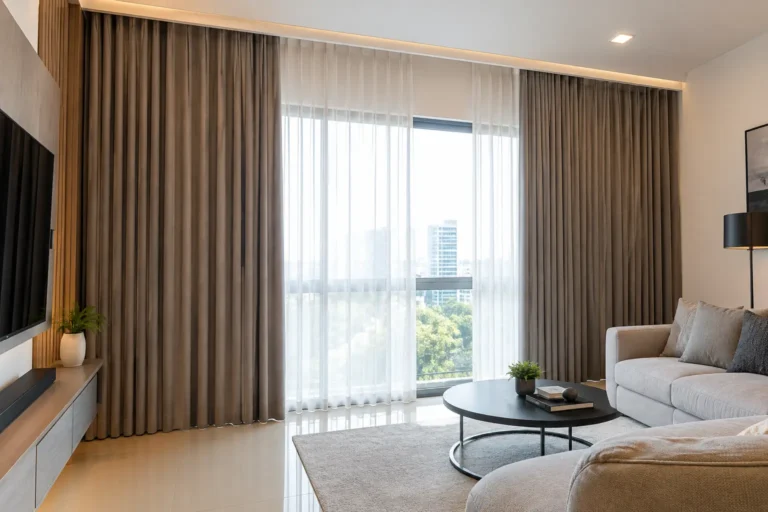
Motorised Curtain Systems Singapore: What to Look For
Read motorised curtain system reviews with clear advice on tracks, fabrics, smart controls, fitting, light control and long-term use for Singapore homes.
READ MORE →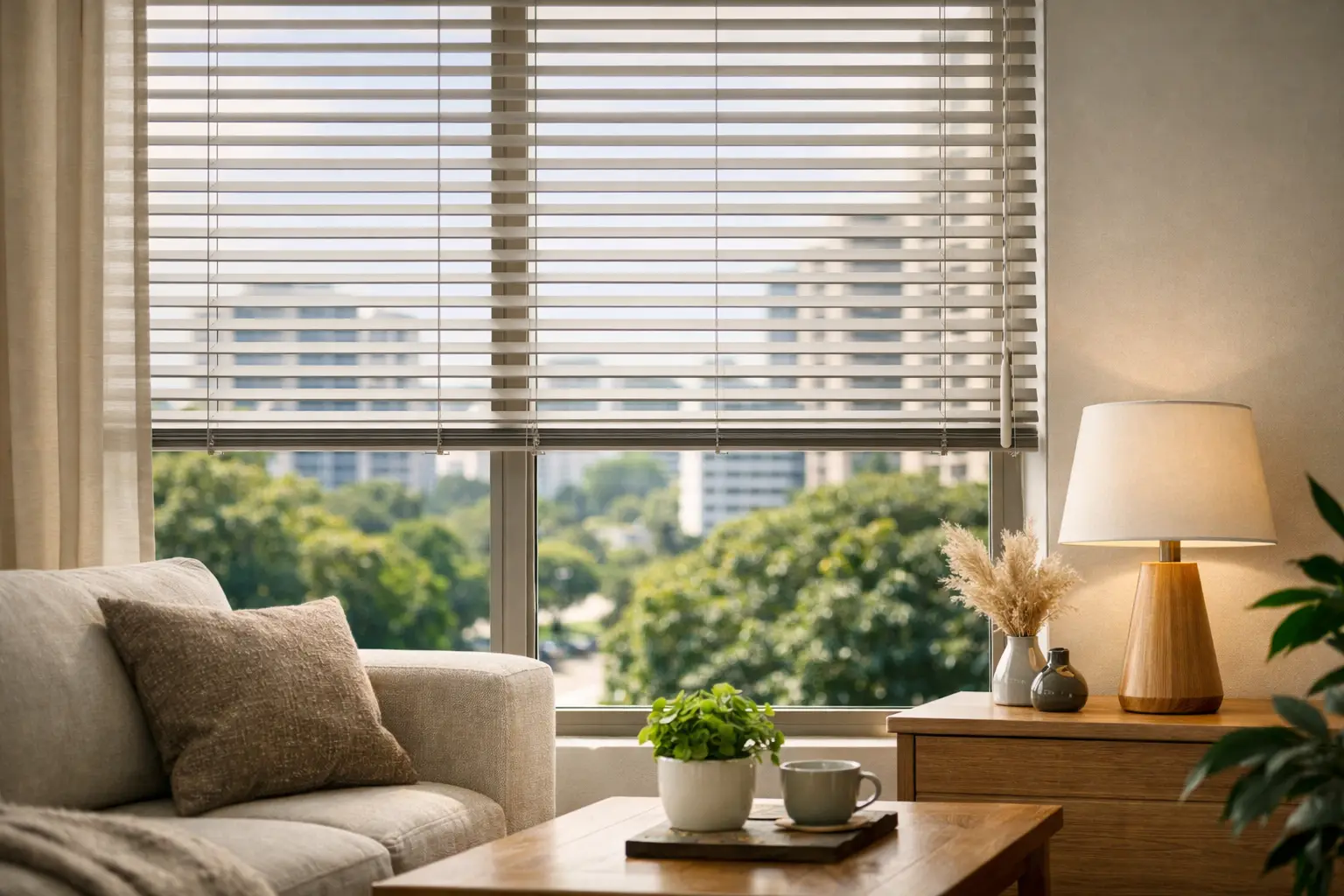

How to choose Venetian blinds in Singapore starts with the room, window conditions and the level of light control you actually need. Material, slat size, fitting method and operating system all affect how the blind looks and performs. For that reason, it is better to compare these factors together rather than choosing by colour alone.
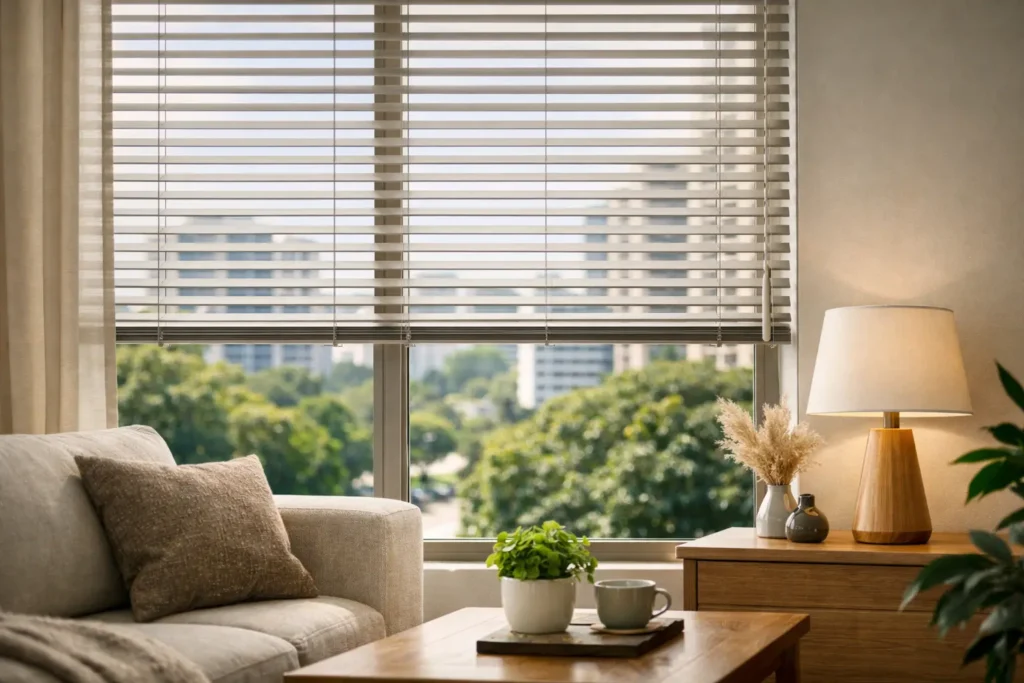
Venetian blinds suit many HDB, BTO, condominium, landed and commercial spaces because their horizontal slats let you adjust daylight and privacy throughout the day. However, they are not a one-size-fits-all solution. The right specification depends on the window size, humidity, accessibility, maintenance preference and how dark you want the room to become.
Looking for made-to-measure options? Explore our Venetian blinds in Singapore, including aluminium, polystyrene, natural wood and selected motorised systems.
Start by deciding what problem the blind needs to solve. For example, a west-facing living room may need glare control in the afternoon. A bedroom may need stronger privacy, while a study may need softer daylight around computer screens.
Next, consider the window itself. Check the width, height, recess depth, opening direction, handles, grilles and nearby cabinetry. These details influence where the blind can sit and how comfortably it can operate.
Finally, compare the material, slat width and operating system. A slim aluminium blind behaves differently from a wider natural wood or polystyrene blind. Larger blinds also place more demand on the lifting mechanism, so the system matters as much as the finish.
The main advantage of Venetian blinds is precise light control. Unlike a curtain that is mainly open, partly drawn or closed, Venetian slats can change angle throughout the day. As a result, you can reduce direct sunlight while still keeping useful natural light in the room.
They also provide flexible privacy. Tilt the slats to reduce views into the room without covering the whole window. This is useful in close-facing HDB and condominium developments where privacy needs can change between daytime and evening.
However, Venetian blinds do not provide complete blackout. Small amounts of light can pass between the slats and around the edges. Therefore, light-sensitive sleepers may prefer blackout curtains, blackout roller blinds or a layered arrangement.
Material affects the appearance, weight, maintenance and suitability of the blind. It also changes how the blind feels within the interior. For this reason, compare samples in the actual room whenever possible.
Aluminium offers a slim, lightweight and contemporary profile. It also suits spaces where easy cleaning and regular adjustment are priorities. For example, homeowners often use aluminium Venetian blinds in studies, kitchens, offices and modern living spaces.
Sincere Interior offers aluminium Venetian blinds in 25mm and 50mm slats. The 25mm option creates a finer look with more horizontal lines. By contrast, 50mm slats create a broader and more architectural appearance.
Aluminium does require sensible handling because thin slats can bend if they are forced. Good measurement, suitable components and careful everyday use help the blind operate consistently.
Natural wood gives the window genuine timber grain, warmth and variation. It works especially well where the blind forms part of the interior design rather than acting only as a practical screen.
Sincere Interior offers natural wood Venetian blinds in 35mm and 50mm slats. Wider slats can look especially proportionate on larger windows and in more architectural interiors.
However, Singapore’s humidity requires more consideration when you choose genuine timber. Natural wood generally performs best in dry indoor areas. Avoid locations with frequent steam, splashing or direct rain.
Polystyrene provides a fuller, wood-inspired appearance without using natural timber. It offers a consistent finish and is generally more tolerant of humid conditions than genuine wood. As a result, it can suit homeowners who want a substantial slatted look with simpler maintenance.
Sincere Interior offers polystyrene Venetian blinds in 35mm and 50mm slats. Consumers sometimes call similar products “faux wood”. However, identifying the actual material as polystyrene makes it easier to compare it accurately with natural wood.
Polystyrene slats are also more substantial than slim aluminium slats. Therefore, blind width and overall weight matter when selecting the lifting system for larger windows.
When deciding how to choose Venetian blinds in Singapore, think about how each room is used throughout the day. A blind that looks attractive in a showroom may not solve the practical needs of the actual space.
For living rooms, consider the direction of the sun and where glare occurs. The sun’s position changes throughout the day, so adjustable slats can help redirect strong light without making the room unnecessarily dark.
For bedrooms, decide whether privacy, daylight control or near-darkness matters most. Venetian blinds provide flexible privacy and light control. However, blackout curtains or blackout roller blinds may be more suitable when daytime sleep is a priority.
For studies and home offices, adjustable slats can help reduce screen glare while keeping the room brighter than a fully closed blackout treatment. In addition, the blind can remain raised when maximum daylight is preferred.
For kitchens and bathrooms, choose the material carefully. Keep blinds away from direct splashing and heavy steam. Polystyrene or aluminium may be more practical than natural timber in more humid areas.
Even a well-made Venetian blind will not perform well if the measurements or fitting position are wrong. A recess fit can create a neat, built-in appearance when the window has enough depth. A face fit can cover more of the opening and may reduce visible side gaps.
Measure the recess at several points because walls are not always perfectly square. Also check window handles, grilles, opening panels and nearby carpentry. In BTO and HDB homes, these details often determine whether the blind should sit inside the recess or outside it.
Child safety also matters. If the selected system uses cords or chains, keep the controls secured and out of reach. Your installer should consider the operating position as part of the overall specification.
The lifting system becomes more important as the blind gets wider or heavier. For smaller blinds, a conventional manual system may be sufficient. However, larger installations may benefit from assisted lifting or compatible motorisation.
Different materials also use different operating systems. Aluminium Venetian blinds can use Cord, Chain or One-Pole systems. Natural wood and polystyrene options can use Cord Lock, Easy Lift or Mono Control systems, depending on the blind dimensions and configuration.
Motorisation may be useful for tall windows, hard-to-reach locations or blinds that you adjust frequently. Depending on the compatible system, control may include a remote, wall control or smart-home integration. You can learn more about automated window-covering systems on our dedicated page.
A made-to-measure quotation depends on more than the width and height of the window. Material, slat width, finish, operating system, access and installation complexity all affect the final specification.
Large windows may also require more than one blind for practical operation. In addition, heavier materials can place more load on the lifting system. For this reason, a site measurement usually gives a more useful quotation than photographs alone.
If you are comparing how to choose Venetian blinds in Singapore within a budget, compare quotations on the same basis. Check the material, dimensions, control type, installation scope and any motorisation requirements before comparing price.
Regular light cleaning is easier than allowing dust to build up. Close the slats in one direction and wipe them gently with a microfibre cloth or suitable blind duster. Then reverse the slats and repeat.
For aluminium and polystyrene, use a lightly damp cloth when needed and follow with a dry wipe. Avoid soaking the headrail or operating components. Natural wood needs more care, so use a dry or only slightly damp cloth and avoid harsh cleaners.
If a slat becomes bent or the mechanism starts to feel stiff, do not force it. Early attention can prevent a small issue from affecting the rest of the blind.
Before confirming Venetian blinds, check five things: the room’s light and privacy needs, the material, the slat width, the fitting position and the operating system. These choices should work together rather than being selected separately.
Serving Singapore since 1976, Sincere Interior provides professional site measurement, product guidance and installation for made-to-measure curtains and blinds. We assess the window conditions before recommending a suitable Venetian blind configuration.
Ultimately, how to choose Venetian blinds in Singapore comes down to practical fit as much as appearance. The right blind should give you a comfortable balance of daylight, privacy, maintenance and everyday operation.
Not sure which curtain style, fabric or system suits your home? Speak with our team for personalised recommendations for your space.
GET IN TOUCH →