Published 8 Nov 2026
•
10 min read
Curtain Pleats Singapore: Ripple Fold, Double Pleat & More Compared
Curtain pleats affect far more than the appearance at the top of a curtain. The heading determines how the fabric falls, how much fullness is required, how much space the curtains occupy when open and which track system will work best.
For Singapore homes, the best curtain pleat depends on the window size, interior style, fabric weight, stack-back and how often the curtains will be used. Ripple fold or S-fold curtains are usually the strongest modern choice for wide BTO and condominium windows because they create clean, consistent waves. Double pleat curtains provide a fuller and more tailored appearance, while pencil and other pleat styles suit different aesthetic and practical requirements.
For a wide BTO living-room window or a bedroom that needs stronger darkness, choose the pleat together with the fabric, track and installation position. The heading should form part of the complete curtain system rather than an isolated design choice.
Curtain Pleats Singapore: Why the Heading Matters
Pleats control how the heading gathers the fabric and how those folds continue down the curtain. They also influence fabric fullness, stack-back, track requirements and the overall character of the room.
During site measurement, assess the available wall space, window depth, air-conditioning ledges, pelmets, false ceilings and nearby carpentry. These conditions can determine whether a particular curtain style will operate comfortably once installed.
Ripple Fold vs Double Pleat Curtains in Singapore
For modern Singapore homes, ripple fold curtains usually suit homeowners who want a cleaner, more architectural finish, while double pleat curtains create a fuller and more tailored appearance. Ripple fold works especially well across wide BTO, condominium and full-height windows. Double pleat is a strong alternative for bedrooms and living rooms where structured folds, blackout coverage or a more classic finish matter.
| Feature |
Ripple Fold / S-Fold |
Double Pleat |
| Overall look |
Clean, continuous waves |
Tailored, structured folds |
| Best interiors |
Japandi, Scandinavian, minimalist and contemporary |
Modern-classic, elegant and traditional |
| Track system |
Dedicated compatible ripple or wave track |
Standard curtain track with suitable hooks and carriers |
| Wide windows |
Excellent |
Excellent |
| Stack-back |
Uniform, with planned side space |
Usually creates a fuller fabric stack |
| Blackout planning |
Good, with careful top and side-gap planning |
Very good when positioned close to the ceiling with suitable overlap |
| Motorisation |
Excellent with compatible motorised tracks |
Compatible with suitably specified motorised tracks |
| Day & night curtains |
Clean, contemporary double-track presentation |
Strong tailored alternative |
Why Ripple Fold Curtains Suit Modern Singapore Homes
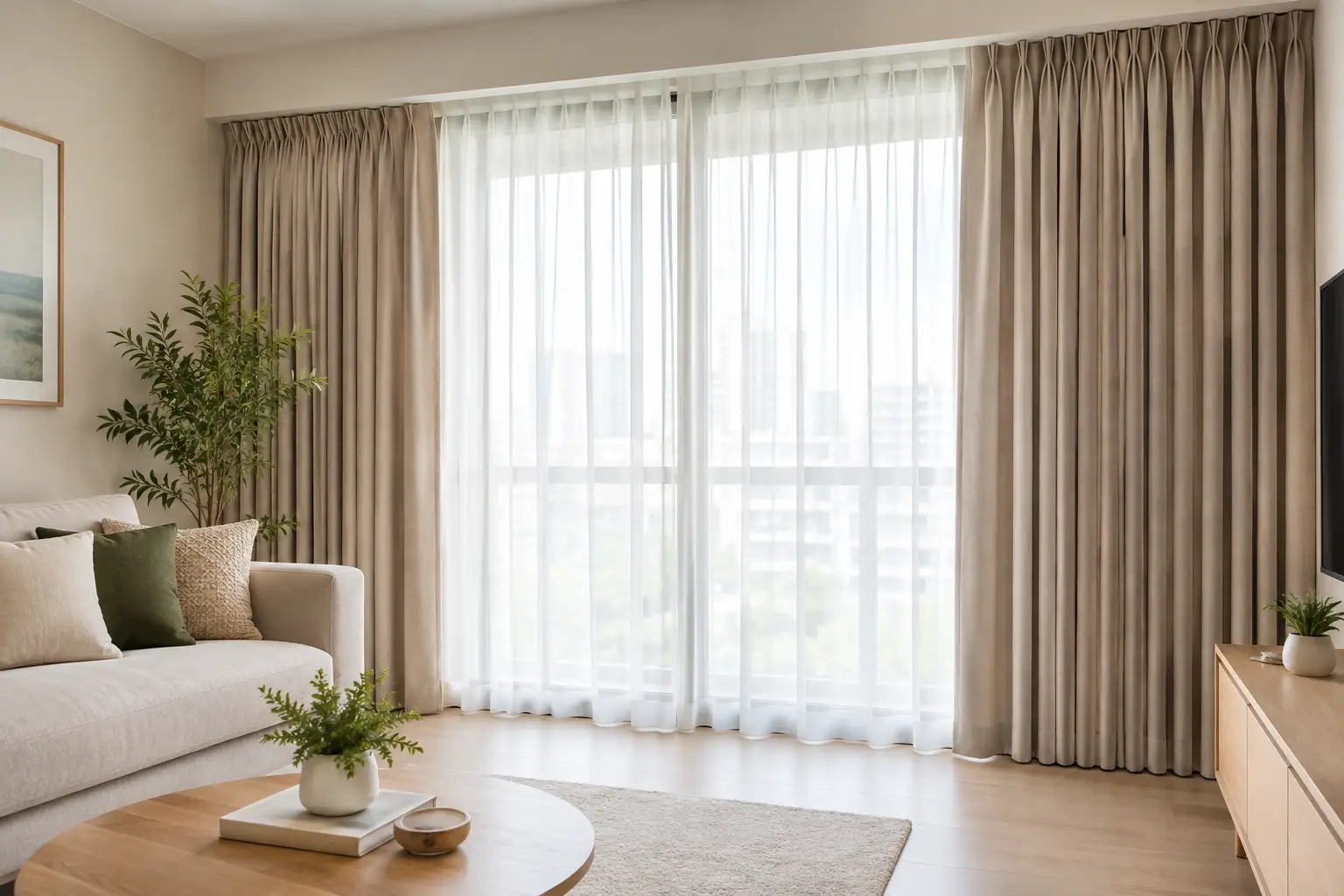
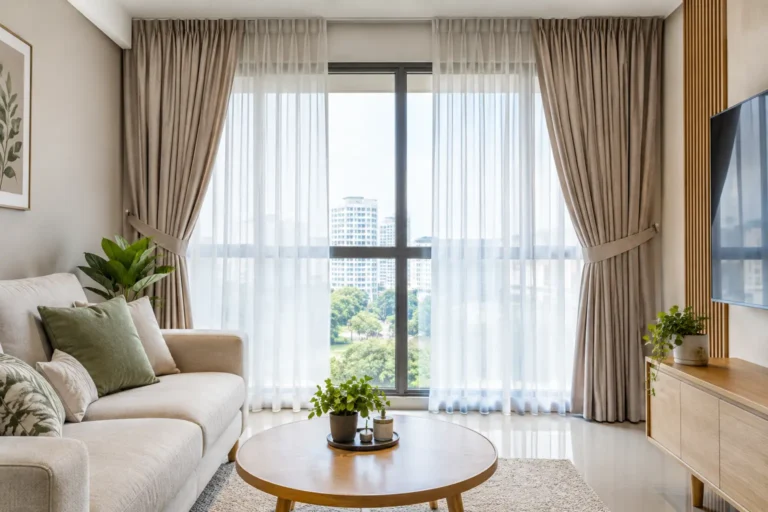
Ripple fold curtains, also known as S-fold or wave curtains, form smooth and consistent waves across the full track. Their clean geometry suits the minimalist interiors commonly seen in newer BTO flats, condominiums and contemporary landed homes.
They work particularly well with full-height glazing because the folds remain orderly across a long curtain run. This makes ripple fold a natural match for Japandi, Scandinavian and minimalist interiors, where visual simplicity is important.
However, the finished result depends on more than sewing. A compatible ripple track, fixed carrier spacing, suitable fabric fullness and accurate installation must work together to maintain the wave pattern.
For homeowners comparing ripple fold curtains in Singapore, the premium appearance comes from the complete system rather than the fabric heading alone.
Ripple fold curtains are particularly suitable for:
- Wide HDB and BTO living-room windows
- Full-height condominium glazing
- Balcony sliding doors
- Sheer day curtains
- Day-and-night curtain combinations
- Compatible motorised curtain tracks
- Japandi, Scandinavian and minimalist interiors
Use a compatible ripple track with carriers spaced at fixed intervals. The fixed spacing keeps the waves consistent when the curtain opens or closes and also determines the required curtain fullness.
This is why ripple fold should be treated as a complete heading-and-track system. Forest Group’s FES® Wave System uses dedicated wave components and interconnected gliders to maintain a smooth, continuous folding effect and neat stack-back.
When Double Pleat Curtains Are the Better Choice
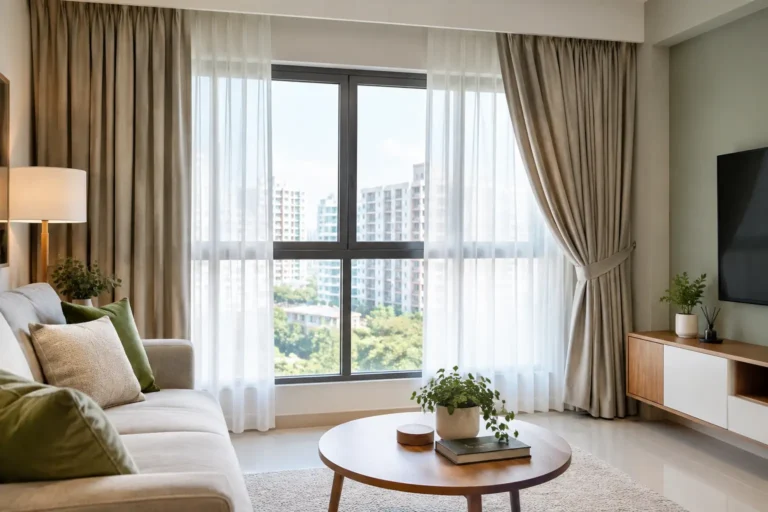
Double pleat curtains create two structured folds at each pleat point, producing a fuller and more tailored appearance than ripple fold. They work well in master bedrooms, formal living areas and interiors where homeowners want the curtain fabric itself to feel more substantial.
Permanent stitching helps the curtain hang in defined columns and retain its shape. Select the track for the curtain load and confirm that the mounting surface can support it.
Double pleat curtains can also work particularly well for blackout applications when the track is positioned close to the ceiling and extends sufficiently beyond the window.
Compared with ripple fold, double pleat usually creates a fuller stack when the curtains are open. Stack-back planning therefore becomes especially important beside balcony doors, narrow side walls and built-in cabinetry.
Other Curtain Pleats to Consider
Pencil Pleat
Pencil pleats use heading tape with cords that gather the fabric into narrow vertical folds. They work with a curtain track or, with suitable hooks, a curtain pole.
Curtain makers can adjust the fullness during fabrication, but they must gather the fabric evenly for a neat result. Pencil pleats remain flexible and familiar, although they generally create a softer and less architectural appearance than ripple fold.
Pinch and Triple Pleat
Pinch and triple pleats create a more formal and structured finish. They suit classic or luxury interiors where homeowners want the curtain heading to become a more visible design feature.
These headings also use more fabric and generally create a fuller stack when opened, so adequate wall space should form part of the planning.
Decorative Pleats
Homeowners usually choose decorative headings such as goblet pleats for formal, traditional interiors. Curtain makers shape and lightly fill the pleats so they hold their form.
They remain a valid design option, although contemporary Singapore BTO and condominium projects more commonly favour cleaner ripple fold or tailored double pleat styles.
Which Curtain Pleats Suit BTO, Condo and Landed Homes?
BTO and HDB Flats
Ripple fold works particularly well where homeowners want a clean, contemporary finish. However, measure stack-back carefully when the window sits close to a wall, wardrobe, balcony door or air-conditioning trunking.
Double pleat remains a good alternative where a bedroom requires a fuller night curtain or where the homeowner prefers a more tailored look.
Condominiums
Full-height glazing is an excellent application for ripple fold because the consistent waves complement taller windows and long curtain runs.
Double pleat can be particularly suitable for master bedrooms where stronger blackout planning or a more structured fabric finish is preferred.
Landed Homes
Both headings can work well in landed properties. For wide or double-volume windows, track strength, fabric weight, stack-back and motorisation become more important than the pleat style alone.
Which Curtain Pleat Is Best for Blackout?
No curtain heading creates complete darkness on its own. Blackout performance depends on the fabric, track position, top gap, centre overlap and how far the curtains extend beyond the window.
Double pleat can provide strong room-darkening when installed close to the ceiling because the heading sits relatively flat at the top. Ripple fold also works with blackout fabric, but the wave shape and track position require careful planning to minimise upper and side light gaps.
For bedrooms where darkness is the priority, assess the complete curtain arrangement rather than choosing the heading based on appearance alone.
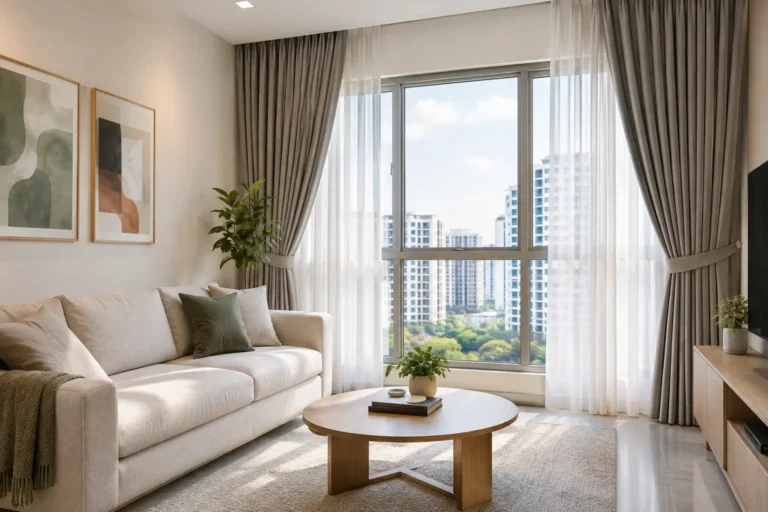
For households that need daytime privacy as well as stronger night-time darkness, a day-and-night arrangement can pair sheer curtains with a separate blackout layer.
Curtain Fullness and Stack-Back
Curtain fullness describes the amount of fabric relative to the track width. More fullness can create a richer finish, but it also increases fabric quantity and the space required when the curtains are open.
Sheer fabric usually creates a lighter stack than lined or blackout curtains. Fuller curtains require more side space than compact blinds.
Ripple fold curtains create orderly, even waves. Allow enough stack-back beside sliding doors and full-height windows so the open curtains do not unnecessarily cover the glass.
Check the space around the open curtains. They should not block balcony doors, light switches, cabinetry or the usable opening of a casement window.
Curtain Pleats and Motorised Curtains: Ripple Fold vs Double Pleat
Both ripple fold and double pleat curtains can work with motorised tracks when the motor, track and curtain weight are specified correctly.
Ripple fold is particularly attractive with motorisation because the linked carriers maintain consistent spacing as the curtain travels along the track. Motorisation can be especially useful across wide living-room glazing, high windows and curtains that homeowners open and close several times a day.
It can also make daily operation easier for older family members or households that adjust curtains at regular times.
Plan the power point or charging method early in the renovation. If the renovation includes a false ceiling, confirm the curtain tracks before contractors finish the carpentry and electrical work.
For suitable projects, homeowners can also consider motorised curtains and automated window systems as part of the overall renovation planning.
Curtain Pleats for Privacy, Glare and Everyday Comfort
The curtain heading affects appearance and movement, but the fabric determines much of the privacy and light-control performance.
Sheer curtains soften strong Singapore daylight while retaining daytime brightness. However, they do not provide full privacy at night once indoor lights are switched on.
Dim-out curtains reduce brightness without creating a very dark room, while blackout fabric suits bedrooms and spaces where stronger light control matters.
For west-facing windows, the curtain should also help manage afternoon glare and direct sunlight. In these cases, fabric choice, track position and curtain coverage matter as much as the pleat style.
Cleaning and Long-Term Appearance
Vacuum pleated curtains gently with a soft brush attachment to remove surface dust. Regular use also helps prevent the folds from remaining compressed in one position.
If a ripple fold curtain begins hanging unevenly, check the carriers and make sure the fabric still follows its intended wave pattern.
Singapore’s humid climate also makes ventilation and regular dust removal important. Avoid leaving heavy curtains pressed against damp glass or condensation for long periods, particularly in bedrooms that remain air-conditioned and closed for much of the day.
Sheer fabrics usually dry faster, while thick lined or structured curtains may require more careful professional cleaning. Always follow the care instructions for the selected fabric.
Choosing the Right Curtain Pleats for Your Home
The best curtain heading is the one that suits the window, fabric and way the room is used. Ripple fold is often the premium modern choice for wide contemporary windows, while double pleat remains an excellent option for homeowners who prefer a fuller, tailored finish or stronger blackout planning.
At Sincere Interior Service, the curtain heading is selected together with the fabric, track and actual window conditions rather than as a styling decision alone. Serving Singapore since 1976, our team assesses window width, stack-back, fabric weight, privacy, track position and daily operation before recommending a pleat style.
Our Singapore-based production team custom-sews the curtains for professional installation, helping the finished folds remain practical as well as visually balanced.


 0