0

Are Motorised Curtains Worthwhile for Your Home?
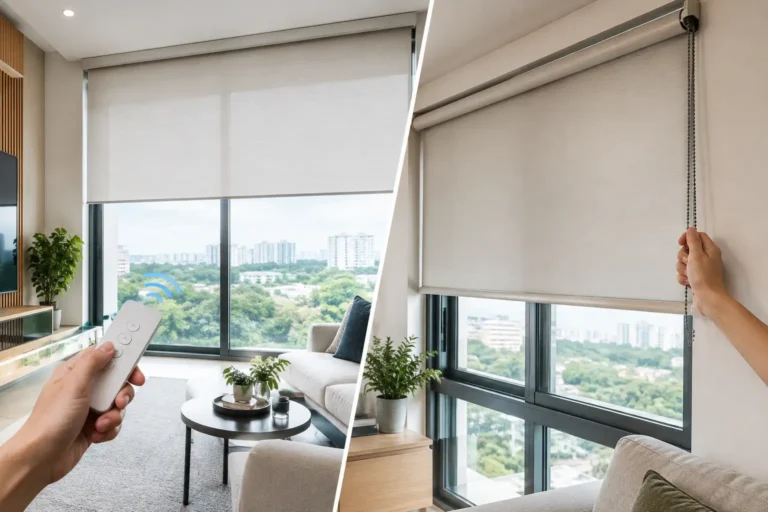
Are motorised curtains worthwhile in a Singapore home? Learn where they add real value, what affects installation, and when manual curtains suit…
READ MORE →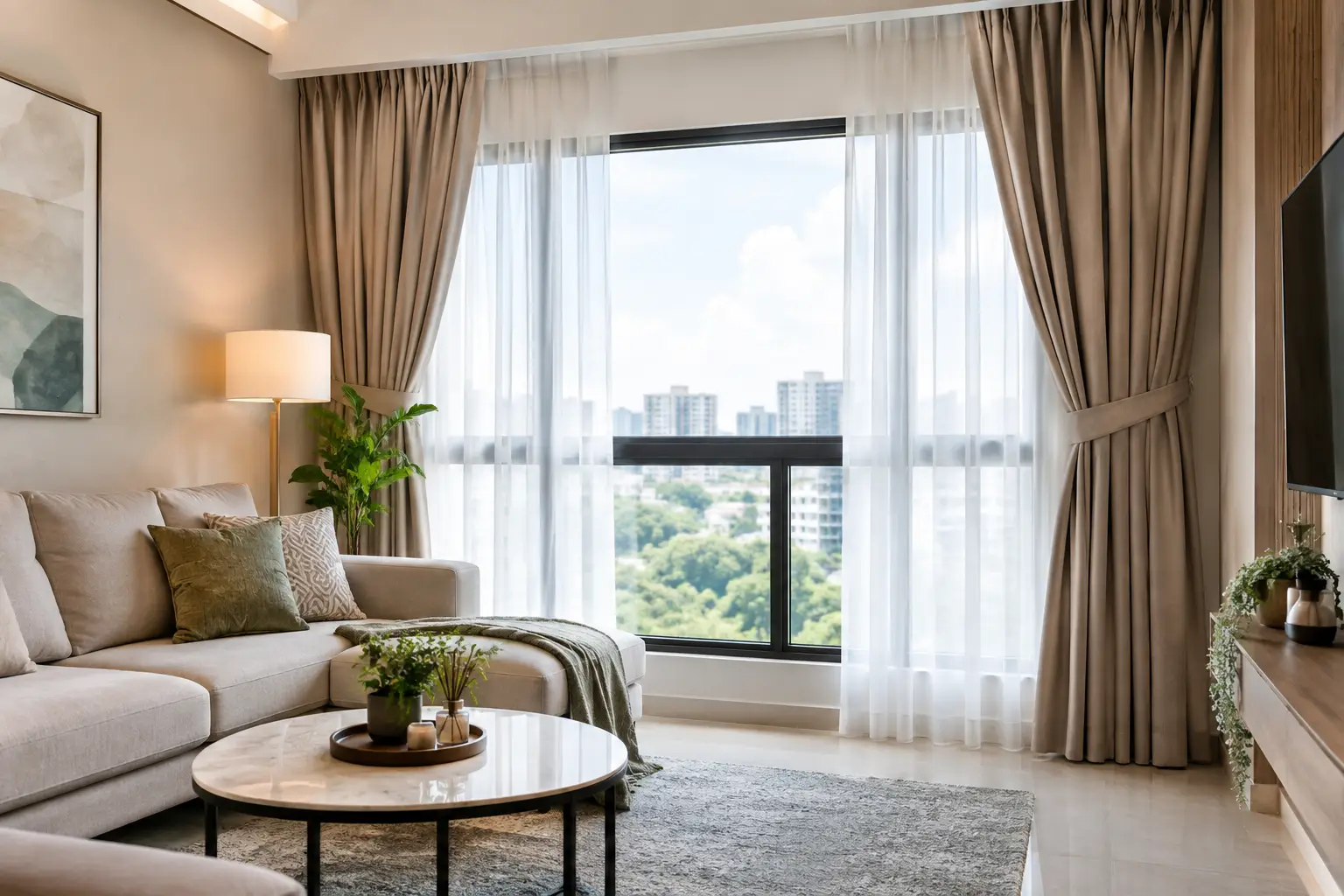

A custom curtains consultation should do more than match a fabric colour to your sofa. It is the stage where your window size, room use, sunlight, privacy needs and daily habits are considered together, so the finished curtains look considered and work properly for years.
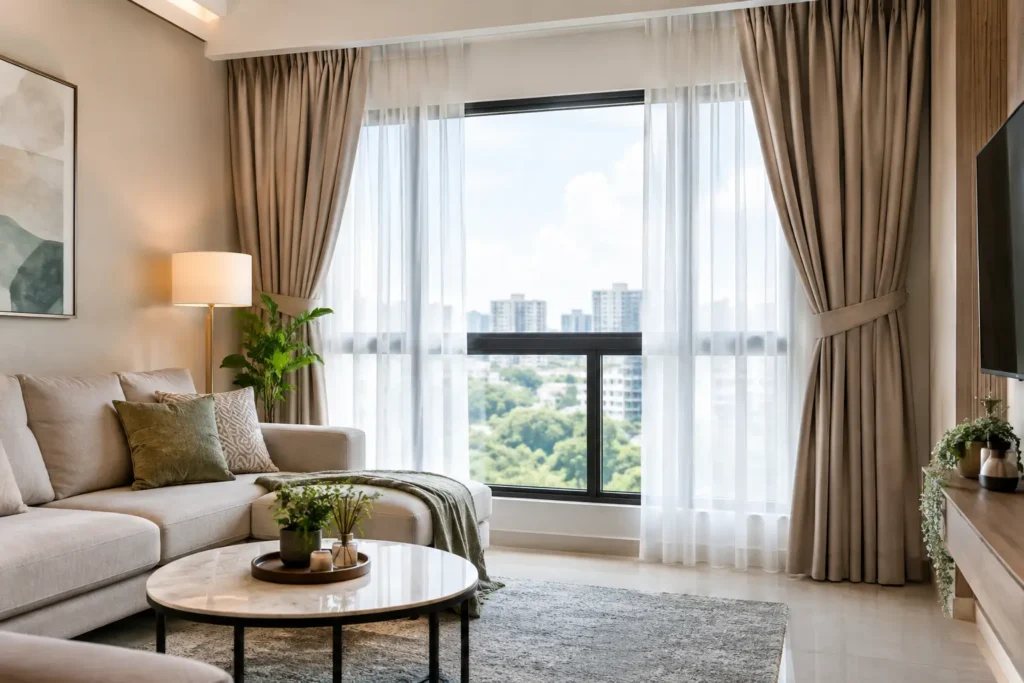
For a BTO bedroom, that may mean checking whether the chosen blackout fabric will still leave unwanted light at the sides. For a condominium living room with full-height glazing, it may mean planning a day-and-night curtain combination that softens glare without making the room feel closed in. Good advice starts with the window itself, not a catalogue.
A custom curtains consultation should establish four things before anything is ordered: how each room needs to manage light and privacy, which fabric and heading suit the window, where the track can be mounted, and whether blinds or motorisation would work better. The consultant should then confirm site measurements, stack-back, installation constraints and the final quotation before production begins.
A proper consultation begins with practical questions. Which rooms need privacy during the day? Does afternoon sun create glare on the television or work desk? Do you need a dark bedroom for a child, a shift worker or simply better sleep? Will the curtains be opened and closed every day, or mostly remain in place as a decorative layer?
These answers affect the fabric, heading style, track, mounting position and whether blinds may suit the room better. Curtains are highly flexible, but they are not automatically the right answer for every window. A narrow kitchen window near a sink, for example, may be more practical with a roller blind. A wide living-room window may benefit from curtains because fabric can cover a large span with a softer, more complete finish.
The consultant should also assess what the site allows. Window recesses, pelmets, false ceilings, air-conditioning trunking, electrical points, cabinetry and sliding doors all influence the track position. This matters particularly in renovated HDB and BTO flats. Ceiling details and carpentry may already limit the available installation space.
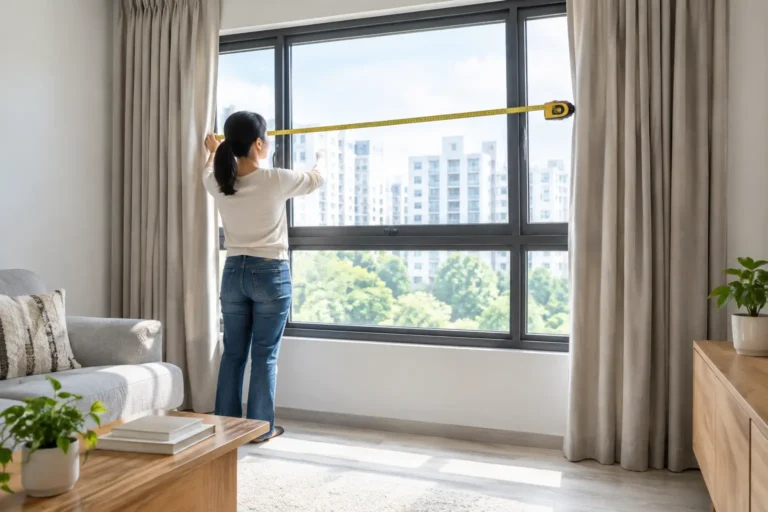
Curtains require more than the visible glass measurement. The installer also checks side-wall space, ceiling height, window handles and the space required for stack-back.
Stack-back refers to the space occupied by the open curtains. On a compact window, thick blackout fabric may still cover part of the glass when fully opened. If daylight and the view matter, extend the track further beyond the window where wall space allows.
Track placement matters too. Ceiling-mounted tracks can make a room feel taller and are common for full-height curtains. Wall mounting may work better where a bulkhead, uneven ceiling or other site condition limits ceiling installation. Neither option is automatically better. The right choice depends on the site condition and the look you want.
Track selection should also suit the curtain weight, mounting position and installation conditions. TOSO offers curtain-track systems designed for different applications, including ceiling-mounted and functional track arrangements, so the track should be selected together with the curtain style and site conditions.
Fabric selection deserves careful discussion. A curtain that looks opaque in a showroom can appear very different when strong tropical daylight passes through it. The weave, colour and lining all affect how much light passes through.
Sheer curtains soften daylight and reduce direct glare. However, they do not provide complete night-time privacy when interior lights are on. Homeowners often pair sheers with a fuller night or blackout curtain in bedrooms and living areas. In high-rise homes facing neighbouring blocks, this combination preserves daylight and daytime privacy. The fuller curtain can close later for stronger evening privacy.
Dim-out fabric reduces light without making the room fully dark. It suits living rooms, guest rooms and spaces that need gentler light control. Blackout fabric suits bedrooms where darkness matters more. Even then, light can enter through gaps at the top, sides or centre opening.
That distinction is important. If you want the darkest practical bedroom, discuss both the fabric and installation details during the consultation. Wider track extensions, centre overlap, suitable fullness and a higher track position can all reduce light leakage. A curtain still needs clearance to move smoothly, so a completely sealed result is not realistic in most homes.
Colour also changes the experience of a room. Lighter fabrics reflect more light and usually keep a space looking open, while darker fabrics can feel richer and may conceal marks better. However, a dark curtain is not necessarily more blackout than a pale one. Performance depends mainly on the fabric construction and lining, not colour alone.
Ripple fold and S-fold curtains are popular for their consistent, wave-like appearance. They suit contemporary living rooms and full-height windows, especially where you want the curtains to sit neatly whether open or closed. They need a compatible track and enough space for the folds to stack.
Pleated curtains create a more tailored, traditional appearance. They suit fabrics and rooms that need greater structure. The heading affects fabric allowance, curtain movement and the amount of stack-back required. This is why fabric should not be selected in isolation from the chosen track and heading.
Day-and-night curtains require a double track. This arrangement needs more depth, so the ceiling or pelmet must provide enough space. In a room with a shallow pelmet, a consultation may reveal that a blind-and-curtain combination is more workable than two curtain layers.
Curtains and blinds solve different problems, and many homes use both. Blinds fit close to the window and are useful where there is limited room beside the opening, where doors need to operate freely, or where a cleaner, more compact appearance is preferred.
Roller blinds offer straightforward light control and work well in studies, kitchens and commercial spaces. Korean or combi blinds use alternating sheer and opaque bands for adjustable privacy and daylight. Their layered appearance may not suit every interior style. Honeycomb blinds can be useful where a softer blind appearance and a more insulating cellular structure are preferred. Venetian blinds offer adjustable slat control but have more individual surfaces to dust.
In bedrooms, blackout roller blinds can help reduce light, but the same principle applies: side gaps may still allow light in. Curtains can be added over blinds where a more complete window treatment and softer finish are wanted. The best arrangement depends on the available depth, budget, cleaning preference and desired level of darkness.
Motorisation is most useful for large, high, heavy or frequently operated curtains. It can also help elderly family members, busy households and people managing windows behind furniture. Plan a motorised system early where possible. During renovation, power access and concealed wiring can affect the final installation.
Battery-operated options can reduce wiring work. Wired systems may suit renovations where suitable power points are already planned. The practical question is not simply whether motorisation looks impressive. It is whether the system will be easy to operate, charge or service in your particular home.
Track quality and installation alignment matter even more with motorised curtains. Poor track alignment or excessive curtain weight can affect smooth operation. During consultation, it is sensible to discuss the fabric weight, curtain width, control preference and access for future maintenance.
You do not need technical knowledge before the appointment. A few practical details can make the recommendations more accurate. Note the room orientation, strongest sunlight period, privacy concerns and any furniture that may obstruct the curtains.
It is also useful to share renovation plans, such as false ceilings, pelmets, window-seat carpentry or smart-home wiring. If you have a preferred style, photographs can help communicate it, but treat them as a starting point rather than a fixed specification. A design that works in a landed home with wide walls may not allow enough stack-back space in a compact flat.
Discuss the budget openly as well. Fabric type, curtain size, fullness, track configuration, lining, motorisation and installation conditions all influence the quotation. A clear budget allows the consultant to prioritise the features that matter most rather than recommending details that add cost without improving daily use.
After the site assessment and fabric selection, the quotation should clearly list the proposed treatment. It should cover the fabric or blind, track arrangement, dimensions, installation and any motorisation components. Custom production begins after the team confirms the final measurements. The curtains are then made for the actual window rather than adapted from a standard size.
Professional installation provides the final quality check. The curtains should move smoothly, meet neatly where required and finish at the intended height above the floor. The installer should also explain normal operation and sensible cleaning. Most fabric curtains benefit from regular gentle vacuuming with a soft brush attachment, while blinds should be dusted according to their material and construction. Always check care requirements before using water or cleaning agents.
Serving Singapore since 1976, Sincere Interior Service approaches a curtain consultation as a practical planning process rather than a fabric-selection exercise alone. Our team considers room use, daylight, privacy, window dimensions, track position, fabric performance and installation conditions before production begins. Professional measurement, Singapore-based custom production, installation and post-installation support keep the project coordinated from the first consultation to the finished window.
Not sure which curtain style, fabric or system suits your home? Speak with our team for personalised recommendations for your space.
GET IN TOUCH →