0
0

Motorised Curtain Systems Singapore: What to Look For
Read motorised curtain system reviews with clear advice on tracks, fabrics, smart controls, fitting, light control and long-term use for Singapore homes.
READ MORE →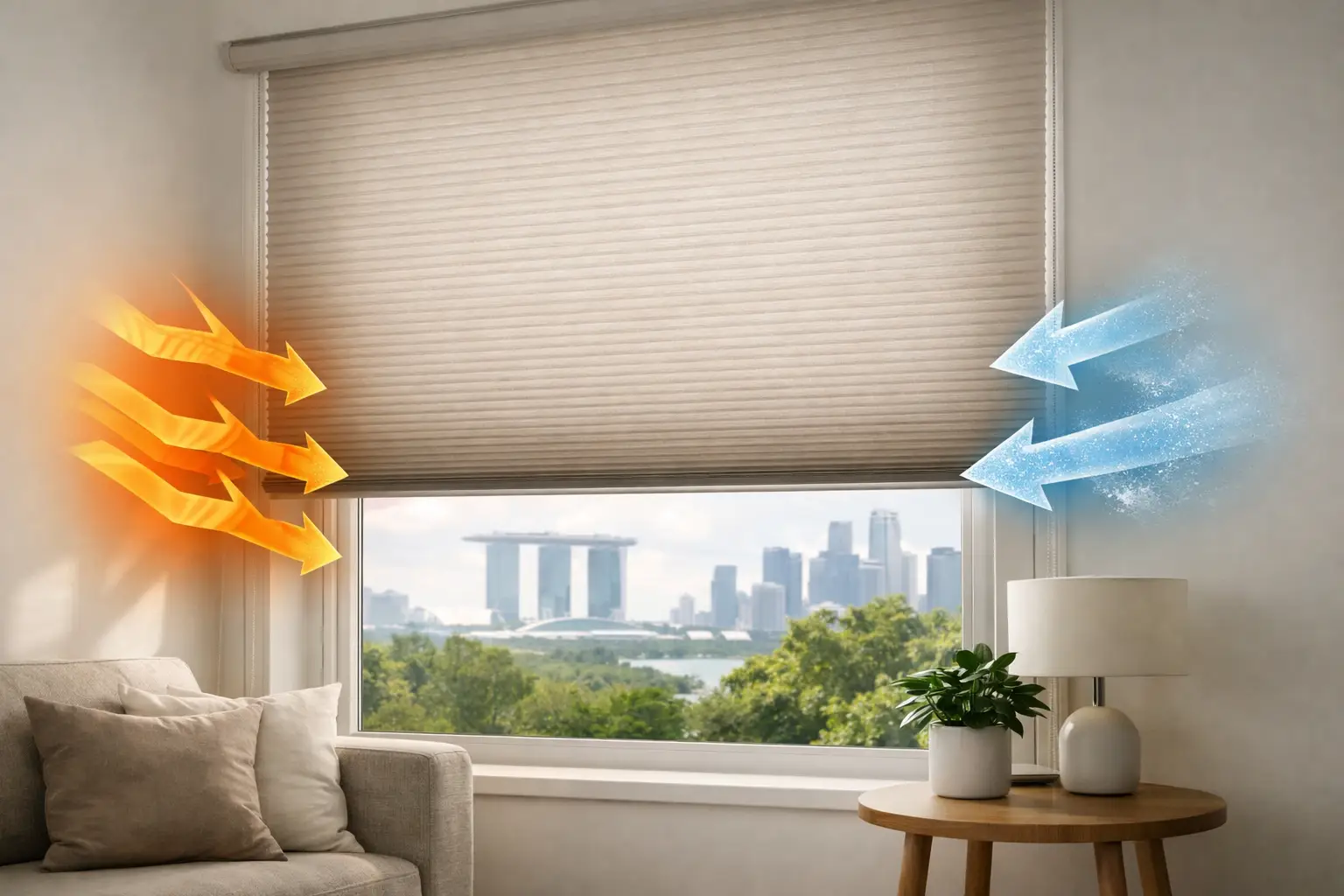

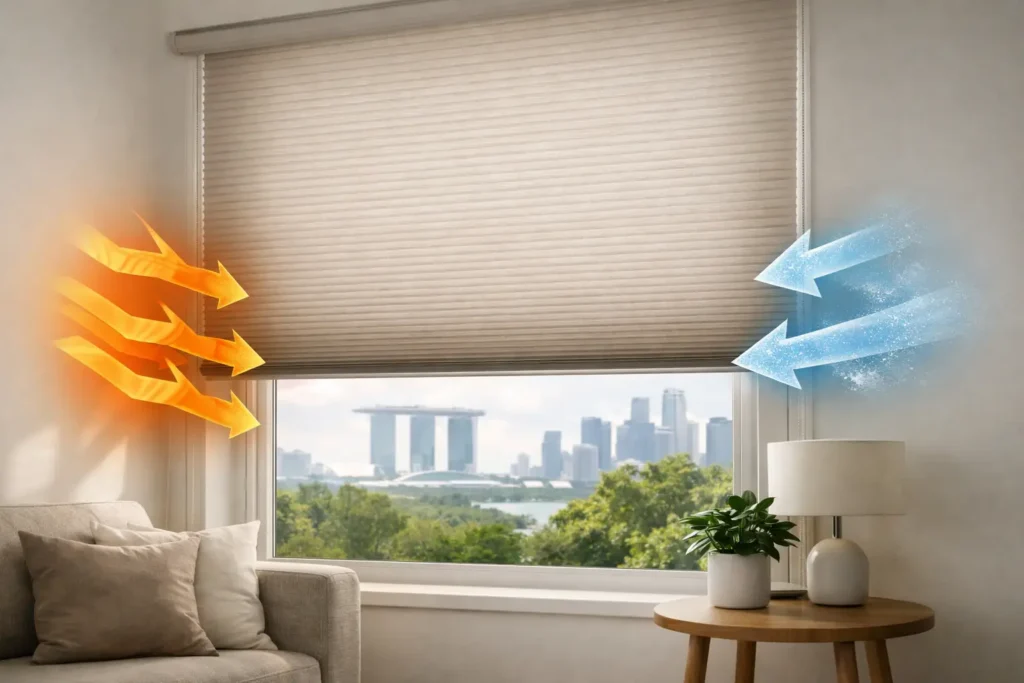
A west-facing bedroom can feel noticeably warmer by mid-afternoon, even with the air-conditioning running. This is where honeycomb blinds for heat reduction can make a practical difference. Their cellular construction creates small air pockets between the window and room, helping to slow the transfer of heat through the glass while still giving a neat, contemporary finish.
For Singapore homes, however, the right result depends on more than choosing a blind with a honeycomb pattern. Window direction, glass size, fabric opacity, side gaps and installation details all affect how well the blind controls heat and glare. An experienced assessment is especially useful for BTO flats, condominiums and landed homes with large or heavily exposed windows.
Honeycomb blinds, also called cellular blinds, are made from pleated fabric that forms a series of hollow cells when viewed from the side. These cells trap a layer of still air. Since still air transfers heat more slowly than an open window space, the blind provides an insulating barrier between the room and the glass.
This is different from a standard roller blind, which is usually a single, flat layer of fabric. A good roller blind can reduce glare and soften direct sunlight, but it does not create the same air pockets. Honeycomb blinds are therefore worth considering where daytime heat is a major concern, particularly at west-facing windows or rooms with broad glazing.
They can also help with comfort after sunset. In an air-conditioned bedroom, the cellular layer may reduce heat gain from the window and make the room feel less exposed to the warmth stored in the glass and surrounding wall. It will not replace air-conditioning, nor will it turn a sun-facing room into a cool space without other measures, but it can reduce the strain on the room’s cooling system.
The blind’s construction is useful, but performance is shaped by the full specification. A well-chosen cellular blind should be matched to how the room is actually used.
Larger cells generally hold more air, which can improve insulation. However, the appearance, available colours and the blind’s stacking size may differ by range. This is something to review during selection rather than assuming that a larger cell is always the right choice.
Fabric opacity also matters. Sheer or light-filtering honeycomb fabrics reduce harsh glare while allowing daylight into a living room or study. They provide some heat control, but they will not block strong afternoon sun as effectively as dim-out or blackout fabric.
For bedrooms, nurseries and media rooms, a blackout honeycomb blind is usually the stronger option. The fabric blocks substantially more light and is better suited to rooms where sleep, privacy and reduced glare are priorities. Remember that blackout refers mainly to the fabric itself. Light can still enter around the edges if there are gaps between the blind and the window frame.
Heat enters through the glass and through exposed areas around the blind. A made-to-measure blind fitted close to the window recess or frame will usually perform better than an off-the-shelf option with generous side gaps.
The best fitting method depends on the window. Some HDB and condominium windows have limited recess depth, handles that project outwards or uneven frame details. A site measurement helps identify whether an inside-recess or face-fitted installation gives better coverage without obstructing the opening of the window.
For rooms with serious sun exposure, consider side channels where suitable. These channels guide the blind along the sides and reduce light leakage. They can be particularly helpful for blackout applications, although not every window type or blind system is compatible with them.
A west-facing living room receives a different type of heat from an east-facing kitchen window. West sun is often the issue homeowners notice most because it arrives when rooms have already warmed up throughout the day. For this setting, a dim-out or blackout honeycomb blind can be a sensible choice, especially if the room is used for working from home, watching television or resting in the afternoon.
East-facing bedrooms may benefit from a blackout option to manage early morning light. North- and south-facing windows can still create glare, particularly in high-rise flats where sunlight reflects from neighbouring buildings. Here, a light-filtering honeycomb blind may offer enough control without making the space feel too enclosed.
Singapore’s National Environment Agency also recommends using curtains or blinds over windows to block unwanted heat from the sun when designing for a cooler home.
Honeycomb blinds suit many modern interiors because they have a clean profile and stack neatly when raised. They are often a good fit for bedroom windows in BTO flats and condominiums, where homeowners want blackout performance without the visual weight of full curtains.
They also work well in home offices. A light-filtering fabric can reduce screen glare while keeping the room bright enough for daytime work. If privacy is needed at night, choose a more opaque fabric or combine the blind with curtains, depending on the desired look.
For large living-room windows, the decision is more dependent on the window layout. Honeycomb blinds can be practical for individual panels, but very wide spans may need multiple blinds. This creates separate operating sections and small joins between panels. In some homes, curtains or a combination of sheer curtains and blackout curtains provide more flexible coverage and a softer interior finish.
Landed properties often have taller windows and stronger sun exposure. Honeycomb blinds may be suitable for selected bedrooms, stairwells or study areas, but a full assessment should consider access for operation, window height and whether motorisation is needed.
There is no single blind that suits every room. Honeycomb blinds are valued for their insulation, tidy appearance and light-control options, but they have trade-offs.
Roller blinds are often more economical and straightforward for broad windows. Solar screen fabrics can preserve an outward view during the day while reducing glare, although they offer less privacy at night when indoor lights are on. Blackout roller blinds are practical for bedrooms, but their flat fabric does not provide the same insulating cell structure.
Venetian blinds allow very precise control over the direction of light. They are useful where you want to adjust the view and ventilation, though their slats have more gaps and are less focused on insulation. Curtains, especially lined blackout curtains, can provide excellent coverage when installed with adequate overlap and return. They also add softness and acoustic comfort, but require more stacking space at the sides.
For homeowners who want both daylight and stronger night-time control, a layered solution can be worthwhile. A light-filtering honeycomb blind with curtains, or a solar blind with blackout curtains, gives flexibility but naturally costs more than a single treatment. The right choice comes down to whether heat control, blackout, privacy, styling or budget is the main priority.
Manual honeycomb blinds are suitable for many standard bedroom and study windows. Cordless systems can give a cleaner appearance and avoid loose operating cords, which is helpful in homes with young children.
Motorised blinds are worth considering for tall, hard-to-reach or frequently used windows. They allow the blinds to be lowered before the strongest sun reaches the room and raised easily when daylight is wanted. For a living room with several window panels, this convenience can make the system more likely to be used consistently.
Motorisation adds to the overall budget and requires early planning. Depending on the system, power may come from a rechargeable battery or an electrical point. It is best to discuss this before renovation works are complete, particularly for new BTO homes and major refurbishment projects.
A honeycomb blind should be measured professionally rather than ordered only from rough window dimensions. Small differences in recess width, frame depth or handle clearance can affect whether the blind sits neatly and operates smoothly. Correct alignment also matters for light control and for keeping side gaps to a minimum.
Maintenance is generally simple. Use a soft brush attachment on a vacuum cleaner at low suction, or a feather duster, to remove surface dust. Avoid soaking the fabric or using harsh cleaning solutions, as the cells can retain moisture and the fabric may be marked. In kitchens or areas exposed to grease, a wipeable roller blind may be a more practical choice than a fabric cellular blind.
At Sincere Interior Service, every window furnishing project begins with a personalised consultation and site measurement, followed by custom production and professional installation. Serving Singapore since 1976, our experienced team can advise whether honeycomb blinds are the right choice for your windows or whether curtains, roller blinds or a combination of window treatments would better suit the room’s light control, privacy and comfort requirements.
For homeowners considering honeycomb blinds for heat reduction, the most important factors are window direction, fabric opacity, fit and how the room is used.
Before deciding, stand in the room at the time the sun is strongest and observe where the glare and heat are coming from. That simple check gives a clearer starting point for choosing a fabric, fitting style and control system that will make your home more comfortable every day.
Not sure which curtain style, fabric or system suits your home? Speak with our team for personalised recommendations for your space.
GET IN TOUCH →