0
0

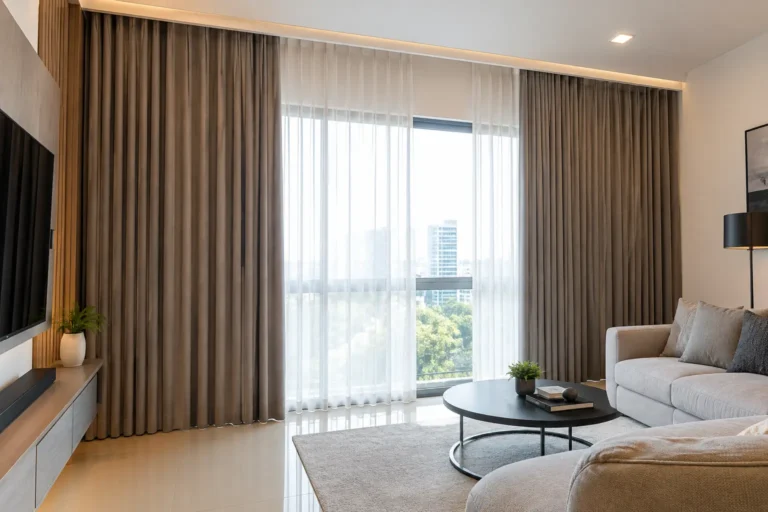
Motorised Curtain Systems Singapore: What to Look For
Read motorised curtain system reviews with clear advice on tracks, fabrics, smart controls, fitting, light control and long-term use for Singapore homes.
READ MORE →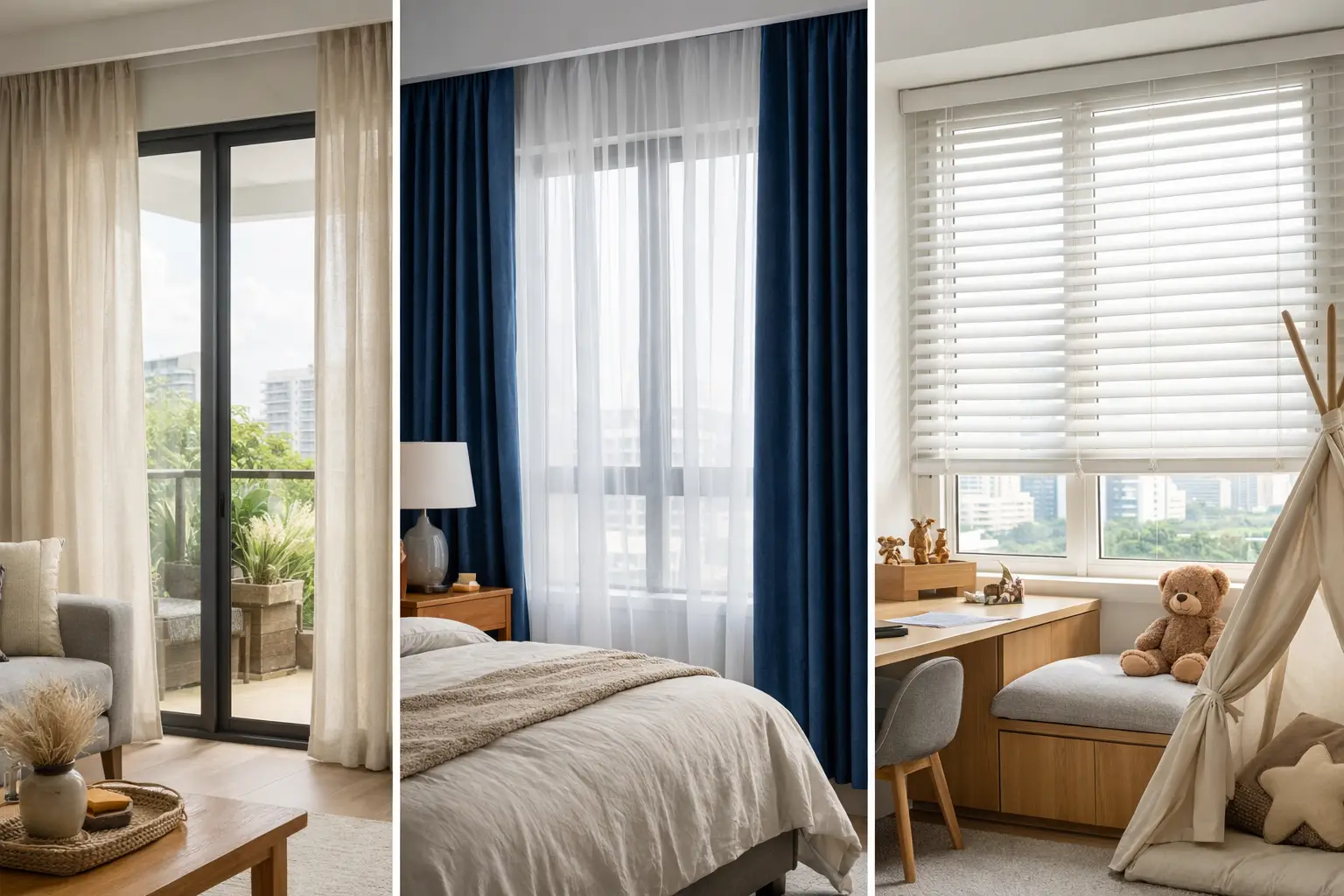

A curtain can look right in a showroom and still feel wrong once it is hanging across a sunny living-room window. The key to how to choose curtain fabric is not simply finding a colour you like. It is understanding how the fabric will handle daylight, privacy, heat, daily use and the dimensions of your actual window.
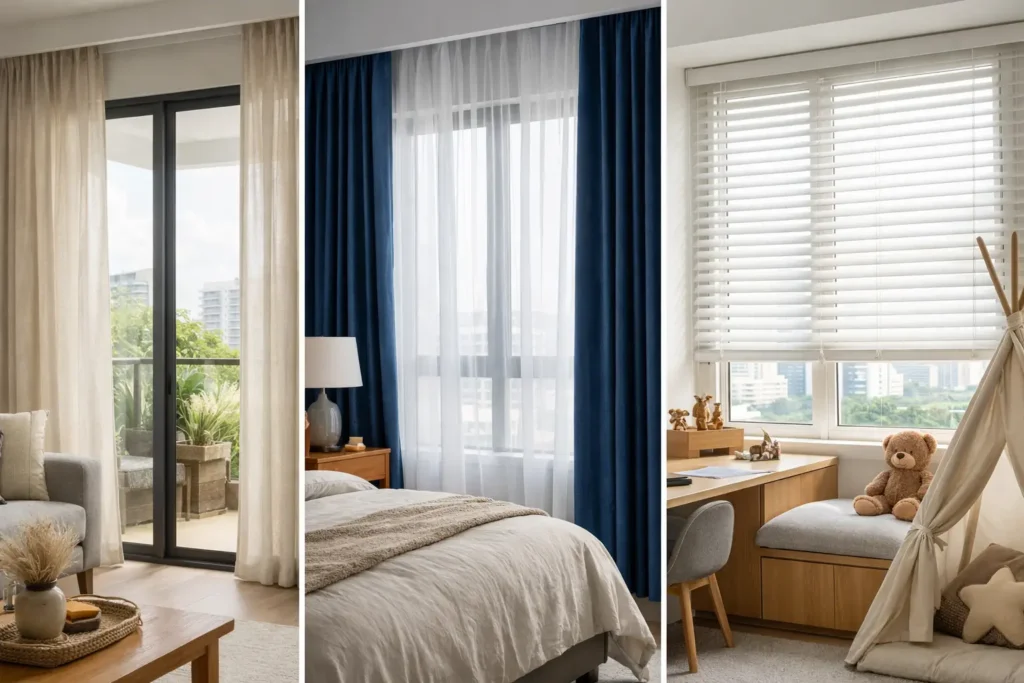
For HDB, BTO and condominium homes, where windows may be close to neighbouring blocks and living areas can be compact, fabric choice affects both comfort and space. Start with what the room needs to do, then assess the fabric’s weight, weave, opacity and care requirements before deciding on the final look.
Ask what happens at the window during the day and after dark. A fabric that provides sufficient privacy in daylight may become more transparent at night when indoor lights are switched on. This is particularly relevant for bedrooms and living rooms facing nearby units.
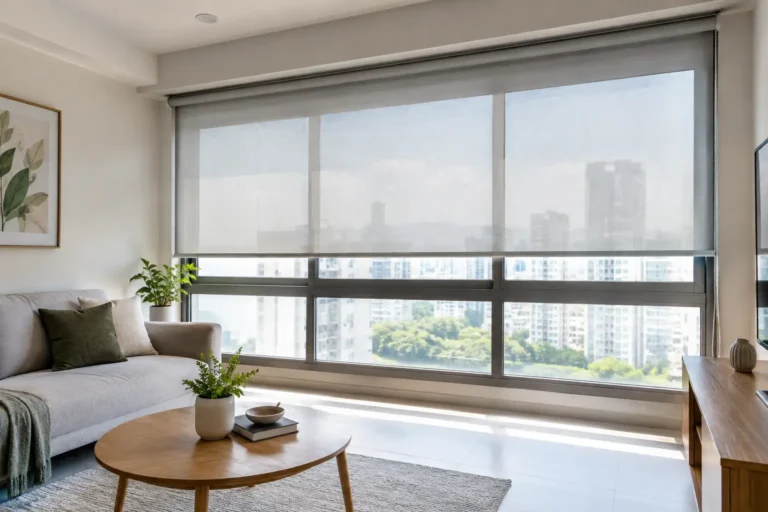
Sheer fabrics soften harsh sunlight and reduce glare while keeping the room bright. They work well in living rooms, dining areas and spaces with a pleasant view, but they do not provide strong night-time privacy on their own. Many homeowners use sheers as the day layer, paired with a fuller night curtain for privacy and light control.
For the night layer, the common choices are dim-out and blackout fabrics. Dim-out fabric reduces a substantial amount of incoming light but may still allow some light through the fabric itself. It suits living rooms, study areas and bedrooms where a softly darkened setting is sufficient.
Blackout fabric is more appropriate when darkness is a priority, such as in a child’s room, a shift worker’s bedroom or a media room. However, blackout performance is not determined by fabric alone. Light can still enter around the curtain edges, above the track and between centre panels. If you need the room as dark as reasonably possible, discuss track position, curtain overlap and side returns during site measurement.
Curtain fabric has a practical character. Two fabrics in a similar shade can hang, gather and wear very differently.
Voile, linen-look and textured sheer fabrics give a light, airy appearance. A more open weave admits more light and preserves visibility outwards. A denser sheer provides greater daytime privacy and slightly better glare control. Fine white sheers can look elegant, but off-white, warm grey or taupe often hide everyday dust and marks more forgivingly.
Sheers are generally best treated as a supporting layer rather than the only window covering in a bedroom. For lower-floor flats or windows facing common corridors, privacy may require another layer. A roller blind, honeycomb blind or night curtain can provide stronger coverage when needed.
Textured fabrics can make a plain room feel more considered without relying on a bold pattern. Linen-look curtains are popular because they bring a relaxed, natural appearance, but the weave and lining matter. A loosely woven fabric may filter light beautifully while offering limited privacy and can require careful handling.
A textured dim-out fabric is often a practical compromise for a living room. It gives the visual depth homeowners want while handling afternoon glare better than an unlined decorative fabric.
Denser polyester blends and blackout fabrics generally provide stronger light control, more privacy and a more substantial fall. They are often easier to maintain than delicate natural fibres and are suitable for family bedrooms or windows exposed to strong sun.
For windows exposed to strong sunlight, fabric choice should also be considered alongside effective shading and solar heat control. The Singapore Green Building Council highlights reducing direct solar exposure as an important part of improving thermal comfort in Singapore’s hot-humid climate.
The trade-off is bulk. A heavy fabric on a wide window needs more stack-back space when opened. In a compact BTO bedroom, the gathered curtain may cover part of the glass or crowd a wardrobe if this is not planned properly.
Fabric does not hang independently of its curtain style. The heading, fullness and track all influence its final appearance and operation.
Ripple fold and S-fold curtains need fabric that forms consistent, flowing waves. Medium-weight fabrics often perform well because they have enough body to hold the shape without becoming stiff or overly bulky. A very thick blackout fabric can still be used, but the wave size, fullness and track system should be selected carefully.
Traditional pleated curtains can carry heavier fabrics well and create a more formal look. They also require a larger stack when opened. If your window is beside a balcony door, consider whether the parked curtain will obstruct access or reduce the usable opening.
The track should be chosen for the curtain weight, window width and whether motorisation is planned. A correctly sized track helps curtains glide smoothly and prevents unnecessary strain over time. For double-layer curtains, a double track keeps the sheer and night curtains operating separately.
There is no single fabric that suits every room. A useful choice usually comes from balancing the room’s use with the direction of sunlight and the level of privacy required.
Living rooms usually benefit from flexibility. A sheer and dim-out or blackout combination lets you enjoy daylight in the morning, reduce glare in the afternoon and close the room off in the evening. If the window receives intense west-facing sun, choose a denser night fabric and do not rely on a thin sheer to manage heat or glare.
For large condominium windows or landed-home glazing, consider the fabric width and panel arrangement early. Wide curtains can be impressive, but multiple panels may be easier to operate and may create a neater stack-back.
Prioritise privacy and sleep comfort. A blackout night curtain is commonly suitable, with a sheer layer if you want soft daylight without exposing the room fully. If you are sensitive to early morning light, take time to plan light gaps rather than assuming any fabric labelled blackout will darken the entire room.
In a small bedroom, select a colour that works with the wall tone and avoid excessively thick fabric if there is limited clearance around the bed, wardrobe or air-conditioning ledge.
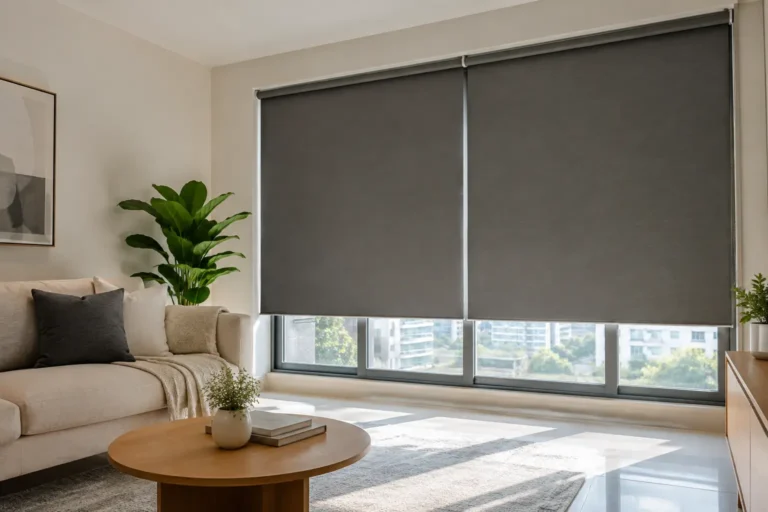
The main concern is often screen glare rather than complete darkness. A sheer may be enough for indirect light, while dim-out curtains or roller blinds offer more control for windows facing strong sun. Blinds can be a sensible alternative where a desk sits directly below the window and long curtain panels would interfere with furniture.
Curtains are usually less suitable close to cooking vapours, grease or high moisture. Choose an easy-clean blind solution where appropriate, and ensure the installation does not obstruct windows needed for ventilation. Fabric that absorbs odours or requires frequent professional cleaning may not be practical in these areas.
When deciding how to choose curtain fabric, consider how the colour and texture look in the room’s actual daylight rather than under showroom lighting alone.
Assess the colour in natural daylight as well as against the rest of the room. A grey that looks neutral under showroom lighting may appear cool in a sun-filled room, while cream can read yellow against certain wall colours.
For smaller flats, light to mid-tone fabrics often keep the window area visually open. Dark colours can look refined and may reduce visible light transmission. However, they can feel visually heavier in a compact room. Patterned curtains suit rooms with simple furniture and plain walls; where the flooring, wallpaper or upholstery is already busy, a textured plain is often easier to live with.
Also consider the view when curtains are open. The fabric will stack at one or both sides of the window, so its colour remains visible even when it is not covering the glass.
Fabric should suit your household, not just your renovation concept. Homes with young children, pets or windows opened frequently may benefit from durable, stable fabrics in practical mid-tones. Delicate sheers require gentler treatment, especially near balcony doors where hands, bags and outdoor dust can mark the fabric.
Regular vacuuming with a soft brush attachment helps remove surface dust. Follow the fabric-specific cleaning advice rather than washing curtains casually at home. Some materials can shrink, lose their coating or change their drape. Where possible, choose a fabric with a manageable care routine before committing to a full-home installation.
Knowing how to choose curtain fabric also means considering the window dimensions, surrounding furniture and installation conditions.
A curtain fabric performs properly only when accurate measurement, production and installation work together. Window width, ceiling height, pelmet details, air-conditioning units, balcony doors, window handles and wall clearance all affect what is suitable.
Professional measurement is especially valuable for irregular windows, bay windows, high ceilings and motorised curtains. It helps determine the appropriate track position, fabric fullness and potential light gaps before production begins. At Sincere Interior Service, we consider fabric selection together with measurement and installation requirements rather than treating it as a purely decorative choice. Serving Singapore since 1976, our team provides practical recommendations based on the room, window conditions and how the curtains will be used.
When comparing samples, hold them at the window in daytime and, if possible, view them against evening lighting too. The right curtain fabric is the one that continues to work after the renovation photographs are taken: it opens smoothly, gives the privacy you expect and makes the room more comfortable every day.
Not sure which curtain style, fabric or system suits your home? Speak with our team for personalised recommendations for your space.
GET IN TOUCH →