0
0

Motorised Curtain Systems Singapore: What to Look For
Read motorised curtain system reviews with clear advice on tracks, fabrics, smart controls, fitting, light control and long-term use for Singapore homes.
READ MORE →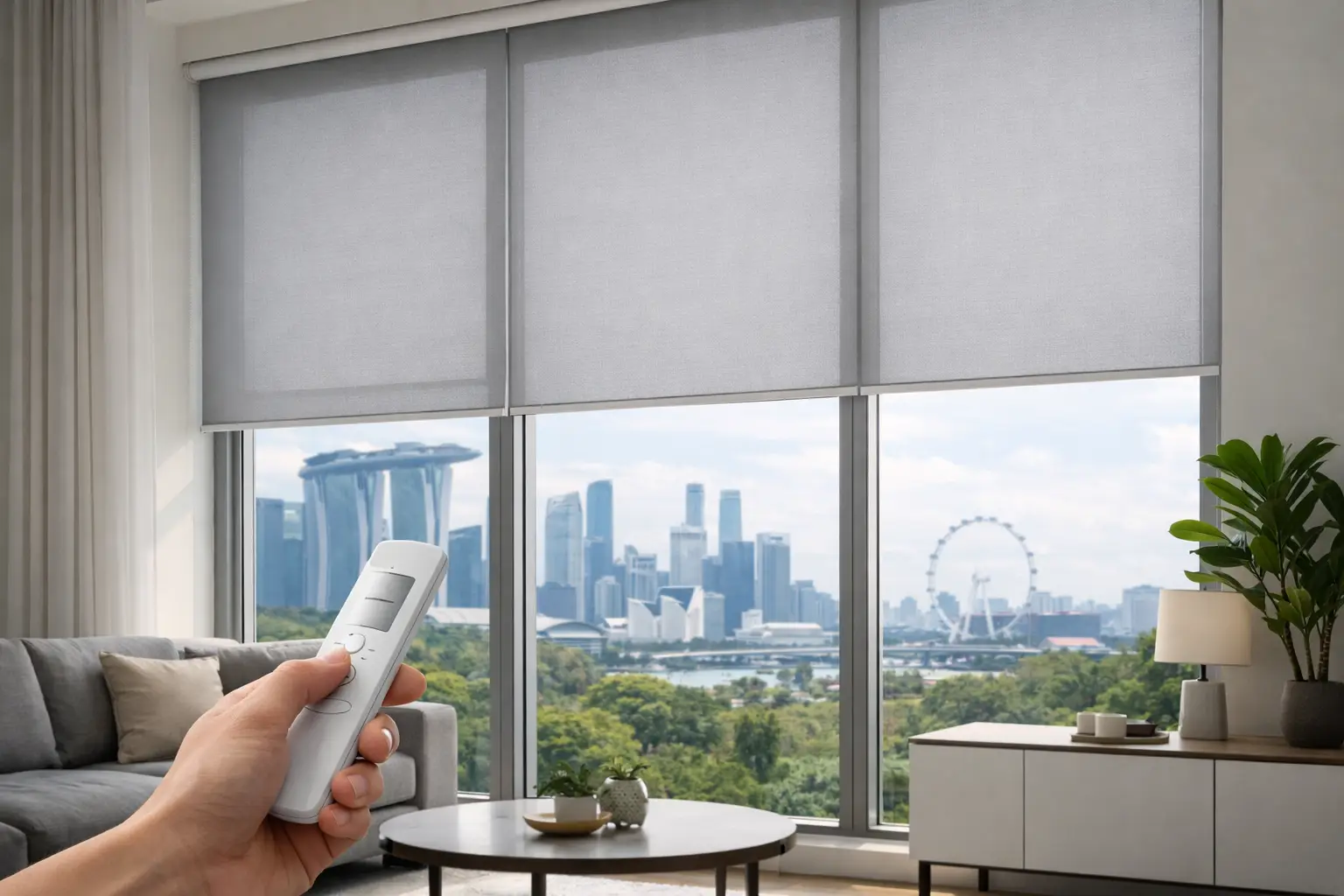

Floor-to-ceiling glazing can make a BTO living room, condominium lounge or landed-home stairwell feel bright and spacious. It can also leave you with blinds that are difficult to reach, glare at the hottest part of the day, and no practical way to adjust privacy once the sun goes down. Motorised blinds for high windows solve this everyday problem by putting control within easy reach, without ladders, poles or repeated pulling on a long chain.
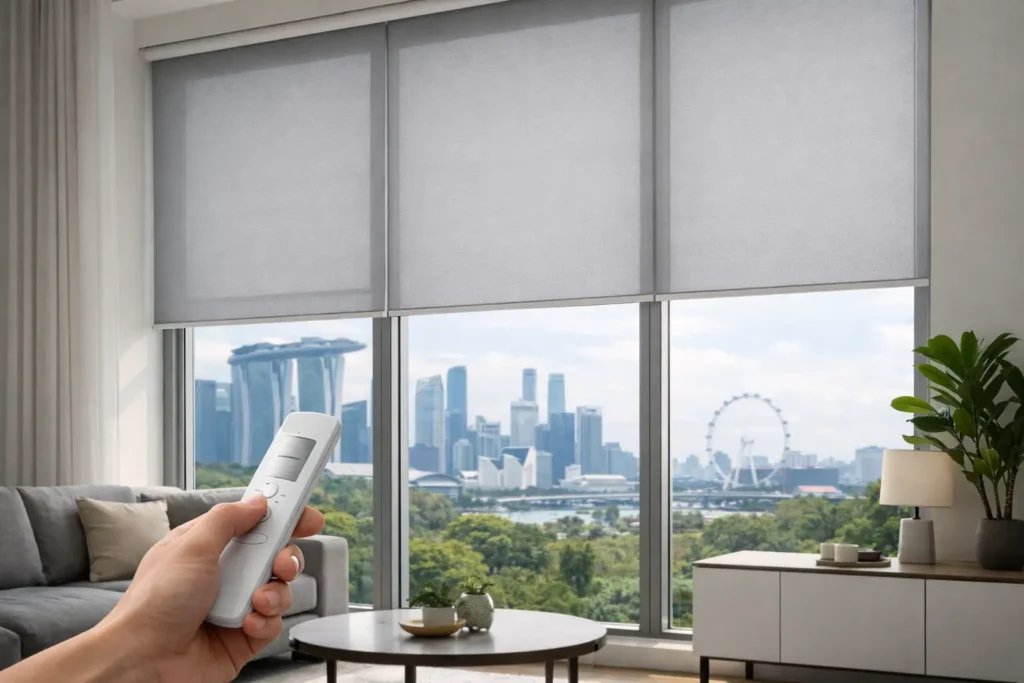
For tall or awkwardly placed windows, motorisation is not simply a luxury feature. It can be the safest and most sensible way to operate a made-to-measure blind consistently, especially where several large panels need to move together.
A blind that works well on a standard bedroom window may not be suitable for a double-volume area or high-level glazing. Height changes how the blind is measured, mounted and operated. A manual chain can become excessively long, while a hand-operated system may be impossible to reach safely after furniture is in place.
High windows also tend to admit strong daylight over a larger area. In Singapore, morning or afternoon sun can create glare on television screens, make a study corner uncomfortable, and increase heat near the glass. A motorised system allows you to lower the blinds when needed, rather than leaving them open because operating them is inconvenient.
There is also a safety consideration. Pulling a chain from a step ladder is not a practical long-term routine, particularly in homes with elderly family members or young children. Singapore’s Consumer Product Safety Office advises choosing window coverings without exposed cords where young children are present. Motorised operation removes the hanging chain. You can control the blind with a wall switch, remote control, mobile app or compatible smart-home system.
The right product depends on the window shape, the amount of sun it receives, and what the room needs at different times of day. During a site measurement, an experienced installer will look beyond the width and drop of the glass. Access for installation, ceiling structure, power availability and the blind’s fabric weight all affect the final recommendation.
Roller blinds are often a practical choice for high windows. Their clean, compact design suits contemporary HDB, condo and office interiors, and they can cover broad glass panels without adding visual bulk. With the right fabric, they provide privacy while retaining some daytime view, or deliver stronger room darkening where required.
Sunscreen roller-blind fabric filters harsh light and reduces glare, but it is not a blackout solution. It is well suited to tall living-room windows where occupants still want daylight and an outward view. For bedrooms, media rooms or spaces affected by nearby lighting at night, blackout roller blinds offer more effective coverage. Some light may still enter around the sides of a blind, especially with an inside-recess installation. Homeowners should consider this limitation when complete darkness is the priority.
Motorised Venetian blinds use adjustable slats to direct light upwards or downwards without fully blocking the window. They can be effective in studies and commercial spaces where changing glare levels are a concern. However, on very large or high windows, the combined weight and moving parts need careful assessment. Not every window is appropriate for this style.
Roman blinds bring a softer, fabric-led finish that works well with selected interiors. They can be motorised, but the fabric folds stack as the blind rises, meaning there must be sufficient space above the window. For very tall glazing, roller blinds are frequently the more streamlined option, though the design direction of the room may point to Roman blinds instead.
Tall windows do not always need one treatment only. A common arrangement in landed homes and double-volume condo spaces is a motorised sunscreen blind for daytime glare, paired with full-height curtains for evening privacy and a softer look.
This combination gives more control than relying on a single blackout blind. The blind manages daytime heat and visibility while the curtains create warmth and better night-time coverage. It does require proper planning so that curtain tracks, blind brackets and pelmets do not compete for ceiling space.
Most motorised blind systems use either mains power or rechargeable battery motors. Neither is automatically better. The suitable choice depends on the property, number of blinds and access to electrical points.
Mains-powered motors are generally suitable for new renovations, major refurbishments and projects with many high windows. For new renovations, plan the electrical wiring before completing false ceilings or carpentry. This keeps the finished look tidy. For a tall bank of blinds that will be used daily, this can be a reliable long-term arrangement.
Rechargeable battery motors can be useful where running new wiring would mean opening completed walls or ceilings. They are especially worth considering for smaller projects or individual windows. The trade-off is that batteries need periodic charging, and a very high installation may still require a practical method for reaching the charging point. Some systems offer solar charging accessories, but performance depends on the window’s exposure. Assess the site before relying on solar charging.
Controls can be as simple as a handheld remote or wall-mounted switch. Group control is useful when several blinds cover one wall of glazing, allowing them to rise or lower together. Smart control can add scheduled opening and closing, which is helpful for west-facing rooms that receive strong afternoon sun. Yet automation should support daily living, not complicate it. A straightforward remote remains a sensible choice for many households.
With high windows, small measuring errors are more noticeable. A blind that is too narrow may leave unwanted gaps; one that is too wide may interfere with window handles, mullions or curtain tracks. The mounting surface also matters. Concrete, steel, plasterboard and concealed ceiling details each require appropriate fixings and planning.
For blackout requirements, the installation method deserves particular attention. An inside-recess blind looks neat, but it normally allows some light around the edges. An outside-recess installation can improve coverage, although it may change the appearance of the window and require a larger fabric allowance. In a bedroom, the practical difference can be significant.
Large blinds also place more load on brackets and motors. Selecting a motor based only on price can lead to slower operation, unnecessary strain or a system that is poorly matched to the blind size. Made-to-measure production and professional installation are valuable here because the fabric, tube, brackets and motor are specified as one working system.
The cost of motorised blinds for high windows varies more than many homeowners expect. Window dimensions are a major factor, but so are fabric type, motor brand and capacity, control method, number of blinds, mounting height, electrical work and access conditions.
A sunscreen roller blind with battery motor may suit one tall window at a manageable cost. A full set of blackout blinds across a double-volume living area, with concealed wiring and group control, is a more involved project. It is worth comparing quotations on the details included, rather than only looking at the final figure. Check whether site measurement, installation, programming, warranty and post-installation support are clearly stated.
For renovated BTO and condo homes, it is usually more practical to plan motorisation before ceiling works are closed. For completed homes, a consultant can advise whether battery motors or discreet cable routes are more realistic.
Motorised blinds need little maintenance when correctly installed. Dust the fabric lightly using a soft brush attachment or dry microfibre cloth, and avoid soaking roller-blind fabrics unless the manufacturer specifically permits it. Keep the blind path clear of décor and ensure windows can be opened without catching the fabric or bottom bar.
If a motor becomes slow, unresponsive or stops at the wrong height, avoid forcing the blind by hand. It may need charging, reprogramming or a technician’s inspection. Keeping the remote accessible and using programmed upper and lower limits correctly will help the system operate smoothly over time.
Serving Singapore since 1976, Sincere Interior Service handles tall-window projects with professional site measurement and practical product recommendations. Our team guides homeowners from fabric selection and motor specification through custom production and installation, with a 12-month warranty and post-installation support.
High windows should remain one of the most enjoyable features of a home, not an area left permanently exposed because it is difficult to manage. A well-planned motorised blind system lets you enjoy the view and daylight while retaining control whenever the room needs it.
Not sure which curtain style, fabric or system suits your home? Speak with our team for personalised recommendations for your space.
GET IN TOUCH →