Ripple Fold vs Pleated Curtains Singapore: Style, Space, Light Control & Practical Differences
Published 22 Nov 2026
•
9 min read
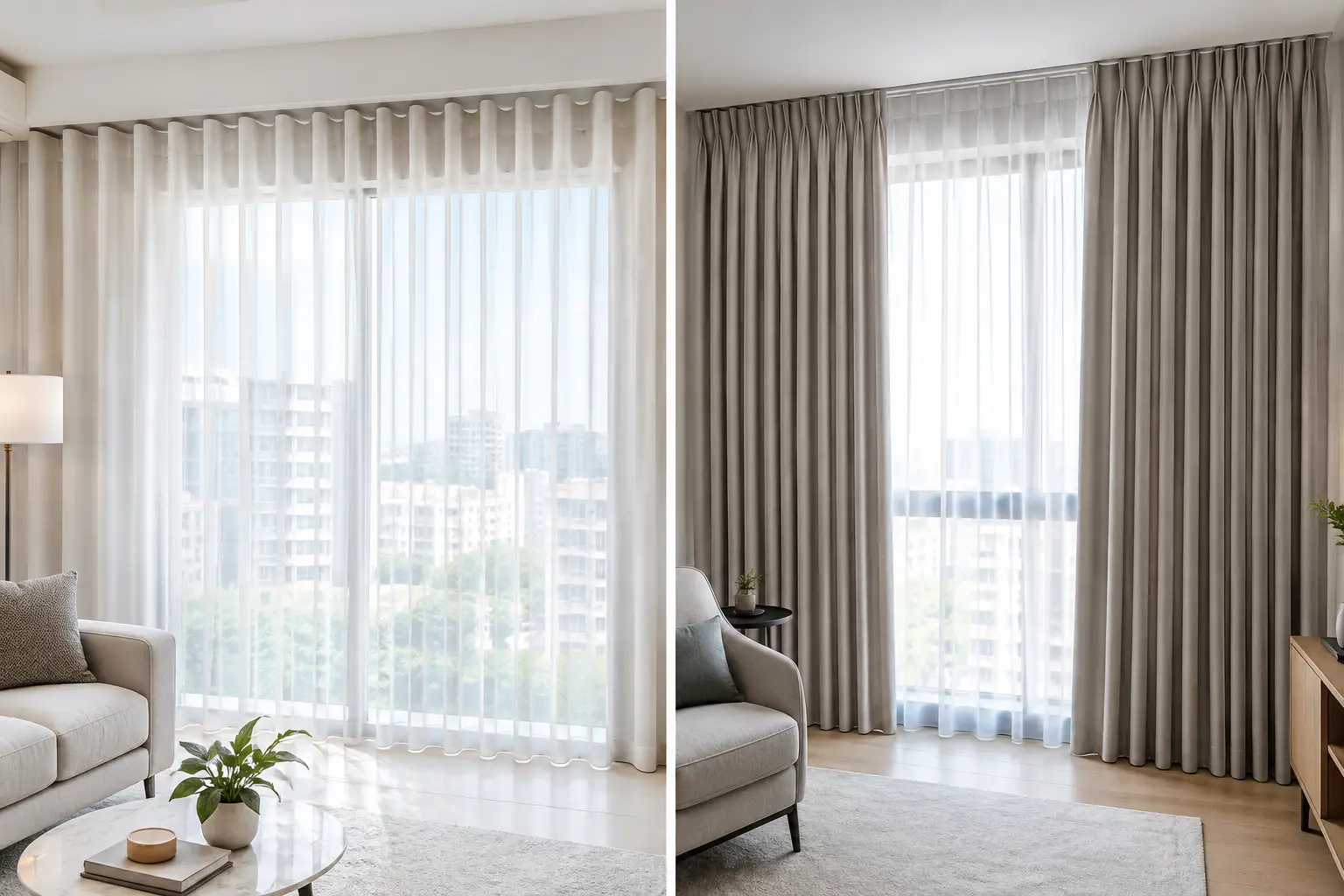
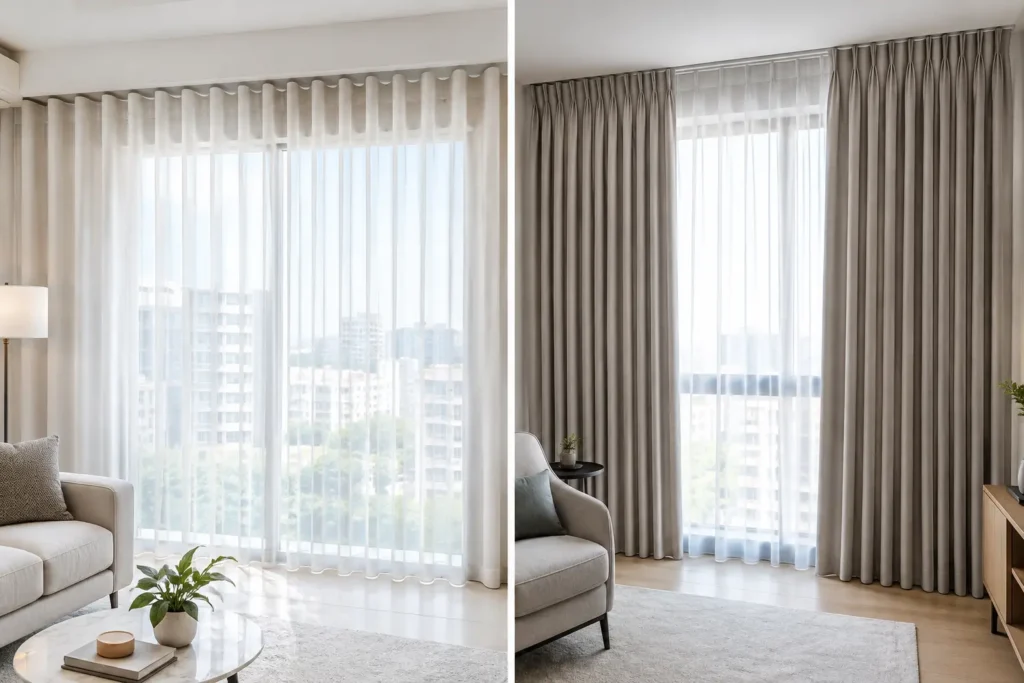
When comparing ripple fold vs pleated curtains, the first difference most people notice is the heading. Ripple fold curtains create smooth, evenly spaced waves, while pleated curtains form defined folds at the top. In practice, the better choice also depends on window width, fabric weight, stack-back space, privacy, light control and daily operation.
Both styles can suit HDB flats, BTO homes, condominiums, landed properties and commercial interiors. S-fold is another common name for ripple fold, while pleated curtains include options such as pinch pleat and pencil pleat. Choosing the heading before confirming the fabric helps avoid a curtain that feels too bulky, too formal or poorly suited to the window.
Ripple Fold vs Pleated: At a Glance
Ripple fold uses a compatible track with carriers set at regular intervals. This spacing creates a continuous wave across the curtain and keeps the heading visually consistent. Pleated curtains rely on folds formed into the heading, giving the top of the fabric a more structured appearance.
Neither option is automatically more premium. Fabric quality, proportion, fabrication, track choice and installation have a greater influence on the finished result. For many modern Singapore interiors, ripple fold feels cleaner, while pleated curtains offer more heading variety.
Ripple Fold vs Pleated: Style and Appearance
Ripple fold curtains work especially well across wide living-room windows, sliding doors and full-height glazing. The repeated waves create a calm, contemporary rhythm without making the heading look heavy. Ceiling-mounted tracks can also strengthen the full-height effect and make the window wall appear taller.
Pleated curtains draw more attention to the top of the fabric. Pinch pleats can look tailored, whereas pencil pleats create a softer gathered finish. A plain neutral fabric can still make a pleated curtain feel modern rather than traditional.
Room proportion should guide the final choice. A very narrow window may not provide enough width for ripple fold waves to develop naturally. By contrast, a heavily pleated curtain can feel too bulky beside a small window or narrow wall return.
Ripple Fold vs Pleated: Fabric and Fullness
Fabric behaves differently depending on the heading. Sheers, linen-look materials and many medium-weight dim-out fabrics drape particularly well with ripple fold systems. Stiffer or very thick materials can produce less fluid waves, so they should be assessed together with the track and wave spacing.
Pleated headings can accommodate lightweight decorative fabrics as well as denser dim-out and blackout materials. Heavier fabrics gain structure from the stitched heading, although they may create a larger stack when opened. That extra bulk matters beside wardrobes, balcony doors and areas where wall space is limited.
Fullness describes how much fabric is used relative to the track width. Too little fabric can leave a sheer looking flat, while excessive fullness can make a compact room feel unnecessarily heavy. The right amount should match the heading, fabric weight and window size rather than copy another installation.
Ripple Fold vs Pleated: Privacy and Light Control
Heading style does not determine whether a curtain is blackout. Blackout curtains can use either ripple fold or pleated headings, and both can provide strong room darkening when the installation is planned well. Light may still enter at the sides, centre opening, top or bottom of the curtain.
With ripple fold, the fabric naturally moves forwards and backwards as the waves form. Small light paths can therefore appear near the sides or between layers, depending on the track position. For most living rooms this is not a concern, but bedrooms that need stronger darkness require more attention to overlap and side coverage.
Pleated curtains also depend on proper fitting. A pleated heading does not automatically remove light gaps, so the curtain should extend sufficiently beyond the window where possible. Pairing sheer curtains with a dim-out or blackout night layer gives more flexibility between daytime privacy and night-time light control.
Ripple Fold vs Pleated: Tracks and Stack-Back
Track requirements are one of the biggest practical differences between ripple fold vs pleated curtains. Ripple fold needs a compatible system that maintains regular spacing between the carriers. The heading and track should therefore be planned together.
Pleated curtains offer more track flexibility. Depending on the design, they can operate on suitable tracks or decorative poles, with centre-opening, one-way or individual-panel arrangements. This flexibility can help when the window sits beside a balcony door, beam or built-in furniture.
Stack-back is the space occupied by a curtain when fully open. Ripple fold creates an orderly series of waves, while pleated curtains can form a thicker stack with heavy fabrics and generous fullness. Actual stack-back still depends on curtain width, fabric weight, fullness and track design.
Ripple Fold vs Pleated: Which Suits Each Room?
Living rooms with wide windows often suit ripple fold because the continuous waves complement larger spans. A sheer day layer can soften direct sunlight while maintaining a bright interior. Adding a dim-out or blackout night curtain provides stronger evening privacy.
Bedrooms can work well with either heading. Homeowners who want a cleaner contemporary finish may prefer ripple fold, whereas pleated curtains can provide a fuller or more structured appearance. In compact rooms, clearance around beds, wardrobes and desks should influence the final decision.
Large glazed areas in landed homes need careful planning because total curtain weight increases quickly. Ripple fold can create a striking continuous appearance across broad glazing, while pleated curtains may suit interiors that call for a more decorative finish. Long tracks and heavier fabrics need adequate support regardless of heading.
Commercial and hospitality spaces often prioritise predictable operation, durability and a consistent appearance. Ripple fold suits repeated full-height windows particularly well. Pleated curtains remain useful where the design calls for more visual structure or heavier decorative fabric.
Ripple Fold vs Pleated: Motorisation
Both heading styles can work with motorised curtain systems when the correct track is selected. Ripple fold is especially compatible with motorisation because controlled carrier spacing helps maintain the wave pattern as the curtain moves. Wide living-room windows and high glazing are common situations where this can be useful.
Pleated curtains can also operate smoothly on a compatible motorised track. Fabric weight, track length and the operating arrangement should remain within the selected system’s specifications. Planning power access early makes installation easier during renovation.
Manual operation still makes sense for smaller windows and curtains that are easy to reach. A well-installed manual track can provide excellent everyday performance without unnecessary complexity. The best operating method is the one that suits how often the curtain will actually be used.
Ripple Fold vs Pleated: Maintenance and Cost
Routine maintenance is similar for both styles. Use a suitable upholstery attachment to remove surface dust gently, and follow the cleaning instructions for the selected fabric. Instead of pulling repeatedly on the main fabric, use the leading edge or draw wand where provided.
Correctly aligned carriers help ripple fold curtains maintain their regular waves. Pleated headings need care around the stitched folds so the structure remains neat over time. Household habits should influence fabric choice as much as appearance.
Cost varies according to fabric type, window dimensions, fullness, lining, track system and installation requirements. Ripple fold uses compatible track hardware and specific fabrication, while pleated curtains may use different amounts of fabric depending on pleat style and fullness. Motorisation can add further cost to either option.
For full-height windows, corner glazing or limited stack-back, site measurement gives a more meaningful comparison than a simple price per metre. The same heading can perform very differently from one property to another when the window proportions change.
HDB Curtain Installation Considerations in Singapore
For standard internal installations, the Housing & Development Board’s window-work guidelines currently list internal curtain rails as work that does not require a renovation permit. If a project affects the windows, open balcony or other building elements, different requirements may apply.
Homeowners should check the latest HDB guidance when proposed work extends beyond a normal internal curtain installation. Site conditions such as beams, false ceilings and existing carpentry should also be assessed before confirming track position.
Frequently Asked Questions About Ripple Fold vs Pleated Curtains
What is the main difference between ripple fold and pleated curtains?
Ripple fold curtains create continuous waves through regularly spaced carriers on a compatible track. Pleated curtains use folds formed into the heading, which gives the top of the curtain a more defined structure.
Is ripple fold the same as S-fold?
In Singapore, ripple fold and S-fold are commonly used for the same general wave-style curtain heading. Both terms describe curtains that form consistent S-shaped curves rather than stitched or gathered pleats.
Which style looks more modern?
Ripple fold usually creates the more contemporary appearance because the waves remain consistent across the window. Pleated curtains can still look modern when paired with a simple fabric and restrained heading.
Which style works better with blackout fabric?
Either heading can use blackout fabric. Final room darkening depends more on track position, side coverage, centre overlap and surrounding light gaps than on the heading itself.
Which curtain takes up less space when open?
No single heading always uses less space. Fabric weight, fullness, window width and track design determine the final stack-back.
Can both styles be motorised?
Yes. Appropriate motorised tracks can operate both ripple fold and pleated curtains. Controlled carrier spacing makes ripple fold particularly compatible with motorisation.
Can sheer curtains use either heading?
Yes. Sheer fabrics can use ripple fold or pleated headings. Ripple fold is especially popular for full-height sheers across wide living-room windows.
Choosing Between Ripple Fold vs Pleated Curtains
Your choice between ripple fold vs pleated curtains should consider more than appearance. Homeowners who prefer consistent waves, clean lines and a contemporary full-height finish may favour ripple fold. A pleated heading may be more suitable when greater heading variety or a more structured fabric treatment is preferred.
Before making the final selection, compare stack-back space, fabric weight, privacy requirements, light control and expected daily operation. Accurate measurement becomes especially important around balcony doors, built-in furniture and unusually wide windows.
At Sincere Interior, we consider the heading, fabric, track, fullness and window dimensions together. This approach helps the finished curtain work with the room instead of treating each component as a separate decision.
Serving Singapore since 1976, our team provides made-to-measure curtains in Singapore with in-house production, professional site measurement and installation for residential and commercial projects.
Ultimately, the right curtain should look proportionate when closed, clear the window properly when open and remain convenient to use long after installation.
SINCERE INTERIOR
Need Help Choosing the Right Curtains?
Not sure which curtain style, fabric or system suits your home?
Speak with our team for personalised recommendations for your space.
Discover the best curtains for Singapore humidity, with practical guidance on fabric choices, mould prevention and care for homes, offices and commercial…


 0