0
0

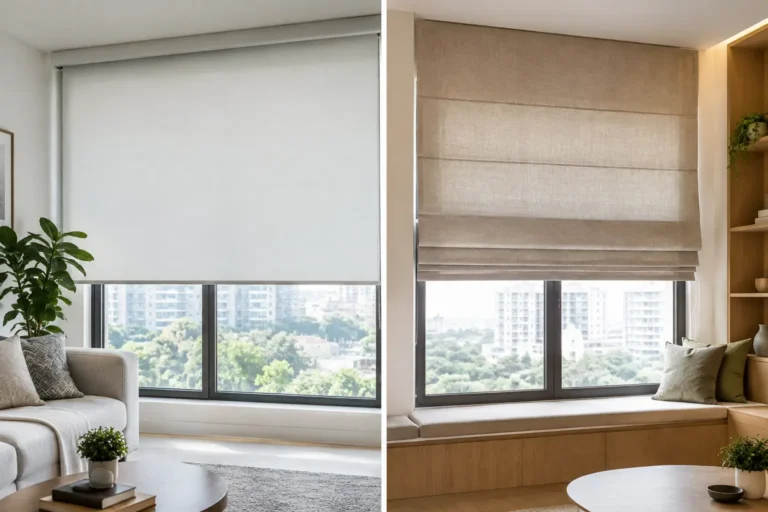
Roller Blinds Versus Roman Blinds: Which Fits?
Compare roller blinds versus roman blinds for privacy, glare control, blackout, upkeep and style, with practical advice for HDB, condo and landed…
READ MORE →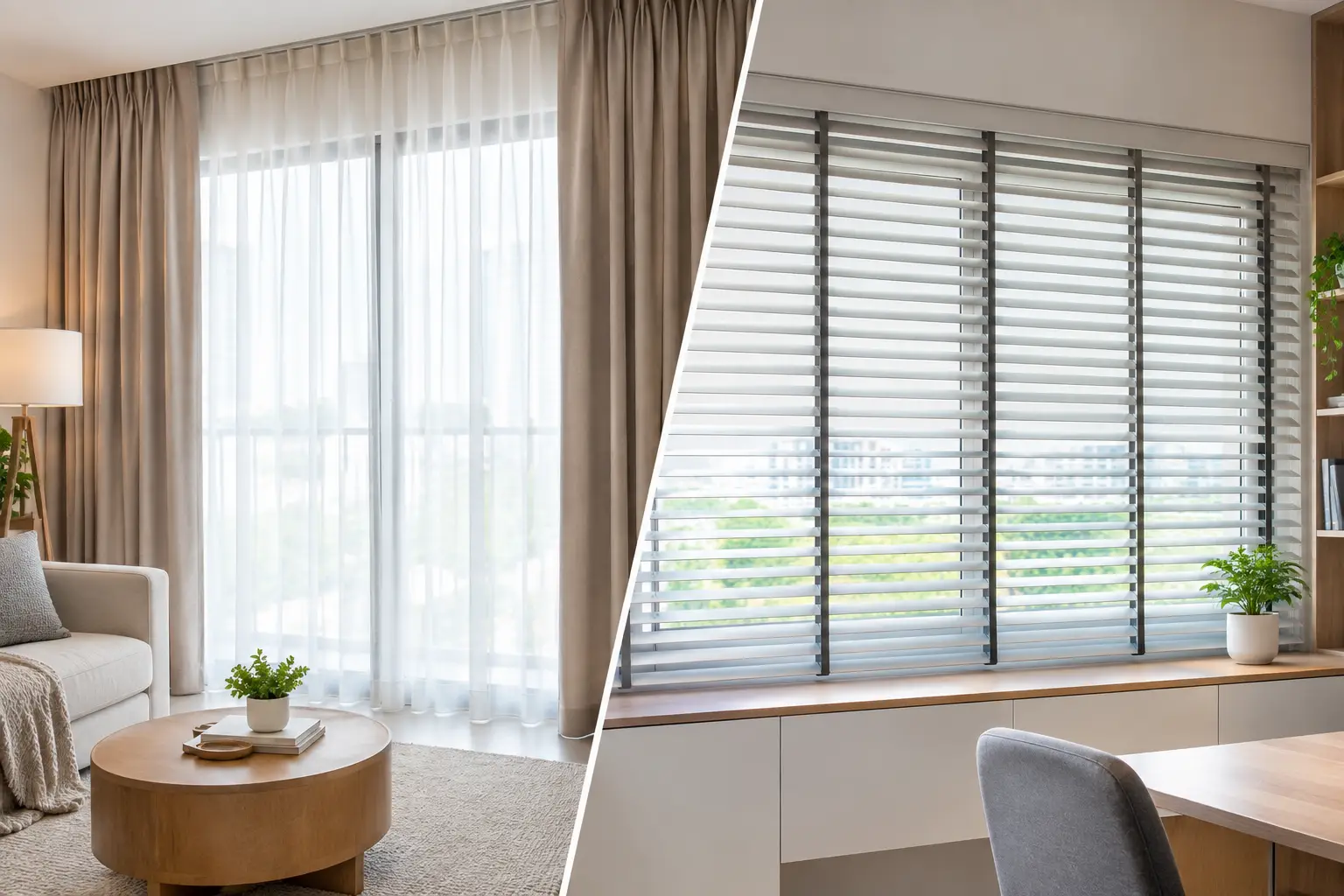

A west-facing living-room window can look very different at 4pm. The issue is not only brightness, but glare on the television, heat near the glass and a lack of privacy from neighbouring blocks. When considering curtains versus blinds, the right choice depends on how the room is used, the window shape, the amount of available space and the level of light control you genuinely need.
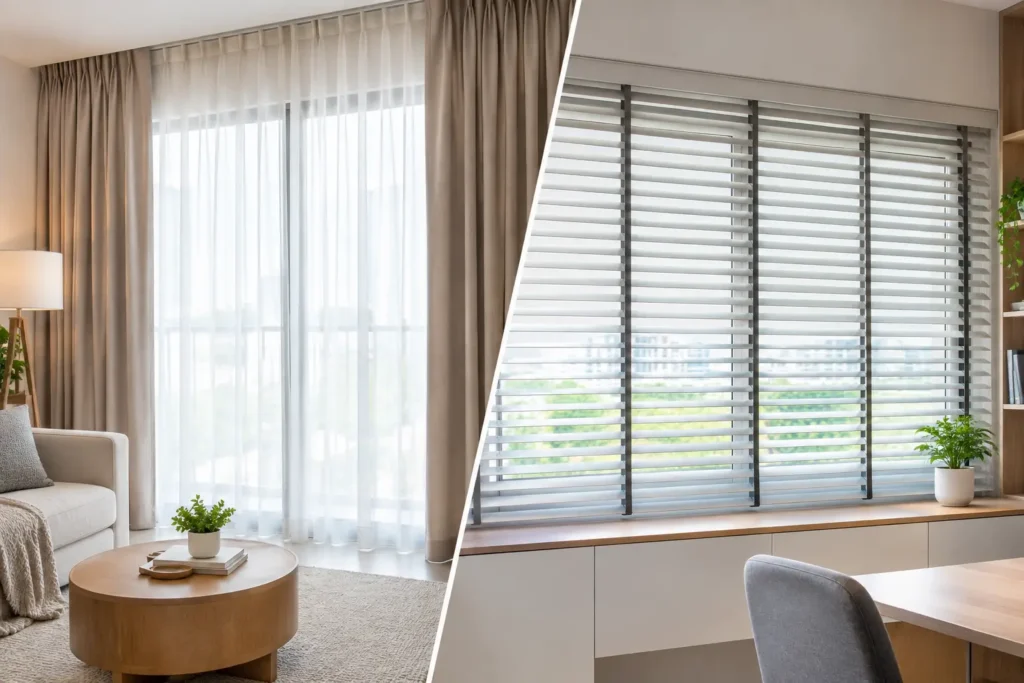
Curtains usually offer a softer, more complete finish and stronger light coverage. Blinds give a neater profile and more precise control over daylight. Neither is automatically the better option. A careful site measurement is what reveals whether the chosen treatment will clear the window, stack neatly and operate comfortably every day.
For most Singapore homes, neither option is universally better. Curtains usually suit rooms that need fuller coverage, layered privacy and a softer finish, while blinds work well where compact installation and more adjustable light control matter.
The main difference is how each treatment covers the window. Curtains are fabric panels that travel sideways on a track. They can be drawn fully open, gathered at the sides and layered with sheers or blackout fabric. Most blinds use a single treatment that rolls, folds, stacks or tilts within the width of the window.
Because curtains extend beyond the window opening, they are generally better at reducing side light gaps. This matters in bedrooms where homeowners want a blackout effect. A blackout curtain fabric blocks light through the fabric itself, but light can still enter around the top, sides and bottom if the track and curtain coverage are not planned properly.
Blinds sit closer to the glass or window frame, which makes them useful for compact BTO bedrooms, study rooms and kitchens where a full curtain stack-back would take up valuable wall space. However, most blinds will have some edge gaps by design. They can dim a room very effectively, but may not create the same darkness as a properly designed blackout curtain system.
Homeowners often choose curtains for living rooms and bedrooms because fabric adds warmth, softness and visual depth. In a condominium or landed home with broad glazing, full-height curtains can also make the window wall feel more proportionate and less stark.
For bedrooms, a day-and-night curtain combination remains one of the most flexible arrangements. You can close sheer curtains during the day to soften sunlight and reduce direct views while still allowing daylight through. At night, the main curtain provides privacy and a more restful atmosphere.
If you are sensitive to early morning light, blackout curtains are generally the stronger choice. Consider the track as carefully as the fabric. A ceiling-mounted track may reduce the gap above the curtain, while sufficient overlap at both sides helps limit light leakage. Depending on the room and renovation design, you can also use side returns or a pelmet-style detail.
Ripple fold and S-fold curtains are popular where homeowners want even, continuous waves across a large window. The appearance is clean, but the fabric still needs adequate fullness and a suitable track to form consistently. A fabric that is too stiff, too light or insufficiently full may not hang as intended.
Curtains also need stack-back space. When open, the fabric gathers at one or both sides of the window. On a narrow wall, this can cover part of the glass or conflict with a built-in cabinet, air-conditioning ledge access or a bedroom wardrobe. This is one reason on-site measurement matters more than choosing from a photograph.
Curtains collect more dust than many blind types, particularly textured fabrics and heavier blackout linings. Regular vacuuming with a soft brush attachment helps, while care instructions will depend on the fabric construction. They also require enough wall or ceiling space for the track and sufficient clearance from furniture.
For a very small study where a desk sits directly beneath the window, curtains may be less convenient than a blind that can be raised above the glass.
Blinds are practical when the aim is controlled daylight, a compact installation or a more structured appearance. They are especially useful for windows with limited side clearance, where curtain panels would have nowhere sensible to stack.
Roller blinds are a straightforward choice for studies, offices, kitchens and many bedrooms. You can specify roller blinds in dim-out or blackout materials. Blackout versions still have side gaps unless the window allows for a specialist enclosed system.
A sunscreen-type roller blind is useful where glare is the main issue rather than full privacy or darkness. It reduces harsh sunlight while retaining some outward visibility during the day. At night, however, internal lighting can make the room more visible from outside, so do not rely on it as a complete privacy solution.
Korean blinds, also known as combi blinds, use alternating sheer and opaque fabric bands. By aligning the bands, you can choose filtered daylight, more privacy or a clearer view out. This flexibility suits living rooms and home offices where lighting conditions change through the day.
Their design does not provide full blackout performance. They are best for homeowners who value adjustable light and a contemporary, streamlined look rather than bedroom-level darkness.
Venetian blinds allow the slats to tilt, directing daylight upward or downward while maintaining some privacy. Aluminium versions can suit kitchens and practical spaces because the surface is easy to wipe. They can, however, produce a more structured visual effect and need occasional cleaning between slats.
Roman blinds bring fabric softness in a more compact format than curtains. They suit smaller windows and can work well in bedrooms or lounges, but the folded fabric stack remains visible at the top when raised. The selected fabric and lining affect how neatly it folds and how much light it blocks.
Honeycomb blinds are worth considering where a neat profile and a softer diffused light are preferred. Their cellular structure gives them a distinct appearance, but material choice, window location and fitting details should still be assessed rather than assuming one blind type solves every heat or privacy concern.
HDB’s MyNiceHome also recommends comparing blinds and curtains according to functionality, maintenance and budget, reinforcing the value of choosing around the needs of each room rather than following one style throughout the home.
In an HDB or BTO living room facing another block, a sheer curtain with a night curtain often offers comfortable daytime privacy and a welcoming finish. For a compact study with a monitor near the window, a roller blind or Korean blind may manage glare without adding bulk around the desk.
Bedrooms need a more direct decision. If the priority is sleeping in darkness, choose blackout curtains with a track arrangement designed to minimise gaps. If the bedroom is tight and the requirement is mainly privacy with moderated daylight, a dim-out roller blind may be more practical.
For kitchens, blinds are usually easier to keep clear of worktops and may be more suitable near areas exposed to cooking residue. In bathrooms, product selection must take humidity, ventilation and the window position into account. Fabric curtains are not always the practical answer in these spaces.
Large, high windows in landed properties can benefit from motorised curtains or blinds. Motorisation avoids handling long fabric panels or reaching awkward controls, and it can make daily operation more likely. Discuss the electrical provision, control preference, track or blind size and installation access early. Ideally, do this before closing false ceilings.
Poor installation planning can undermine even a beautiful fabric or blind. Curtain tracks require a secure fixing surface and enough clearance from air-conditioning units, ceiling fans, coves and built-in carpentry. For blinds, installers need to check whether the fitting will be inside the recess, outside the recess or ceiling mounted, as this changes the finished coverage and light gaps.
Window handles, grilles and inward-opening casement windows also affect the choice. A blind fitted too close to a protruding handle may not lower smoothly. Installers may need to set curtains further forward to clear grilles. This changes the required track projection.
This is why an accurate measurement is more than recording width and height. It is an assessment of obstructions, operating clearance, fabric behaviour and how the treatment will look both open and closed.
Costs vary with window dimensions, fabric or material, track type, lining, manual or motorised operation and installation conditions. Comparing only the initial appearance can be misleading. A curtain setup may involve sheers, main curtains and tracks, while a blind may be a more compact single treatment. Conversely, motorised blinds, specialist materials or unusually large windows can change the overall cost.
For maintenance, roller and Venetian blinds are often quicker to dust or wipe. Curtains generally need periodic vacuuming and more careful cleaning. Yet curtains can be a sensible long-term choice where their better coverage reduces the need for additional layers or supplementary shading.
At Sincere Interior Service, we consider these practical details alongside fabric and colour selection. Serving Singapore since 1976, our team provides professional site measurement, Singapore-based custom production and installation for made-to-measure curtains and blinds. The aim is a window treatment that fits the actual opening and remains practical to use after installation.
The most useful next step is to look at each room at the time sunlight is strongest, then consider what happens after dark. That simple observation usually makes the choice between curtains, blinds or a combination much clearer.
Not sure which curtain style, fabric or system suits your home? Speak with our team for personalised recommendations for your space.
GET IN TOUCH →