0
0

Motorised Curtain Systems Singapore: What to Look For
Read motorised curtain system reviews with clear advice on tracks, fabrics, smart controls, fitting, light control and long-term use for Singapore homes.
READ MORE →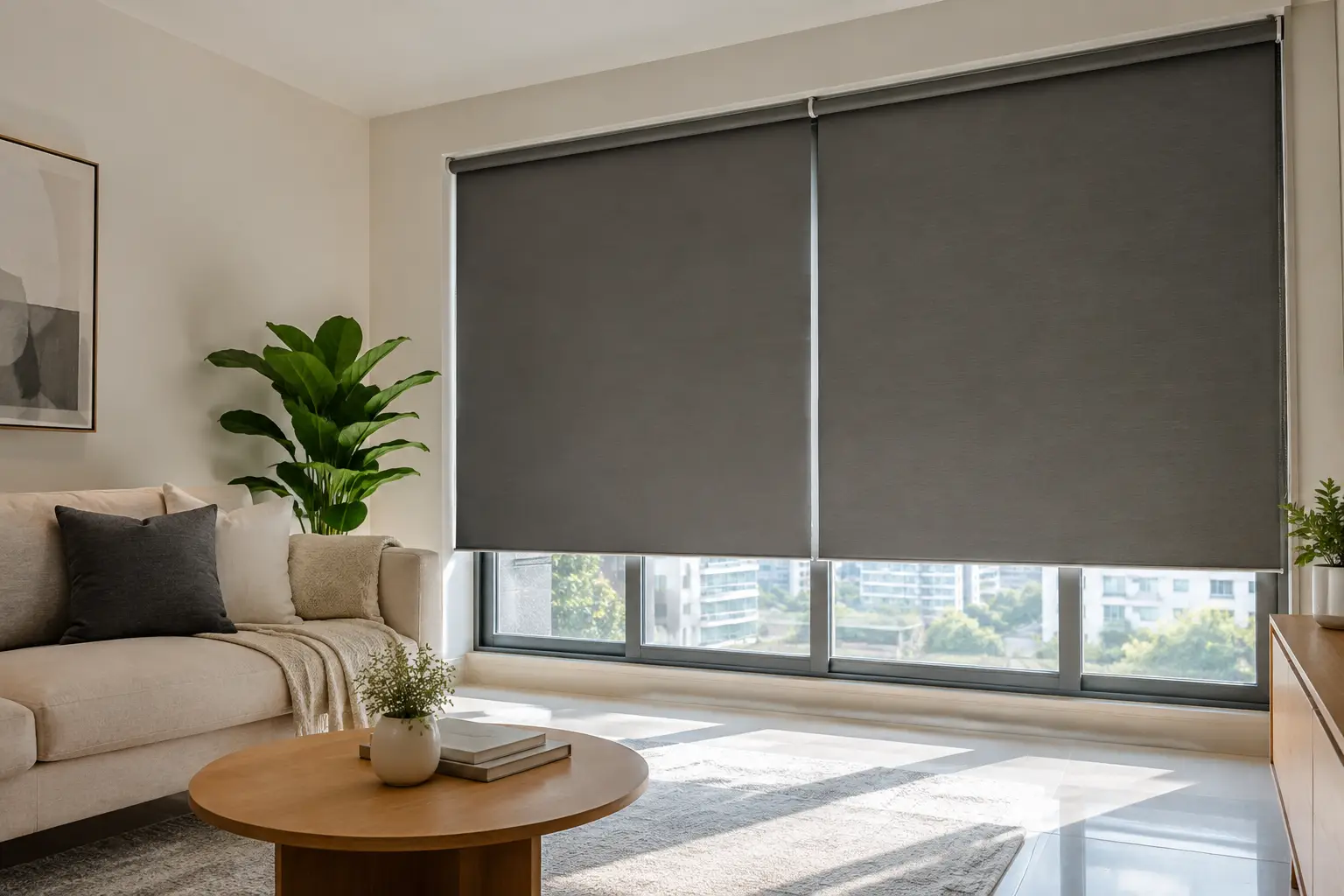

A west-facing living room can feel comfortable at 2pm and uncomfortably bright by 4pm. Low afternoon sun enters directly through the glass, creating screen glare and making the room feel warmer. So, which blinds block afternoon sun most effectively?
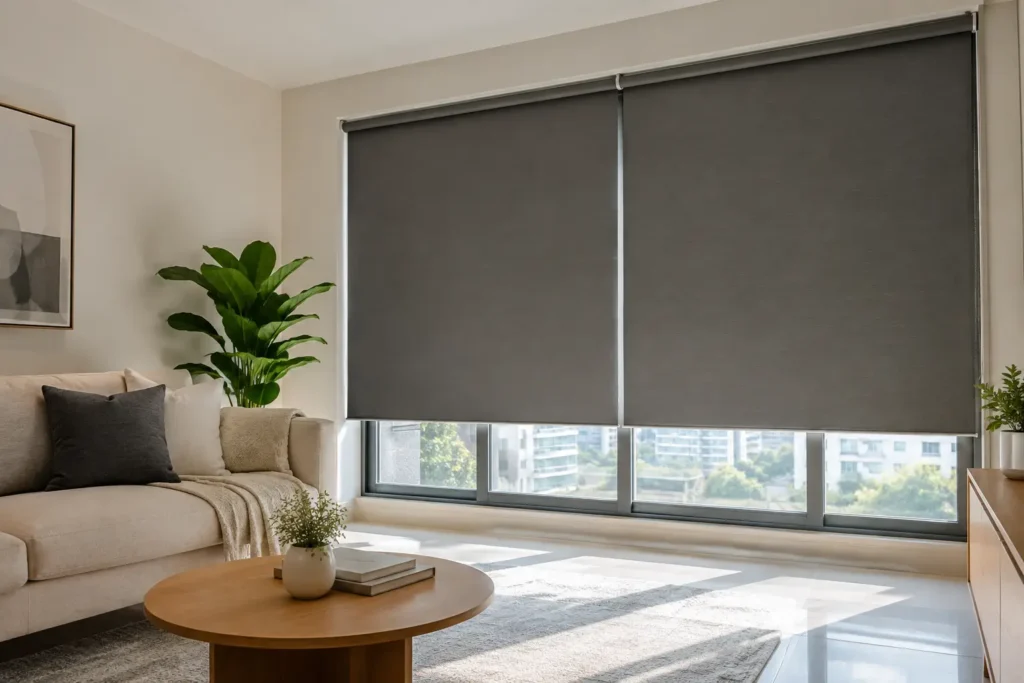
For most Singapore homes, blackout roller blinds are the strongest simple option for reducing direct afternoon light and glare. Honeycomb blinds suit rooms where insulation at the window matters. Venetian blinds offer adjustable light direction and privacy. Korean or combi blinds work better when flexible filtered daylight matters more than maximum darkening.
The right choice depends on whether your main concern is glare, heat, privacy or room-darkening, as well as the window size, orientation and how the room is used.
The right answer depends on whether your main problem is glare, heat, privacy or the need to darken a room. It also depends on the window itself. Window type also matters. A full-height condominium window, an HDB living-room casement window and a narrow BTO bedroom window may need different blind systems.
Blackout roller blinds are usually the most practical blind option for blocking intense afternoon sun. The fabric forms a continuous panel across the window. This helps reduce direct light and glare more effectively than slatted blinds. They are especially suitable for bedrooms, home offices and media areas where a darker interior is useful.
However, “blackout” refers mainly to the opacity of the fabric, not a promise of total darkness. Light can still enter around the sides, above the blind and below the bottom bar. On a west-facing window, these gaps become more noticeable when the sun is low. Accurate measurement, suitable mounting position and sufficient overlap beyond the glass are therefore as important as the fabric choice.
For a room where complete darkness is not necessary, dim-out roller blinds offer a more balanced result. They soften harsh sun and reduce glare while allowing the room to retain a gentler level of daylight. This can feel less enclosed in a living room or dining area used throughout the day.
If the afternoon sun reflects off a television, computer monitor or polished dining table, select an opaque or dim-out roller blind. Roller blinds have no open slats through which concentrated sunlight can pass. You can lower the blind to the exact height needed. This works well in a home office. You can cover the upper window while keeping some view through the lower section.
Korean or combi blinds can also work for glare control. Their alternating sheer and opaque stripes allow you to adjust the amount of filtered light without lifting the blind fully. They are visually lighter than a blackout roller blind, but their sheer sections will not block direct afternoon sun as thoroughly. They suit rooms where light adjustment matters more than maximum darkening.
No internal blind can stop all heat once sunlight passes through the glass. A well-chosen blind can still reduce discomfort from direct solar glare. Opaque roller fabrics and honeycomb blinds are sensible options. Honeycomb blinds have a cellular construction that creates air pockets, helping to moderate the feeling of heat near the window while providing a neat, soft appearance.
Singapore’s National Environment Agency also recommends closing curtains or blinds during the hottest part of the day to help keep the home cooler.
Honeycomb blinds are particularly useful in bedrooms and study rooms where you want privacy and light control without the hard lines of a roller blind. They are less suitable when a room must be very dark in the afternoon. Choose the fabric and fitting carefully if room-darkening is the priority. Side gaps still matter, especially on recessed windows.
For large expanses of glass in landed homes or condominiums, consider how the blind will be used daily. For very wide windows, installers may divide the blind into separate sections for easier operation. This lets you cover only the sun-facing area when needed.
Venetian blinds offer the most precise control of light direction. By tilting the slats, you can deflect some high light while maintaining privacy and a degree of outward view. Aluminium Venetian blinds are often practical in kitchens, utility areas and commercial settings because they are relatively easy to wipe down and tolerate humid conditions well.
Their trade-off is clear: even when closed, slats are not a full blackout barrier. Low-angle afternoon sunlight can pass between or around them, depending on the tilt. Venetian blinds work well when adjustable light is the priority. They are less suitable in west-facing bedrooms where strong sun disrupts sleep or screen viewing.
Vertical blinds can be useful on wide sliding doors or broad windows. Like Venetian blinds, they allow the vanes to be angled to redirect light. They work well for balcony or patio access. However, they may not give the softer, enclosed look some homeowners prefer in living spaces.
A common disappointment is choosing blackout material but finding bright strips of light around the blind. This is not necessarily a fabric fault. An inside-recess roller blind leaves limited space at the sides for the operating mechanism and fabric movement. The resulting side gaps are normal and can be noticeable with direct sun.
Where installation conditions allow, an outside-recess mount can provide more coverage. Installers can make the blind wider and taller than the window opening so the fabric overlaps the frame. This often works better for bedrooms. Plan the blind around handles, grilles, pelmets, air-conditioning trunking and nearby cabinets.
For the strongest room-darkening result, curtains may be more suitable than blinds. Blackout curtains with adequate fullness, wider returns and a properly fitted track can cover a larger area around the window. In many bedrooms, a sheer curtain paired with blackout curtains provides flexible daytime privacy and stronger evening darkness. The compromise is that curtains need stack-back space at the sides, which may be limited in compact BTO rooms.
Fabric roller blinds are a popular choice for living rooms and bedrooms because they give a clean finish and come in many colours and textures. For windows exposed to strong sun, avoid selecting solely by colour or appearance. Hold fabric samples against the glass where possible and assess their opacity in daylight. A pale fabric can still be effective if it has an opaque backing, while a dark but open-weave fabric may filter light without providing much privacy at night.
PVC-based or wipeable blind materials can be practical near kitchens and service yards, where moisture and cooking residue make frequent cleaning necessary. In bedrooms and dry living areas, fabric systems generally offer more warmth and a wider choice of light-filtering or blackout effects.
Consider motorised blinds for high, hard-to-reach or frequently used windows. Afternoon sun follows a predictable pattern, and motorisation makes it easier to lower several blinds at once before a room heats up. It is particularly useful for large windows behind furniture, double-volume spaces and elderly household members who may find manual operation inconvenient. Check power points, cable routing and maintenance access before installation.”
For a west-facing bedroom, choose a blackout roller blind with adequate overlap, or pair a blind with blackout curtains if room-darkening is the priority. If you need to keep the window open regularly, ensure the blind position does not interfere with handles or grilles.
For a living room, dim-out roller blinds or combi blinds are often more comfortable because they reduce glare without making the space feel closed off all afternoon. Add curtains if you want a softer look or more complete evening privacy.
For a study, an opaque roller blind is usually the simplest response to monitor glare. A Venetian blind can work if you need frequent fine adjustment, but test the slat angle at the time of day when sunlight is strongest.
For kitchens, aluminium Venetian blinds may be easier to maintain than fabric, provided maximum blackout is not required. For balcony doors, vertical blinds or separate roller blinds can offer practical access, depending on how the doors open.
More than the blind type determines how well it performs. Window depth, frame projections, handles, grilles, false ceilings and opening direction determine which blinds installers can fit and how effectively they cover the glass. A site measurement also confirms whether one wide blind is sensible or whether multiple blinds will operate more reliably.
At Sincere Interior Service, we first establish when the sun enters the room and how you use the space. We then assess how much glare control, privacy or room-darkening you need. Serving Singapore since 1976, our team combines professional site measurement with made-to-measure blinds and installation. We recommend a system that fits the actual window and remains practical for everyday use.
If afternoon sun is making one room difficult to use, take note of the exact time it happens and whether glare, heat or privacy is the greater nuisance. Those details will lead to a more useful recommendation than choosing a blind by appearance alone.
Not sure which curtain style, fabric or system suits your home? Speak with our team for personalised recommendations for your space.
GET IN TOUCH →