0

Are Motorised Curtains Worthwhile for Your Home?
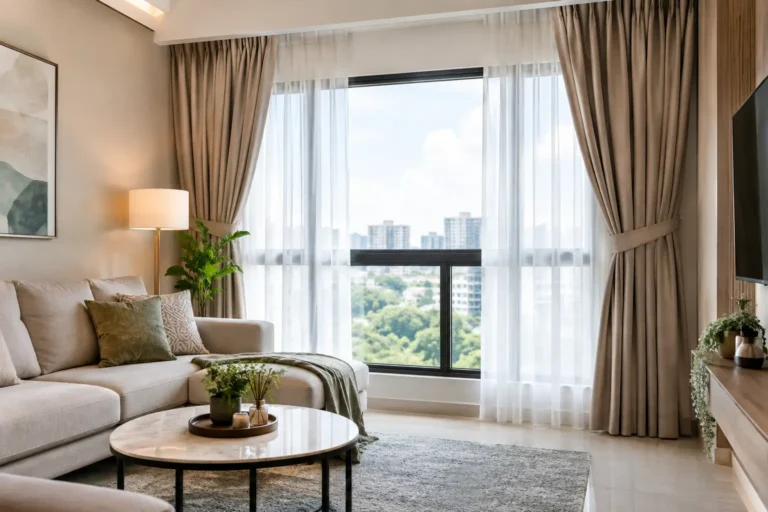
Are motorised curtains worthwhile in a Singapore home? Learn where they add real value, what affects installation, and when manual curtains suit…
READ MORE →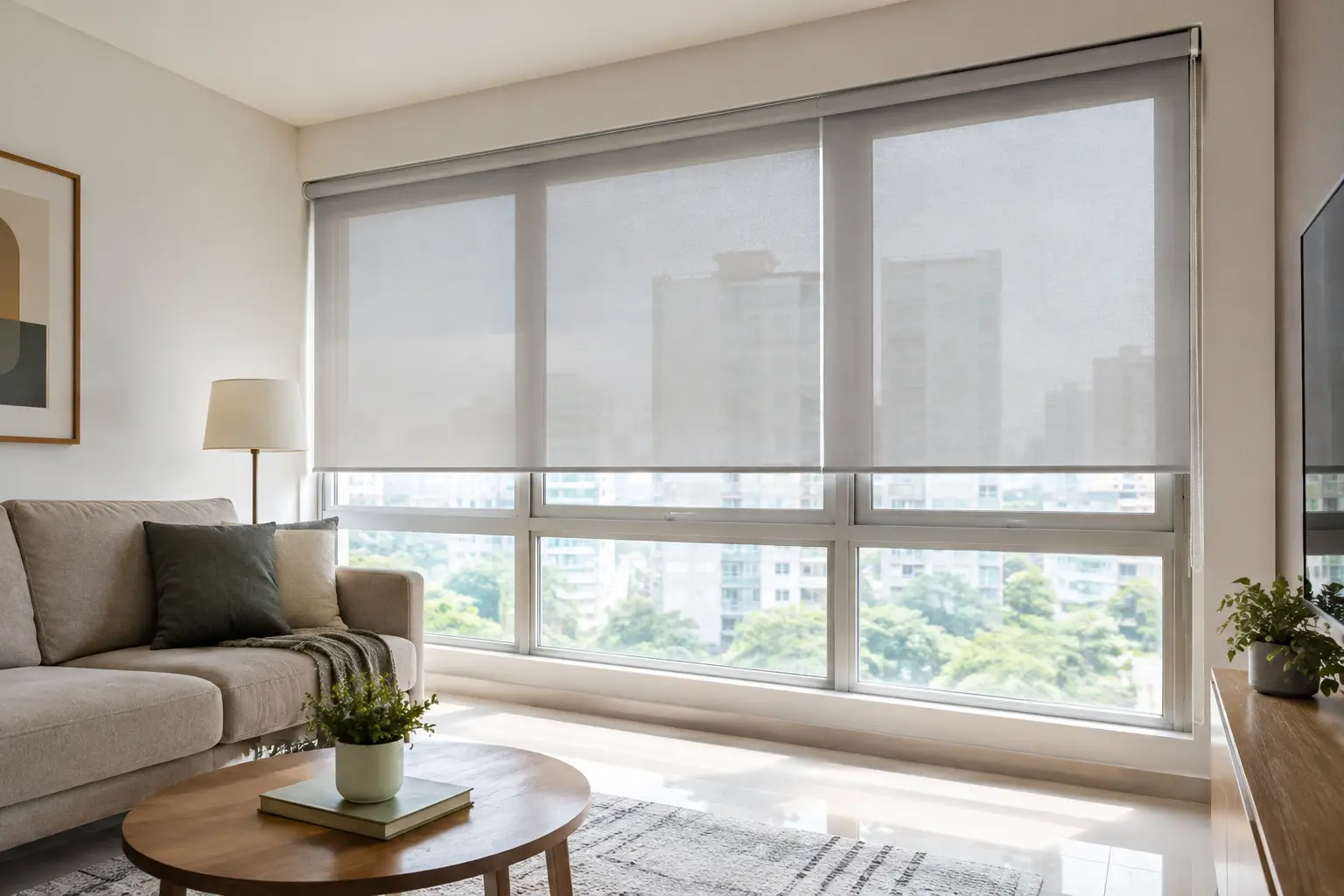

A west-facing HDB living room can look bright and inviting at 3pm, then become difficult to use when glare hits the television and heat builds near the windows. A useful HDB window furnishing guide starts with these everyday realities, not just fabric colours. The right curtains or blinds should suit the way each room is used, the direction of sunlight, privacy from neighbouring blocks and the space available around the window.
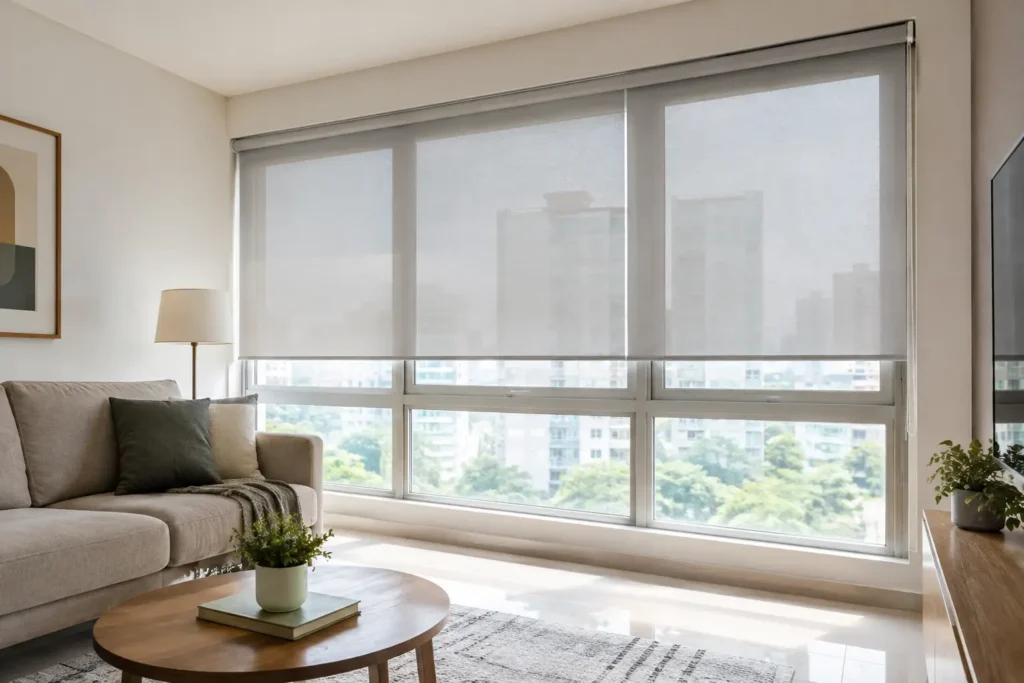
HDB flats vary more than many homeowners expect. A BTO flat may have full-height windows and a clean ceiling line for a concealed track, while an older flat may have pelmets, window grilles, air-conditioner trunking or limited wall clearance. Accurate site measurement before choosing a product prevents costly compromises later.
An HDB window furnishing guide should start with how each room is used. Sheer and night curtains suit living rooms and bedrooms that need layered privacy, while roller or Venetian blinds work well where compact light control matters. Kitchens and service yards need practical, easy-clean materials, while study areas benefit from adjustable glare control.
Decide what the window furnishing must do before settling on a style. In most HDB homes, the main requirements are daytime privacy, glare reduction, bedroom darkness, heat and convenient operation. One product can address several needs, but there are trade-offs.
Singapore’s National Environment Agency also recommends using curtains or blinds over windows to help block unwanted heat from the sun as part of energy-efficient home design.
Sheer curtains soften harsh daylight and maintain a degree of daytime privacy, particularly when the outdoor light is brighter than the room. At night, however, sheers do not provide meaningful privacy once indoor lights are on. For living rooms, a day and night curtain arrangement is often practical: a sheer layer remains closed during the day, while a dim-out or blackout curtain is drawn when more privacy and light control are needed.
Choose blackout fabric for bedrooms used for daytime sleep, early-morning light control or stronger darkness for children. Set expectations clearly: blackout fabric alone will not make every bedroom completely dark. Light can still enter at the curtain sides, above the track and between the panels. A well-planned track position, sufficient curtain overlap and appropriate fabric fullness make a noticeable difference.
Dim-out curtains are lighter in feel and reduce light substantially, but they allow more light through than blackout curtains. They can be a good fit for a study, guest room or living area where glare control matters more than near-darkness.
Curtains generally create a softer, fuller appearance and work especially well on wide windows, full-height glazing and balcony doors. They can cover window grilles neatly and, when properly made, give better control over side gaps than many blind types. Ripple fold and S-fold curtains offer even, contemporary waves, while pleated styles can suit a more traditional interior.
Stack-back is another practical consideration. Open curtains gather at the left and right sides of the window. On a compact HDB wall, this may cover part of the glass or interfere with a cabinet placed too close to the window. The track must also be long enough for the curtains to clear the opening as far as possible.
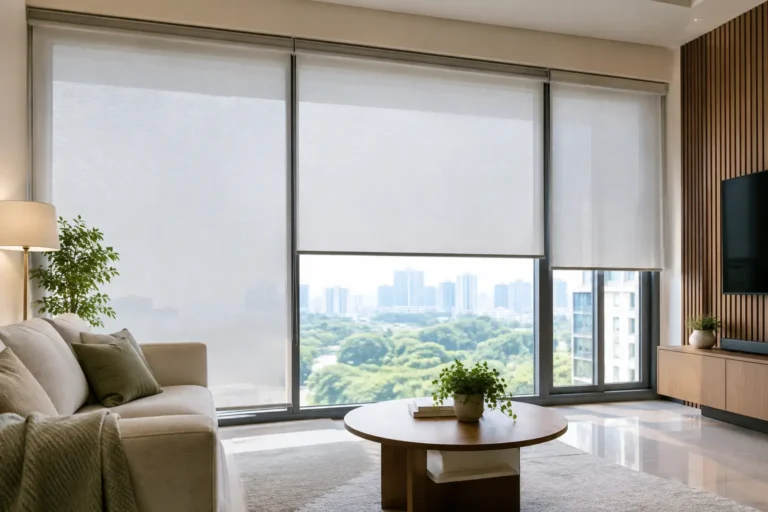
Blinds are often useful where a neat, compact treatment is preferred. Roller blinds are straightforward, easy to operate and available in fabrics ranging from sunscreen materials to dim-out and blackout options. Sunscreen roller blinds reduce glare while preserving an outward view during the day, although they do not provide full nighttime privacy.
Korean or combi blinds use alternating sheer and opaque bands. Homeowners can adjust privacy and light without fully raising the blind. They are popular in bedrooms and living rooms, though the horizontal banding is a distinct visual feature that may not suit every design preference.
Honeycomb blinds have a structured cellular form and a clean profile. They can be a good option for homeowners who want softer light diffusion and a tidy finish. Venetian blinds allow precise tilting of slats for light direction and privacy, but their individual slats require more regular dusting. Roman blinds bring fabric warmth in a more compact form, though their folded structure is usually less convenient than a simple roller blind for windows opened frequently.
The living room often needs flexibility rather than maximum blackout. Sheer curtains paired with a night curtain give a comfortable balance for flats facing another block or a busy common corridor. For strong afternoon sun, a sunscreen roller blind can reduce screen glare while keeping the room visually open, especially if the view is worth retaining.
If the window is next to a balcony door, consider how often the door is used. Curtains on a smooth track are easy to draw aside for access. A blind may be neater, but it needs to be raised before opening the door fully.
For bedrooms, begin with sleep habits and privacy. Blackout curtains often provide better coverage around grilles, irregular recesses and side gaps. A double-track arrangement with sheer curtains also lets the room receive soft daylight without exposing the interior to nearby homes.
Blackout roller blinds suit homeowners who prefer a minimal appearance. However, expect some edge gaps because the fabric does not wrap around the window like curtains can. Where darkness is the priority, a professional measurement should account for the mounting position and available overlap.
Choose materials that tolerate humidity, cooking residue and frequent cleaning. Choose wipeable roller-blind fabrics for kitchen windows where regular cleaning matters. Avoid placing fabric curtains too close to hob areas or where they can collect grease and obstruct ventilation.
For a service yard, privacy and airflow often matter more than decorative softness. A simple blind allows access to windows and keeps the area uncluttered. Check the opening direction of casement windows first, as a poorly positioned blind can obstruct handles or prevent the window from opening fully.
Screen glare is the main issue in a study. A sunscreen roller blind or adjustable Venetian blind can reduce direct glare while retaining useful daylight. For frequent video calls, consider the window behind the desk. Choose a treatment that adjusts easily as daylight changes.
Poor fitting details can undermine even a well-chosen curtain or blind. Installers can ceiling-mount or wall-mount curtain tracks depending on the slab, pelmet, false ceiling and window position. A ceiling-mounted track can create a cleaner, taller appearance and reduce the upper light gap. Installers must secure it to suitable support.
False ceilings require particular care. The installer should confirm suitable backing before fixing a track or motorised system. Existing electrical points, air-conditioner trunking, sprinklers and access panels can also affect placement.
For blinds, the window recess depth, grille position and handle clearance determine whether an inside or outside mount is suitable. An outside mount can offer better coverage, but may project more into the room. Inside mounting looks tidier where the recess is deep and square, but it leaves less room to reduce edge light.
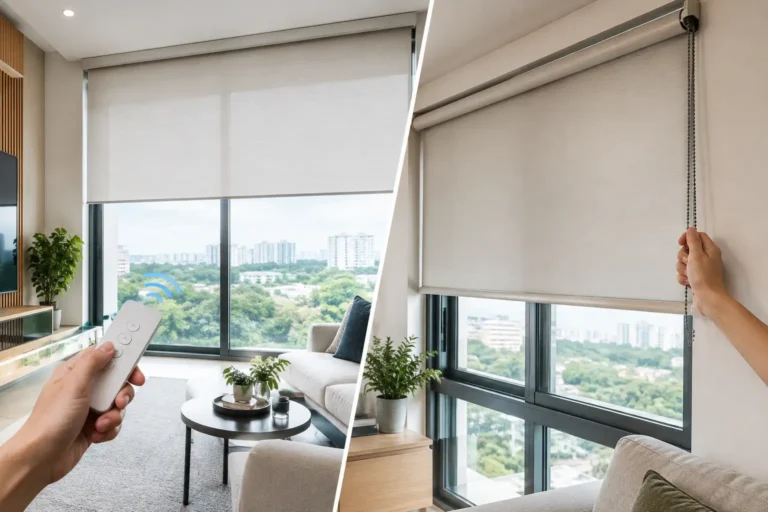
Motorisation is worth considering for high windows, wide curtain spans and homes where curtains are opened and closed daily. Motorised curtains and blinds can be operated by remote control, wall switch or compatible smart-home arrangements, depending on the system selected. They are convenient, but planning is needed early if a concealed power point is preferred. Battery-operated options may suit some situations, although access for charging or replacement should remain practical.
A fabric sample can look very different at your actual window than it does in a showroom. Sunlight direction, floor colour and nearby buildings all influence how a shade appears. Light colours reflect more daylight and can make a room feel open. Deeper colours create a more grounded effect but may show dust or lint more easily.
Fabric behaviour also matters. Fullness gives curtains their drape and body, while a very flat treatment may look sparse once installed. Some fabrics have a soft, relaxed fall; others hold a sharper wave. Ask to see a larger fabric piece where possible, especially for wide windows.
Vacuum curtains regularly with a soft brush attachment to reduce dust build-up. Blinds benefit from routine wiping or dusting before dirt settles into the material and mechanisms. In homes with young children or pets, cordless or motorised blind options can reduce loose operating cords, while durable, easy-clean materials may be more realistic than delicate fabrics.
Take final measurements after confirming window grilles, false ceilings, built-in carpentry and air-conditioning details. Early selection is useful, but base final production measurements on the completed site conditions. This is particularly important when a wardrobe, display cabinet or bedhead sits close to a window.
At Sincere Interior Service, window furnishing recommendations start with the actual room and window rather than appearance alone. Serving Singapore since 1976, our team assesses window dimensions, daylight, privacy, fabric behaviour, track or blind mounting conditions and everyday use before recommending a solution. Professional site measurement, Singapore-based custom production and installation help ensure that the finished treatment works as well as it looks.
Before deciding, observe each window at different times of day. Note television glare, privacy from neighbouring flats, early bedroom light and any difficulty reaching the window furnishing. Those observations will lead to a more practical choice than appearance alone.
Not sure which curtain style, fabric or system suits your home? Speak with our team for personalised recommendations for your space.
GET IN TOUCH →