0
0

Window Automation for Singapore Homes Explained
Window automation makes curtains and blinds easier to manage. Learn what to choose for privacy, glare, large windows, wiring and daily living…
READ MORE →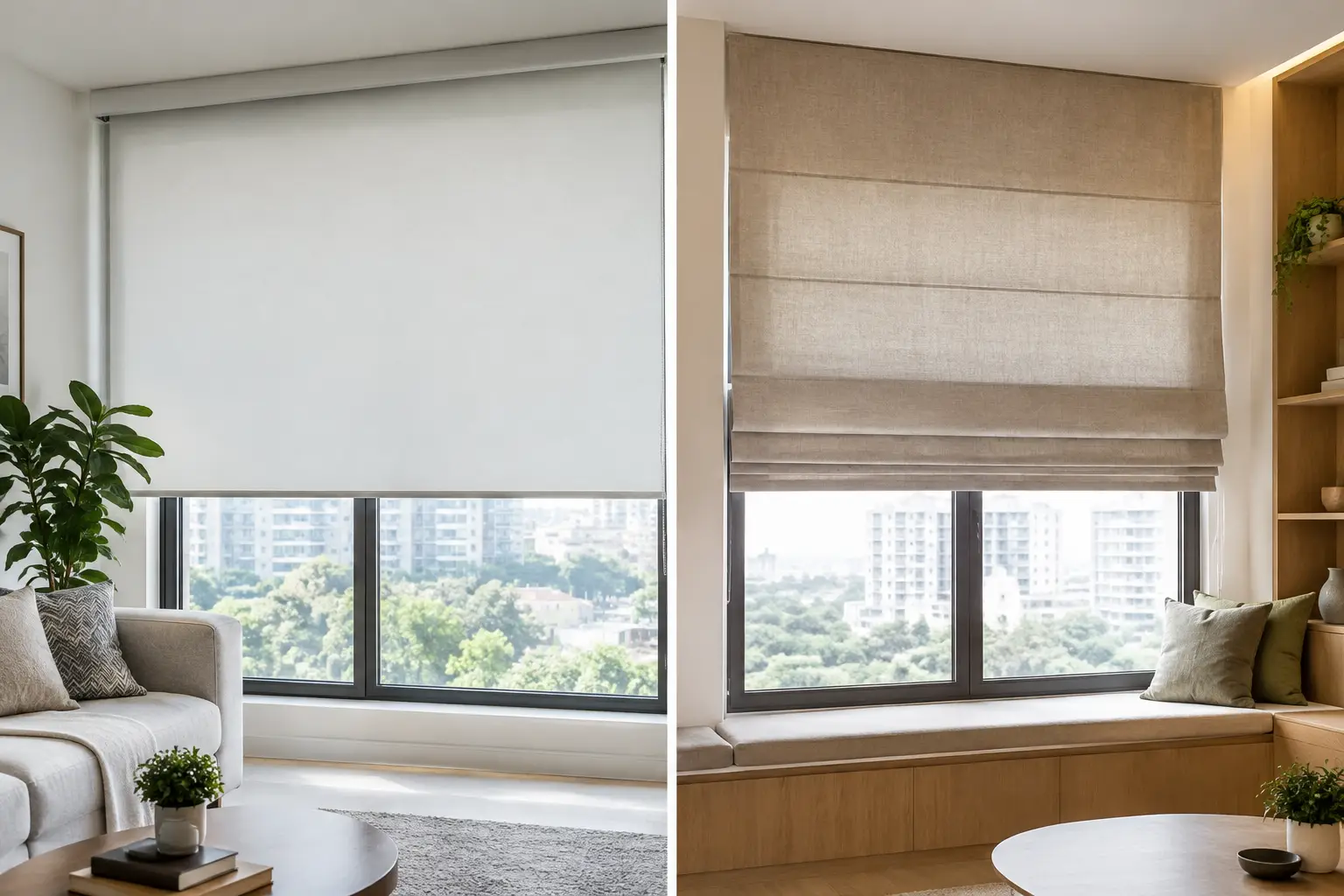

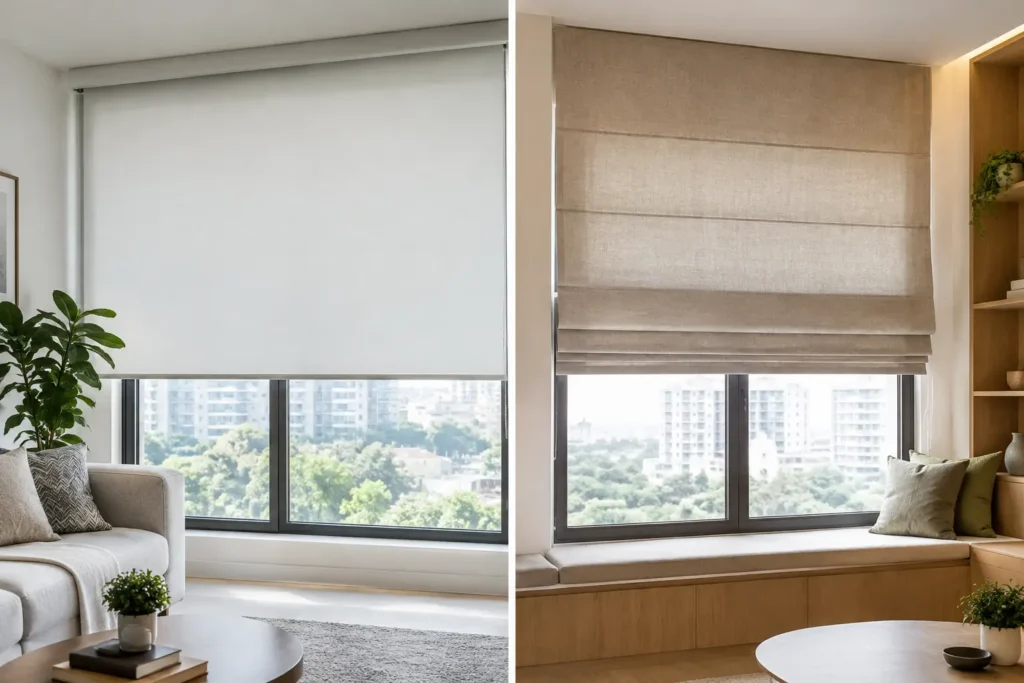
A west-facing living room window can turn a pleasant afternoon into a time when everyone avoids the sofa. The right blind should manage glare and privacy without making the room feel closed in. When comparing roller blinds versus Roman blinds, the difference is straightforward. Roller blinds are neat, practical and compact. Roman blinds add fabric softness and a more decorative finish.
Neither is automatically the right choice. The better option depends on the room, window size, sun exposure and privacy needs. Also consider how much day-to-day maintenance you are comfortable with.
For Singapore homes, roller blinds usually suit rooms where compactness, simple operation and easier cleaning matter most. Roman blinds suit spaces where fabric texture and a softer, more furnished look are the priority. When comparing roller blinds versus Roman blinds, window size, privacy, blackout needs and maintenance should guide the choice.
Roller blinds use a single flat panel of fabric that rolls around a tube at the top of the window. When you raise the blind, the fabric forms a small, tidy roll rather than a large stack. This makes them particularly suitable for compact HDB and BTO rooms, windows near cabinets, and spaces where a clean-lined appearance is preferred.
Roman blinds use fabric that forms horizontal folds as the blind rises. The blind sits flatter when lowered and gathers into a visible fabric stack when raised. Their tailored folds give bedrooms, dining areas and living rooms a warmer, more furnished look.
In practical terms, roller blinds usually win for simple operation, a minimal profile and easier cleaning. Roman blinds often suit homeowners who place greater value on fabric texture, colour and a softer decorative effect.
Both blind types are available in dim-out or blackout materials. However, fabric alone does not determine how dark the room becomes. Light can still enter around the sides, above the blind and sometimes below it. This is particularly noticeable in bedrooms with strong morning sunlight.
A roller blind can sit relatively close to the window or wall, depending on the mounting method. With accurate measurement and suitable brackets, this can reduce side light gaps. However, it will not usually give the same room-darkening result as a well-designed blackout curtain system that overlaps the wall and track.
You can also add blackout lining to Roman blinds. The face fabric and lining allow more design flexibility, which is useful when a bedroom needs darkness but you do not want the look of technical blind fabric. Because Roman blinds have stitched sections and folds, small points of light may remain more visible than on a plain roller blind, especially with light-coloured fabrics.
For a study or living room, sunscreen roller blinds are often a sensible choice. They reduce harsh glare while retaining some outward view during the day. At night, however, sunscreen fabric does not provide full privacy when interior lights are on. A Roman blind in a lined fabric offers more privacy, but it will also block the view and more daylight when lowered.
Choose roller blinds when the window furnishing should sit quietly in the room. They suit contemporary BTO flats, condominium units and offices, especially where cabinetry, feature walls or a restrained colour scheme are already doing the visual work. Available fabrics include sunscreen, translucent, dim-out and blackout options, so a simple appearance does not mean limited function.
Choose Roman blinds when the blind itself should contribute to the room’s character. Linen-look, textured weaves and patterned fabrics can soften a plain wall or connect the window treatment with cushions, upholstery or a bedhead. The folds make the fabric more visible, so fabric selection deserves careful thought. A heavy or overly bulky material may create a larger stack when raised and can look disproportionate on a narrow window.
Roman blinds are often attractive in a master bedroom, nursery, dining room or a landed home study where the window is a focal point. They can also work well on smaller windows that would look underdressed with curtains alone. On very wide glazing, however, multiple Roman blind sections may be needed. The divisions can be visually noticeable, so roller blinds or curtains may provide a cleaner result.
The space above the window is one of the first details to check. Roman blinds need sufficient height for their headrail and fabric stack. If the window sits close to a ceiling bulkhead, air-conditioning trunking or a pelmet, check the available clearance. Insufficient space can prevent the blind from raising fully.
Roller blinds need less top space and are generally easier to fit within a window recess. Recess fitting can look neat, but it requires a suitably deep and unobstructed recess. Check window handles, grilles and projecting frames so the fabric can lower smoothly.
For HDB and condominium windows, it is also worth considering access to casement panels. Raise the blind before opening any window panel positioned behind it. Plan the control position, blind width and divider bars around daily ventilation habits.
Installers can mount Roman blinds outside the recess to cover more of the frame and reduce light gaps. This needs wall space on both sides and above the window. A professional site measurement helps identify whether the wall surface, window reveal and surrounding fixtures can support the selected system securely.
Both roller and Roman blinds can use manual chain or motorised operation. The suitable system depends on blind size, weight and installation conditions. Roller blinds suit motorisation particularly well because the mechanism is compact and the movement is simple. They are useful for high windows, broad living room glazing and rooms where blinds are adjusted frequently to manage heat and glare.
Motorised Roman blinds can be a good option too, particularly for hard-to-reach windows. However, fabric weight and blind dimensions matter more. A heavier lined Roman blind needs a motor and mechanism that can lift the fabric evenly and reliably.
For homes with young children, keep accessible blind chains secured and out of reach. Singapore’s Consumer Product Safety Office recommends cordless window coverings where possible and advises using tension devices or cleats when cords are present. During consultation, also consider the control position, furniture placement and whether motorisation would make everyday use safer and easier.
Roller blinds are usually the lower-maintenance choice. You can dust many roller-blind fabrics with a soft brush attachment or wipe them carefully with a lightly damp cloth. Always follow the fabric supplier’s care guidance. Their flat surface collects less dust than folded fabric, which can be helpful in busy households and commercial settings.
Roman blinds need more careful upkeep because dust can settle in the folds. Regular light vacuuming is advisable. Some Roman-blind fabrics and linings require specialist cleaning rather than casual washing. Consider this before choosing pale or heavily textured fabric for a kitchen-adjacent dining area or a room used by children.
Durability also relates to use. A roller blind is often the more practical choice for windows opened and closed throughout the day. A well-made Roman blind can also be durable. However, its extra fabric and lifting components benefit from gentler operation and sensible fabric selection.
For kitchens, service yards and workspaces, roller blinds are usually more practical because they are compact and easier to maintain. In living rooms, sunscreen roller blinds suit homes that need daytime glare control without losing all natural light. Pairing them with curtains can provide night privacy and a more complete finish.
For bedrooms, the decision depends on priorities. Roller blackout blinds offer a crisp, uncluttered look and straightforward use. Lined Roman blinds suit those who want a softer fabric feature, although homeowners seeking the darkest possible room should consider blackout curtains as part of the solution.
For a nursery or guest room, Roman blinds can add warmth without taking up floor space. For tall or difficult-to-reach windows, motorised roller blinds are often the more convenient choice. Commercial spaces often favour roller blinds for their clean appearance, uniformity and easier maintenance.
Photographs can make both styles look equally suitable, but actual window conditions often change the decision. Dimensions, sun direction, handles, grilles, ceiling details and furniture placement all affect performance. View fabric samples at the actual window because daylight can change their colour, openness and privacy level considerably.
Serving Singapore since 1976, Sincere Interior Service approaches this choice as a practical fit rather than a style contest. During a professional site consultation, our team assesses window dimensions, sun exposure, likely light gaps, stack-back, blind fabric and operating method. We then recommend the option that will remain practical to operate, clean and live with after installation.
Not sure which curtain style, fabric or system suits your home? Speak with our team for personalised recommendations for your space.
GET IN TOUCH →