Smart Blinds Singapore: A Practical Guide for Every Room
Published 10 Nov 2026
•
8 min read
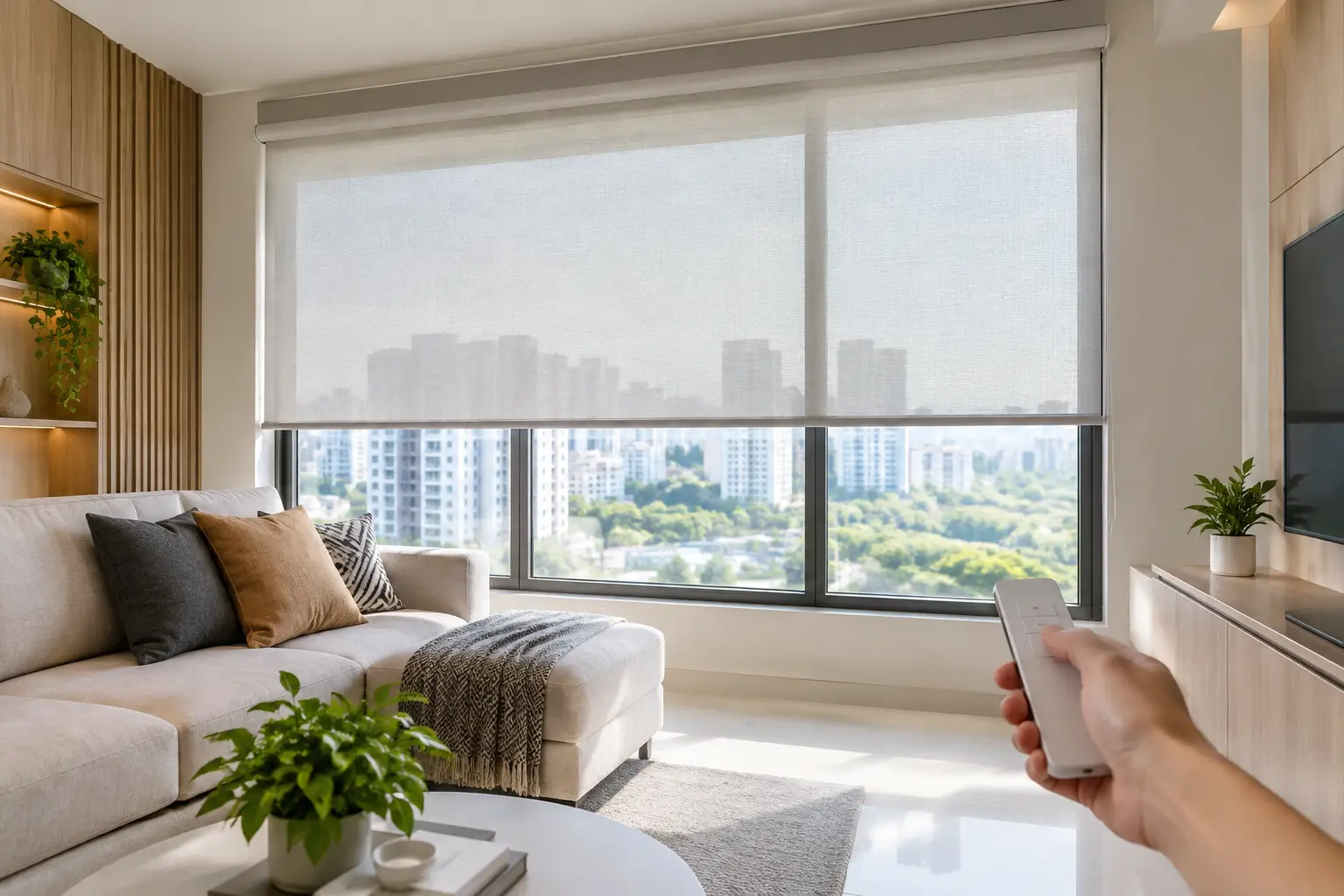
A west-facing living-room window can make television viewing uncomfortable long before the room feels dark. Reaching behind a sofa to adjust several blind chains is not much better. Smart blinds solve this everyday problem by allowing you to raise, lower or tilt window coverings with a remote control, wall switch, app or scheduled setting.
They are not only for large landed homes or elaborate smart-home systems. For an HDB, BTO or condominium flat, motorisation can be a practical choice where windows are wide, hard to reach, exposed to strong afternoon sun or used several times a day. The right blind still needs to be selected and fitted properly, however. A motor adds convenience, but it does not compensate for unsuitable fabric, incorrect measurements or poorly planned light control.
Smart blinds are motorised window coverings that homeowners can raise, lower or tilt using a remote, wall switch, app or schedule. In Singapore homes, they are most useful for wide, high, hard-to-reach or frequently adjusted windows, especially where glare, privacy and afternoon sun change throughout the day. Roller, Venetian, honeycomb and Korean or combi blinds can all be motorised, but the right choice depends on light control, mounting conditions, power access and how the room is used.
What smart blinds can do well
Smart blinds are motorised blinds with an automated control option. Depending on the system, you can operate one blind individually or control several together. You can also set schedules or connect compatible blinds to a home-control platform.
Their most useful role is consistency. In a bedroom, a scheduled blind can lower before bedtime and open gradually in the morning. In a study, scheduled blinds can lower during the strongest sun period to reduce screen glare. For an empty home, programmed blinds can also limit prolonged exposure to direct sunlight.
Motorisation is especially worthwhile for high windows, deep ledges, bay windows and full-height glazing behind furniture. It avoids the need for long operating chains and makes daily use more likely. Homeowners often leave hard-to-reach blinds in one position even when light or privacy needs change.
There are limits. Smart blinds provide control over daylight, but they do not make every blind fully blackout. They also require a realistic discussion about power supply, control preference and the position of the mounting surface before installation.
Choosing Smart Blinds for Each Room
The blind type determines how the room will look and perform. Start with the purpose of the window, then consider motorisation.
Roller blinds for straightforward light control
Motorised roller blinds suit bedrooms, living rooms, studies and offices. Their clean profile works with sunscreen, dim-out or blackout fabrics.
Sunscreen fabric filters glare while retaining an outward view during the day. It is useful for a study or living area where daylight is welcome, but it does not provide full night-time privacy when indoor lights are on. Dim-out fabric softens daylight and adds privacy, while blackout fabric works better in bedrooms or media rooms.
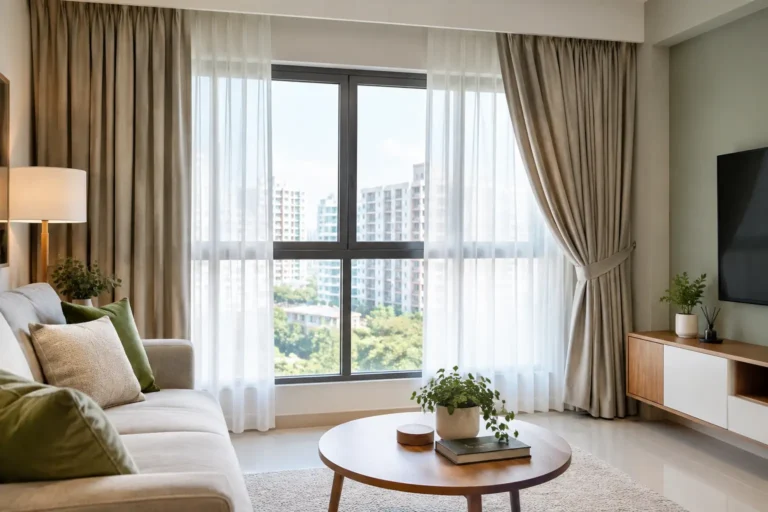
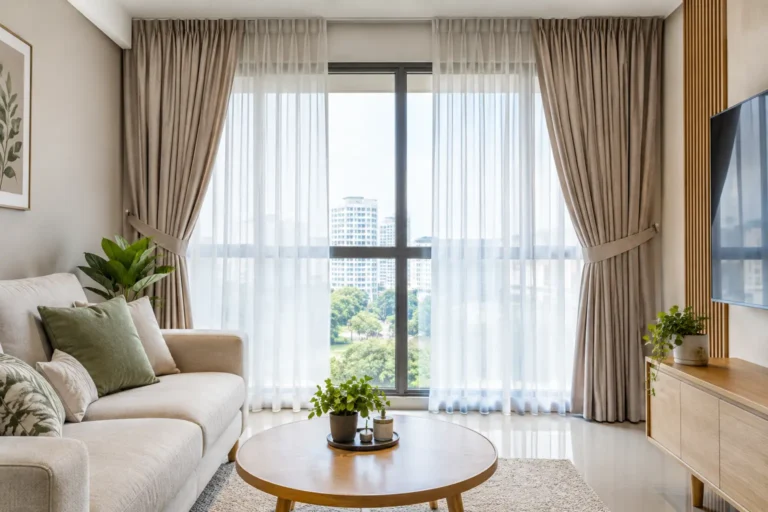
A blackout roller blind reduces light through the fabric, but light can still enter at the sides, top and bottom of the blind. This is normal for a standard roller blind. If darkness is a priority, discuss the mounting position, overlap beyond the window opening and whether side channels or a curtain pairing are appropriate. For many bedrooms, a blackout blind together with curtains gives more effective coverage than relying on one product alone.
Honeycomb blinds for a softer, insulated look
Honeycomb blinds have cellular pockets that create a softer appearance and can help moderate the feel of heat at the window. They suit bedrooms and rooms with broad glazing, particularly where homeowners prefer a neater alternative to curtains.
Honeycomb blinds come in light-filtering and blackout options, although system design and edge gaps still affect room-darkening. Handle and clean the pleated cells carefully to help them retain their shape. They are not the first choice for every kitchen window or greasy commercial environment, where a more wipeable material may be practical.
Venetian blinds where tilt control matters
Motorised Venetian blinds can raise, lower and tilt the slats for privacy and directional light control. This makes them useful for areas where you want to cut harsh sunlight without closing off the window completely.
Material matters here. Aluminium works well where easy cleaning matters, while other finishes can provide a different visual effect. Slatted blinds have more individual surfaces than roller blinds, so dusting takes longer. Consider this before selecting them for a large bank of windows.
Korean or combi blinds for flexible day-to-night use
Korean blinds, also called combi or zebra blinds, alternate sheer and opaque fabric bands. By aligning the bands, you can vary privacy and daylight without raising the blind fully. They work well in living rooms and bedrooms where homeowners want a softer, layered appearance.
They are versatile, but they are not usually the strongest choice for complete blackout because light can pass through the sheer sections and around the edges. Treat them as a flexible privacy and light-filtering option rather than a substitute for a properly planned blackout treatment.
Smart Blinds: Power, Controls and Smart-Home Planning
Before choosing controls, decide how you will power the motor. This is one of the most important practical decisions for smart blinds.
Battery-operated blinds can suit completed homes where electrical wiring is difficult or undesirable. They keep installation less intrusive, although batteries will need periodic charging or replacement depending on use. For a blind that operates frequently or covers a large window, plan access for this maintenance rather than placing the unit where it cannot be reached safely.
Rechargeable motors can also suit completed homes where new electrical wiring would be disruptive. Somfy Singapore notes that charging frequency for its WireFree blind motors depends on the blind size and how often it operates, so charging access should form part of the installation plan.
Wired motors often make the most sense during renovation, especially across several living-room blinds or high windows. Coordinate the electrical point and cable route early with the electrician and interior designer. A concealed power arrangement can look tidy, but contractors need to plan it before completing carpentry, false ceilings or paintwork.
Remote controls are simple and reliable for many households. Wall switches give a familiar, fixed control point, while app-based control and smart-home integration suit owners who want scenes or schedules. For example, a single “away” setting might lower selected blinds to manage sunlight and privacy. Choose the control method you will genuinely use. A complicated system is not necessarily more useful than a well-placed remote.
Accurate fitting affects privacy, light gaps and appearance
Measure smart blinds as carefully as manual blinds. The motor, bracket and fabric roll all need clearance. The installer must also decide whether to mount the blind inside the recess or face-fix it to the wall or ceiling.
Inside-recess fitting gives a contained appearance, but the window frame must have enough depth and a reasonably square opening. Handles, grilles, protruding tracks and uneven tiles can affect whether it is possible. An outside fit can cover more of the window and reduce side light gaps, but the blind will project from the surface and needs a suitable fixing point.
In compact BTO bedrooms, consider where the blind sits when raised. A roller blind rolls neatly at the top, but its bracket and fabric roll still occupy space. Where curtains are also planned, position the blind so it clears the curtain track, window handle and open casement.
For large windows, it may be better to divide the treatment into two or more blinds rather than use one very wide unit. This can improve handling, reduce fabric deflection and allow more flexible control. Plan the visual breaks carefully around window mullions and important sightlines.
Smart Blinds: Practical Care and Long-Term Use
Most roller, Korean and honeycomb blind fabrics benefit from regular gentle dusting with a soft brush attachment or dry cloth. Avoid soaking fabrics or using harsh cleaning products unless the material is specifically suitable for it. For Venetian blinds, regular wiping prevents dust building up between slats.
Do not pull a motorised blind by hand when it is operating or force it if something obstructs its path. Keep loose items, furniture and window handles clear. If the blind begins to move unevenly or stops short, arrange a check rather than repeatedly operating it.
Motorisation can reduce or remove accessible operating chains. In family homes, also assess nearby furniture and window access as part of the overall safety plan.
When smart blinds are worth considering
Smart blinds are most valuable when they solve a repeated inconvenience: difficult access, daily glare, changing privacy needs or a large number of windows to manage. They may be less necessary for a seldom-used window that is easily reached, where a quality manual blind may offer better value.
A site consultation allows the installer to assess window dimensions, sun direction, fabric performance, mounting conditions and how the room is used. At Sincere Interior Service, smart-blind planning starts with the actual window and how the room is used. Serving Singapore since 1976, our team assesses window dimensions, sun exposure, blind type, fabric performance, mounting conditions, power access and control preferences before recommending a system. Professional site measurement, custom production and installation help ensure that motorisation remains practical long after the renovation is complete.
SINCERE INTERIOR
Need Help Choosing the Right Curtains?
Not sure which curtain style, fabric or system suits your home?
Speak with our team for personalised recommendations for your space.
Discover the best curtains for Singapore humidity, with practical guidance on fabric choices, mould prevention and care for homes, offices and commercial…


 0