0
0

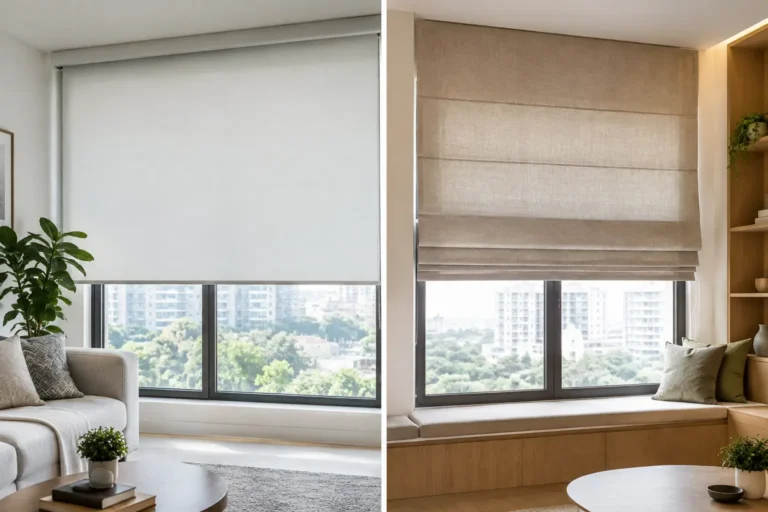
Roller Blinds Versus Roman Blinds: Which Fits?
Compare roller blinds versus roman blinds for privacy, glare control, blackout, upkeep and style, with practical advice for HDB, condo and landed…
READ MORE →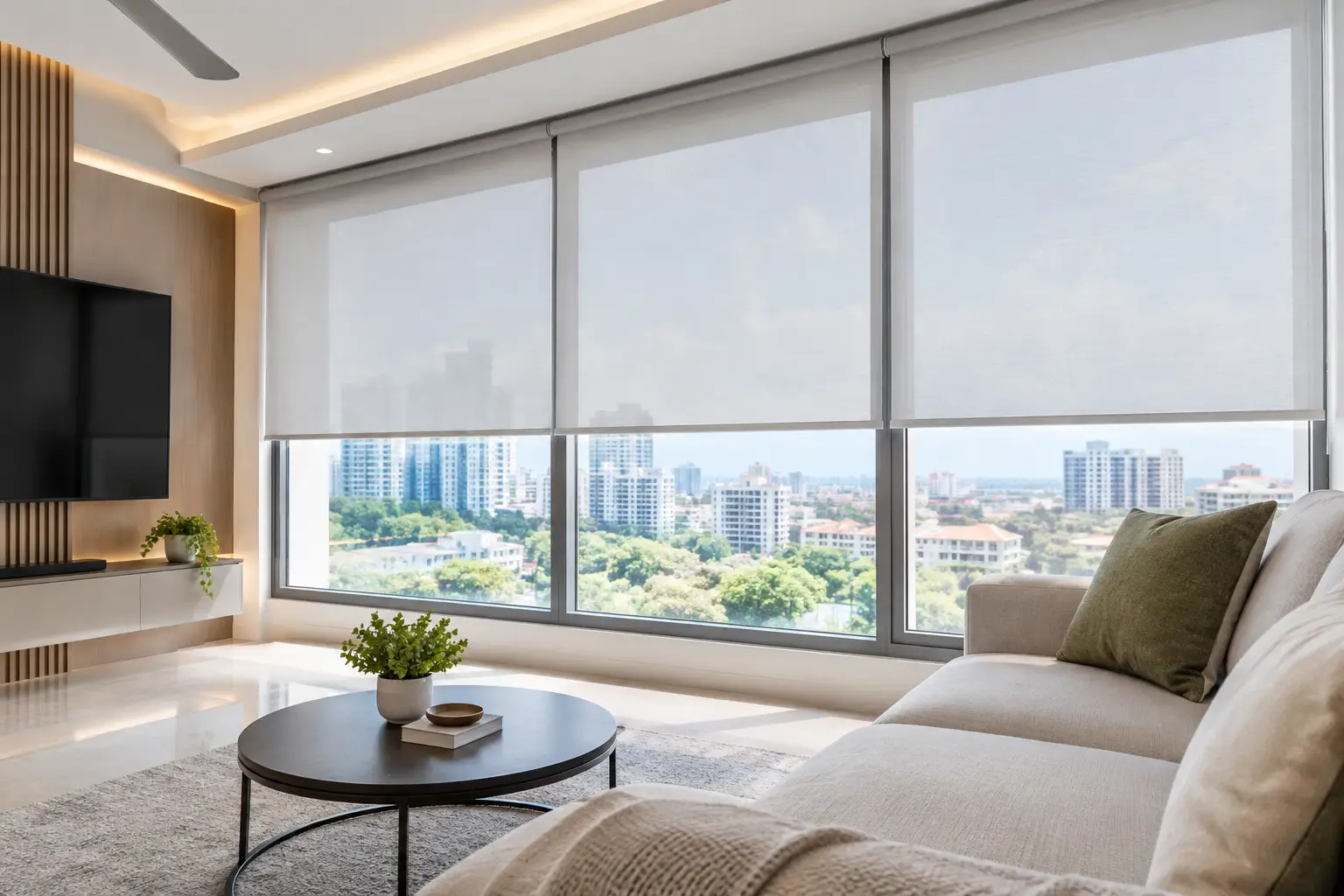

A west-facing living room can be bright and uncomfortable long before the afternoon is over. Window automation lets curtains or blinds respond to daily routines automatically. This removes the need to cross the room, reach over furniture or struggle with a high window. For many homeowners, the real value is not simply a remote control. It is easier light management, better privacy at the right time and more practical use of large window furnishings.
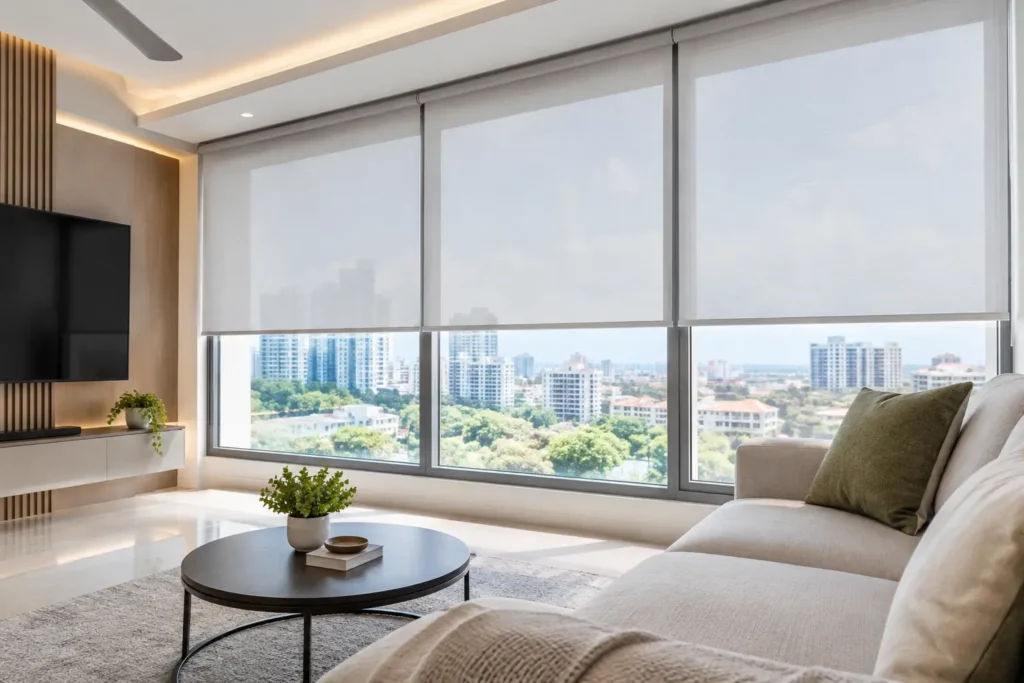
Motorised curtains and blinds can suit HDB and BTO flats, condominiums, landed homes and commercial spaces. The best arrangement depends on the window, furnishing type and how the room is used. Assess the site before installation rather than adding automation as an afterthought.
Window automation is most useful for wide, high or frequently adjusted curtains and blinds. In Singapore homes, motorised systems can manage glare, privacy and daylight through a wall switch, remote, app or compatible smart-home control. The right setup depends on the window furnishing, power access and how often it will operate.
Window automation uses a motor to open, close, raise or lower a curtain or blind. Homeowners can operate the system by wall switch, handheld remote, mobile app or compatible smart-home control. The available options depend on the selected motor and controller. Some setups also support schedules. For example, bedroom curtains can open in the morning while living-room blinds lower during strong afternoon sun.
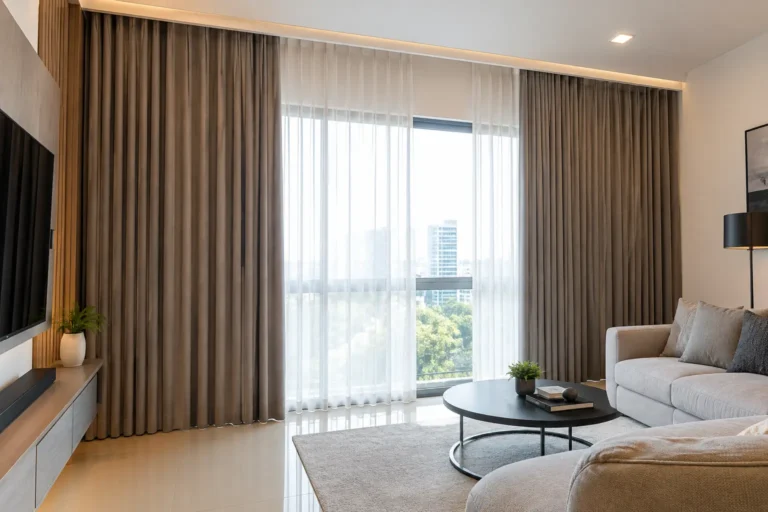
For a family, this can make day and night curtains easier to use as intended. The sheer layer can stay closed for daytime privacy while admitting softened daylight. Later, the night curtain can close for stronger privacy. In a home office, automation can lower a roller blind when glare reaches a computer screen.
Automation does not change the light-blocking properties of a fabric or blind material. A motorised blackout curtain can still have light gaps at the top, sides or centre overlap. Good track positioning and curtain design help reduce them. Similarly, a sunscreen roller blind reduces glare but does not provide the privacy or darkness of a blackout solution at night.
Start with practical questions about the window and how the room is used. Is the primary concern heat and glare, daytime privacy, bedroom darkness, convenience or the need to operate a very wide window? The answer may lead to a different product.
Curtains suit bedrooms and living areas where homeowners want softness, fuller coverage and a layered look. A motorised day-and-night arrangement provides flexible control. It also needs enough depth for double tracks and sufficient wall space for stack-back. When curtains are open, the fabric gathers at the sides. On a compact BTO wall, the opened curtain can cover part of the glass. Include this stack-back during measurement.
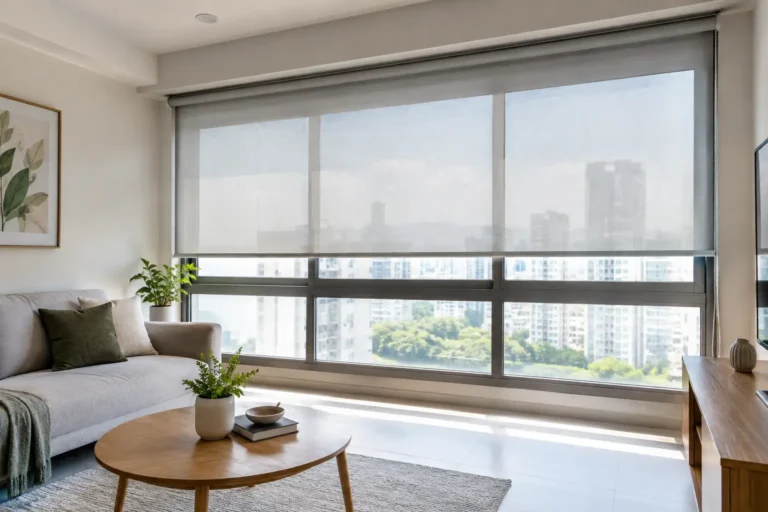
Motorised roller blinds suit study rooms, kitchens, balconies and compact windows. They sit close to the glass and avoid bulky curtain stack-back. They sit close to the window and can be specified in different materials, from light-filtering fabrics to dim-out or blackout fabrics. However, roller blinds generally have more perimeter light gaps than a well-designed curtain system, especially where the blind is fitted inside a recess.
For wide condominium glazing or tall landed-home windows, check motor capacity, track length and fabric weight carefully. A heavier blackout curtain requires a suitable motor and track, not merely an automated version of a light sheer track. Correct support placement also helps the track run smoothly and prevents sagging over time.
There is no single answer because curtains and blinds manage light differently. The choice should reflect your daily use rather than appearance alone.
Motorised curtains work particularly well where you want a sheer during the day and a heavier fabric at night. Sheer curtains soften harsh sunlight and reduce exposure to neighbouring blocks. They do not provide complete privacy after dark when indoor lights are on. Pairing them with a night curtain gives the room a more useful day-to-night arrangement.
For bedrooms, blackout fabric is commonly requested. It can significantly darken a room, yet expectations should be realistic. Light can enter around the edges and through the gap between curtain panels. Extending the track beyond the window and mounting it close to the ceiling can improve room-darkening. Suitable panel overlap can also reduce centre gaps. A pelmet or recess can also reduce top light leakage, depending on the existing ceiling detail.
Ripple fold and S-fold curtains create consistent waves and look neat on long tracks. Plan stack-back carefully because heading style and fullness affect the space required.
Motorised blinds suit rooms where a neat profile and precise positioning matter more than full drapery coverage. Roller blinds offer simple operation and suit many contemporary interiors. Venetian blinds provide adjustable slats for directing daylight, but their individual slats and mechanisms need more regular dusting. Honeycomb blinds offer a softer, structured appearance. Handle the fabric cells carefully so they retain their shape.
Korean or combi blinds use alternating sheer and opaque bands for adjustable filtered light. They are useful in living rooms and studies, but they are not the same as a blackout curtain system. The layered bands may still allow light through, and night-time privacy depends on the position of the opaque sections.
Plan window automation during renovation, before contractors complete false ceilings, carpentry and paintwork. A concealed power point near the track or blind can create a cleaner finish and reduce visible cables. Coordinate the power point with the curtain track position, especially where pelmets, ceiling recesses or air-conditioning trunking affect access.
Battery-powered options can suit completed homes where new wiring would be disruptive. They avoid extensive electrical work but require periodic charging or battery replacement. This is a reasonable trade-off for a single study blind or an existing bedroom, whereas hardwired power may be more convenient for several large curtains used every day.
For smart-home control, check compatibility before choosing the motor. If the system uses Zigbee, confirm that the motor and hub belong to compatible ecosystems. The Connectivity Standards Alliance describes Zigbee as an interoperable networking standard used across connected-home devices. Confirm the intended ecosystem, controls and routines at the outset. Do not assume every app, voice assistant or hub will work together. A dependable wall switch or remote is also worth retaining, particularly for family members and guests who prefer straightforward controls.
Accurate measurement is central to a good automated setup. The installer should assess the ceiling or wall surface, window recess, nearby cupboards and air-conditioning units. They should also confirm that the window can still open comfortably. Beam details, uneven surfaces or weak fixing points can prevent the installer from mounting the track where expected.
Select the curtain track for the fabric weight and curtain heading. A quality motor cannot compensate for a poorly supported track, an overly heavy fabric choice or curtains that catch on an obstruction. For blinds, the width, drop and mounting method affect how evenly the fabric rolls and where light gaps will appear.
Child safety is another practical advantage. Motorised systems reduce the need for accessible operating chains and cords. Place controls where they are easy to reach. Show homeowners how to operate or reset the system manually when required.
Automated window furnishings need routine care, although they should not be difficult to maintain. Curtains benefit from regular vacuuming with a soft brush attachment and occasional professional cleaning based on the fabric care instructions. Avoid pulling the fabric by hand when it is motorised. Use the designated control so the curtain continues to travel evenly.
Dust blinds regularly, especially in kitchens or homes near busy roads where fine particles can accumulate. Do not spray water or cleaning products directly onto motors, tracks or control components. If a curtain moves unevenly, a blind stops partway or a track sounds unusual, stop forcing the system. Arrange an inspection instead.
A customised system is easier to support when the curtain or blind, motor, track and installation are planned together. Serving Singapore since 1976, Sincere Interior Service assesses window dimensions, fabric or blind weight, stack-back, fixing conditions, power access and control preferences before recommending a system. Our team provides professional site measurement, Singapore-based custom production, installation, post-installation support and a 12-month warranty.
Window automation is most worthwhile when it removes a regular inconvenience. Examples include wide curtains that are tiring to draw, high windows that are hard to reach, strong daily glare or frequent privacy adjustments. It may be less necessary for a small, rarely used window with a light blind that is easy to operate by hand.
Before deciding, consider how often the furnishing will move, who will use it and what result you expect. A proper site discussion can clarify the available fixing points, stack-back space, wiring options and likely light gaps. That is the practical route to a window furnishing that remains easy to live with long after the renovation is finished.
Not sure which curtain style, fabric or system suits your home? Speak with our team for personalised recommendations for your space.
GET IN TOUCH →